We Design. We Build. We Deliver.
Engineered for extreme duty cycles, high-voltage renewable grid integration, heavy HVAC loads, and industrial automation across Brazilian industrial hubs.
As Brazil accelerates its energy transition and expands industrial manufacturing capacity, electrical engineers and procurement directors face unprecedented operational challenges. Brazil's unique geographical and regulatory ecosystem—spanning tropical humidity, intense coastal salt-spray exposure, remote solar plant locations in the Northeast backlands (Sertão), and stringent regulatory directives under ABNT NBR IEC 60947-3 and INMETRO—demands switching components that significantly outperform baseline commercial specifications.
An electrical isolation switch or high-voltage DC contactor is not merely a disconnect component; it is the fundamental safety barrier protecting multi-million-dollar solar arrays, battery energy storage systems (BESS), commercial HVAC installations, and automated manufacturing lines. Selecting premier isolation switch factories and OEM exporters who understand the nuances of the Brazilian power grid is crucial for avoiding catastrophic arc faults, thermal runaway, and unexpected line downtime.
Utilizing hydrogen-nitrogen gas-filled sealed chambers and magnetic blowout technology to quench DC arcs within milliseconds up to 1,500 VDC, preventing contact welding and contact carbonization in solar string isolators.
Formulated with high-CCT anti-tracking polymers, UV-stabilized housing material, and salt-mist corrosion resistant silver-tin oxide ($AgSnO_2$) contacts tailored specifically for South American coastal and equatorial environments.
Integrated electronic coil economizers reduce continuous hold power consumption by up to 80%, minimizing enclosure internal heat dissipation in enclosed outdoor combiner boxes.
When sourcing components from global factories for installation in Brazil, engineering teams must evaluate the underlying material science and dielectric breaking performance. The table below outlines critical parameters engineered into our heavy-duty isolation switch and contactor series:
| Performance Metrics | Standard Commercial Isolator | Altran/Export Grade Heavy-Duty Isolator | Impact on Brazilian Projects |
|---|---|---|---|
| DC Voltage Insulation Rating | Up to 800 VDC | 1,000 VDC to 1,500 VDC Continuous | Essential for modern utility solar (Minas Gerais / Bahia 1500V architecture). |
| Arc Quenching Media | Open air gap / air chute | Gas-filled (N2/H2) or Epoxy Hermetic Seal | Eliminates oxidation in humid climates; prevents explosive plasma venting. |
| Ambient Temperature Derating | Derates significantly above 40°C | Zero derating from -40°C to +85°C | Maintains 100% rated current under direct Sertão solar radiation. |
| Inrush Capacitor Damping | External resistor requirement | Integrated pre-charge / damping contacts | Protects power factor correction banks in industrial São Paulo plants. |
| Compliance Certification | Basic CE / Domestic Markings | UL, cUL, CE, CCC, ABNT NBR IEC 60947-3 aligned | Simplifies INMETRO local approval and customs clearance in Santos port. |
Brazil represents South America’s largest electrical engineering market, characterized by rapid renewable expansion, localized manufacturing clusters, and massive infrastructure modernization. Our isolation switches, magnetic contactors, and high-voltage DC power relays are customized for these regional operational conditions:
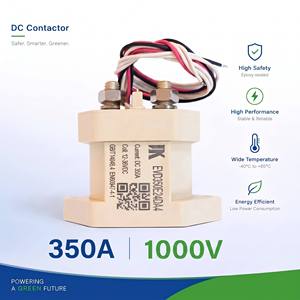
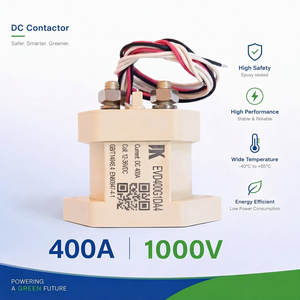
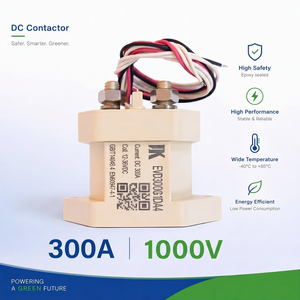
In states like Minas Gerais, Bahia, Ceará, and Pernambuco, solar irradiance levels are among the highest in the world. However, ambient combiner box temperatures often exceed 60°C. Our 350A/400A 1000V DC Contactors (EVD400 series) and rotary DC isolation switches serve as main disconnect switchgear between PV arrays and central inverters. Featuring bi-directional breaking capabilities and non-welding contacts, they guarantee immediate physical isolation during emergency shutdown or grid anti-islanding events under ANEEL grid codes.
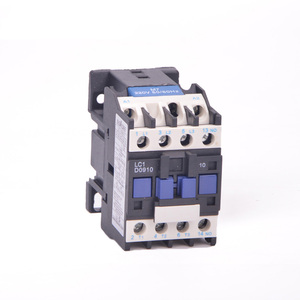
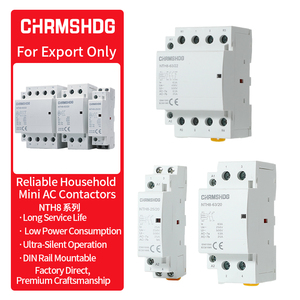
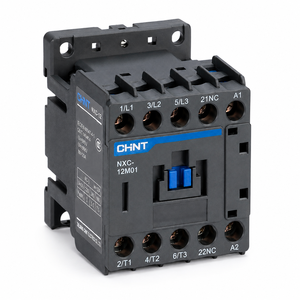
Across the industrial heartlands of Greater São Paulo, Campinas, Joinville, and Caxias do Sul, automated production lines operate 24/7. Our 3-Pole AC Contactors (LC1D equivalent platforms) and Chint NXC series (6A-630A) drive heavy inductive motor loads, conveyor systems, and CNC hydraulic pumps. High mechanical endurance (over 10 million cycles) and drop-in mounting compatibility ensure zero downtime during maintenance cycles.
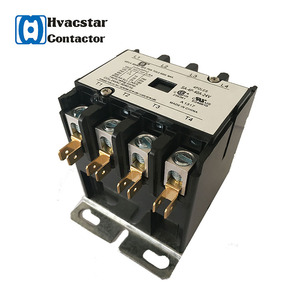
Brazil’s massive agricultural supply chain—stretching across Mato Grosso, Paraná, and Rio Grande do Sul—relies heavily on industrial cold storage and processing plants. Our cUL Certified 4-Pole Definite Purpose HVAC Contactors (40Amp 24V-277V) provide silent, low-vibration switching for large chillers, ammonia compressors, and roof-top air handling units, engineered to withstand fluctuating line voltages common in rural Brazilian distribution grids.
With electrification expanding along major transit axes such as Rodovia dos Bandeirantes and Rodovia Presidente Dutra, high-power DC Fast Chargers (DCFC) up to 350kW require compact, ultra-fast isolation switches. Our Epoxy Sealed High Voltage DC Contactors (300A-500A 1000V/1500V) ensure rapid isolation of the battery pack from the charging station, preventing reverse polarity destruction and electrical shock hazards.
Navigating the Brazilian market requires a sophisticated understanding of localized legislation, energy policy shifts, and technical compliance standards. Key macro trends reshaping the demand for electrical switching products include:
Since the enactment of Brazil's Distributed Generation Legal Framework (Lei 14.300), solar system design has shifted toward higher safety standards, intelligent grid disconnects, and rapid shutdown compliance. Low-quality DC isolators that suffer from thermal degradation under continuous DC load are actively being phased out by Brazilian installers (integradores). Exporting components with verified UL94-V0 flame retardancy and IP66 enclosure ratings has become mandatory for market entry.
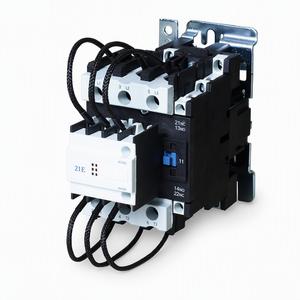
To reduce inductive losses across heavy industrial networks, the Brazilian Electricity Regulatory Agency (ANEEL) strictly enforces power factor limits ($PF \ge 0.92$). Factories across South Brazil are upgrading their automatic capacitor banks. Our specialized CJ19-25 3-Phase Switching Capacitor AC Contactors feature built-in damping resistors that suppress destructive inrush currents during capacitor switching, extending capacitor bank lifespan by up to 300%.
Megaprojects like the Pecém Green Hydrogen Hub in Ceará and port expansions in Santos and Suape demand electrical components rated for extreme saline atmospheres. Standard iron-frame contactors corrode rapidly in these salt-spray zones. Top factories serving Brazil must supply isolators built with nickel-plated copper busbars, stainless steel hardware, and sealed auxiliary contacts.
As a premiere manufacturer and global exporter of high-reliability electromechanical components, we bridge the gap between North American engineering standards, high-volume production efficiency, and local South American logistics needs. Our corporate footprint is built on four fundamental pillars of E-E-A-T (Experience, Expertise, Authoritativeness, and Trustworthiness):
Engineered from our technical support hubs (including Sterling, Illinois), our technical team provides direct schematic reviews, thermal calculation modeling, and customized busbar/coil tailoring for complex OEM build programs.
Every lot shipped to Brazil carries complete quality documentation: UL/cUL file numbers, CE Declarations of Conformity, RoHS/REACH material composition sheets, and 100% factory dielectric withstand test certificates.
Our experienced export logistics team ensures accurate HS/NCM code classification (NCM 8536.50 / 8536.20), custom pallet packaging, moisture-barrier wrapping, and seamless clearance at Port of Santos, Paranaguá, or Viracopos Airport.
Below are authoritative answers to common technical, compliance, and commercial inquiries raised by Brazilian engineering teams and supply managers during procurement cycles:
High-voltage DC contactors and AC industrial switches generally fall under NCM 8536.50.90 (Other electrical switches for a voltage not exceeding 1,000V) or NCM 8536.49.00 (Relays for voltages exceeding 60V). For precise customs filing and tax optimization (Imposto de Importação / IPI), our export documentation specialists supply detailed tariff descriptions and certificates of origin alongside commercial invoices.
Yes. Our entire product line is manufactured in strict accordance with IEC 60947-1, IEC 60947-3 (Switches, Disconnectors, Fuse-Combination Units), and IEC 60947-4-1 (Contactors and Motor-Starters). Because Brazilian ABNT standards are direct adaptations of international IEC standards, our test reports seamlessly support your local system compliance and INMETRO panel listings.
We utilize hermetically sealed epoxy encapsulated or nitrogen-gas-filled contact chambers for DC components, preventing moisture intrusion, oxidation of silver contacts, and salt-mist corrosion. Thermoplastic housings are constructed from high-grade engineering polymers with high Comparative Tracking Index (CTI > 600V) to prevent tracking arc fires under constant humidity.
Absolutely. Because Brazil utilizes varied single-phase and three-phase voltage systems depending on the municipality (e.g., 127V/220V in São Paulo vs 220V/380V in Brasília and parts of the Northeast), we supply custom AC/DC coils ranging from 12VDC, 24VDC, 110VAC, 127VAC, 220VAC, up to 380VAC 50/60Hz with wide operating voltage tolerance (+10% / -15%).
Standard production orders are dispatched within 2 to 4 weeks. Ocean freight shipments to Port of Santos or Paranaguá typically take 25 to 35 days in transit. For urgent production line breakdowns or sample testing, air freight delivery via Viracopos (VCP) or Guarulhos (GRU) airports can be arranged in 5 to 7 business days.
Whether you are designing a 1500V DC utility solar farm in Minas Gerais, retrofitting an industrial plant in São Paulo, or building next-generation EV chargers, our application engineers are ready to support your technical specification.