
Why Traditional AC & Low-Voltage DC Contactors Fail in Modern EVSE Cabinets
Global EV infrastructure is undergoing a massive paradigm shift from legacy 400V architecture to 800V, 1000V, and up to 1500V DC High Power Charging (HPC) systems. Unlike Alternating Current (AC) which naturally crosses zero potential 100 or 120 times per second to extinguish electrical arcs, Direct Current (DC) maintains continuous voltage potential. When a main power switch opens under full load—or during emergency overcurrent tripping—the air ionizes immediately, sustaining a high-temperature plasma arc capable of exceeding 3,000°C.
In high-power Electric Vehicle Supply Equipment (EVSE), specified EV Charging Station DC Contactors must fulfill three fundamental safety and operational criteria:
1. Immediate Plasma Arc Extinguishment
Utilizing hermetically sealed gas chambers filled with high-dielectric inert gas mixtures (such as Hydrogen/Nitrogen blends) combined with high-flux magnetic blowout circuits to force the arc into extinction within milliseconds.
2. Ultra-Low Contact Resistance
Maintaining contact resistance under 0.2 mΩ across continuous duty cycles to minimize heat generation, prevent contact degradation, and maximize power delivery efficiency at 350kW to 500kW+ output levels.
3. Bidirectional Fault Breaking
Supporting Vehicle-to-Grid (V2G) and Vehicle-to-Everything (V2X) topologies where current direction dynamically flips between battery charge and grid discharge cycles without compromising magnetic arc blowout physics.
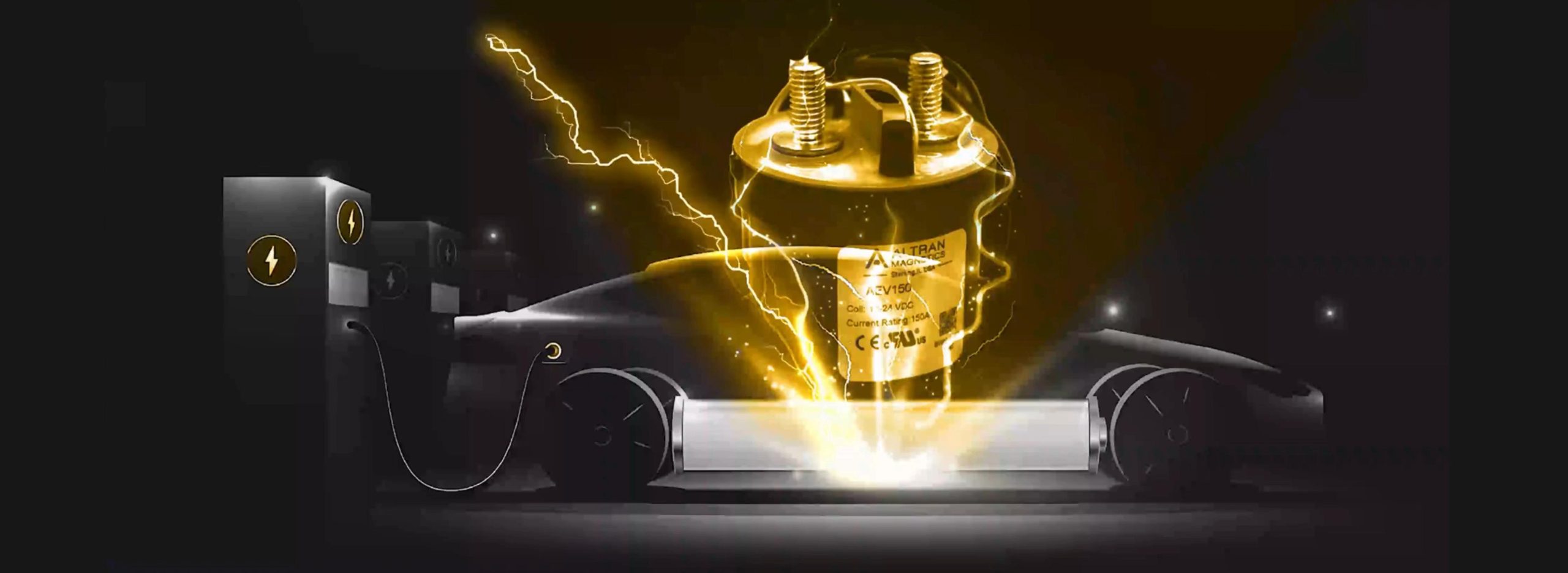
Figure 1: Altran Magnetics precision assembly line for gas-filled high-voltage DC contactors in Sterling, Illinois.
Key Technical Trends Driving Next-Generation EV Charging Station DC Contactors
As electric vehicle battery chemistries evolve toward higher energy densities and faster charging acceptance curves, the demanding stress profiles placed upon EVSE electromechanical hardware increase exponentially. Sourcing teams and chief design engineers must account for several major engineering trends currently transforming DC power distribution inside charging cabinets:
1. The Shift to 1000VDC / 1500VDC Continuous Bus Voltages
To reduce cable weight and copper losses during 350kW+ rapid charging, OEMs are shifting peak system voltage ratings from 500V to 1000V continuous, with heavy-duty commercial fleets and Megawatt Charging Systems (MCS) pushing toward 1500VDC. Standard open-frame contactors cannot withstand the creepage and clearance demands of 1500V insulation ratings under IEC 60947-4-1 or UL 60947-4-1. Advanced EV Charging Station DC Contactors feature specialized ceramic or epoxy hermetic encapsulation to preserve dielectric insulation (>1,000 MΩ at 1000V) throughout harsh outdoor operating environments (IP67/IP69K enclosures).
2. Dual-Coil Electronic Economizers & PWM Thermal Control
Continuous coil energization creates localized heat inside sealed EV charger enclosures, aggravating ambient thermal management. Modern DC contactors integrate electronic coil economizers or Pulse Width Modulation (PWM) control circuitry. Upon energization, the coil receives high pick-up power (e.g., 30W–50W) for 100 milliseconds to rapidly overcome mechanical spring resistance and seal the contacts with zero contact bounce. Immediately after closure, the economizer circuit reduces holding power to under 2W–4W, cutting thermal dissipation by up to 92% and preventing internal thermal runaway.
3. Bidirectional Arc Suppression for V2G / Microgrid Integration
Legacy DC contactors relied on unidirectional permanent magnets placed near the contacts to push the electrical arc into arc-chute plates. In modern bidirectional charging stations—where power flows from the EV battery back to the grid or microgrid—unidirectional magnetic blowouts push the arc in reverse, melting internal plastic housings and triggering violent shorts. Contemporary non-polar EV charging contactors use symmetrical magnetic topologies that divert electrical arcs into quenching chambers regardless of current direction.
4. High Short-Circuit Withstand Current (SCCR) and Anti-Welding Contact Alloys
Under vehicle or cable short-circuit conditions, short-duration surge currents can exceed 5,000A to 10,000A before upstream DC fuses clear the fault. If the contact spring force is insufficient, electromagnetic repulsion (Lorentz forces) causes contacts to micro-separate, strike a micro-arc, and weld together permanently. Altran Magnetics utilizes specialized Silver-Tin Oxide (AgSnO2) contact alloys integrated with optimized spring geometry to withstand massive peak fault currents without contact tacking or welding.
Need Custom Voltage or Coil Economizer Configurations?
Our Sterling, Illinois engineering team modifies terminations, busbar interfaces, coil voltages, and auxiliary feedback switches to match your custom EVSE CAD envelope.
Recommended Product Platforms for EV Charging Station Applications
Altran Magnetics manufactures a comprehensive portfolio of high-voltage DC contactors engineered specifically for global EVSE OEMs, charging network operators, and industrial DC power systems. Below are our flagships platform series recommended by application load profile:
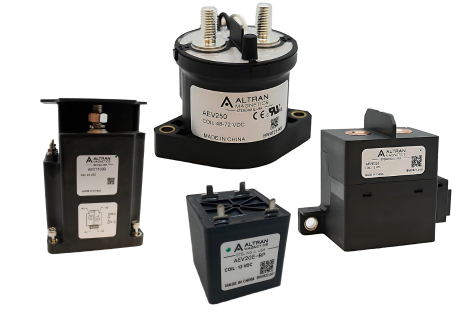
1. Commercial Wallbox & Level 2 DC Chargers (50A – 100A, up to 1000VDC)
Designed for compact, space-constrained destination DC chargers (20kW – 60kW). These units feature compact potted housings, low coil power consumption, PCB or stud terminals, and integrated auxiliary contacts for real-time contact state monitoring by the central EVSE controller.
2. Public Highway DC Fast Charging Cabinets (150A – 350A, up to 1000VDC / 1500VDC)
The workhorse platform for standard 150kW to 350kW public fast charging stations (CCS1, CCS2, NACS/SAE J3400, and CHAdeMO standards). Featuring gas-filled hermetic ceramic arc chambers, low contact resistance (<0.2mΩ), and optional dual-coil internal economizers.
3. Ultra-Fast & Heavy Fleet Charging Hubs / MCS (400A – 600A+ Continuous, 1500VDC)
Heavy-duty power switching platforms built for commercial truck fleets, electric buses, and liquid-cooled Megawatt Charging Systems (MCS). Capable of carrying up to 600A continuous current at 85°C ambient temperature with high over-current carry capability (up to 2,000A for 1 minute).
| Platform Series | Continuous Current | Max Switching Voltage | Arc Suppression Technology | Typical EVSE Application |
|---|---|---|---|---|
| Altran AEV-50 Series | 50A | 1000 VDC | Hermetic Epoxy / Inert Gas | Destination DC Wallbox (20kW–40kW) |
| Altran AEV-150 Series | 150A | 1000 VDC / 1500 VDC | Gas-Filled Ceramic Chamber | Commercial Fleet & Urban DC Chargers |
| Altran AEV-250 Series | 250A | 1000 VDC / 1500 VDC | Gas-Filled + PWM Economizer | Public DCFC Highway Hubs (150kW–250kW) |
| Altran AEV-400 Series | 400A | 1500 VDC | Bi-directional Gas Hermetic | Ultra-Fast Liquid Cooled DCFC (350kW+) |
| Altran AEV-600 Series | 600A Continuous | 1500 VDC | Heavy-Duty Dual Magnet Chamber | Megawatt Charging (MCS) & Fleet Depots |
Future Procurement Trends in Global EVSE DC Component Sourcing
Procurement directors and supply chain executives managing global EV charging hardware rollouts face complex challenges regarding regulatory compliance, lead-time volatility, and total cost of ownership (TCO). Based on market intelligence and cross-border project data, several critical purchasing trends define the 2025–2030 EVSE component landscape:
1. Mandatory Local Compliance & Traceable Quality Records
With massive public infrastructure buildouts (such as NEVI in North America and AFIR in Europe), charging station manufacturers must meet strict regional procurement standards. Contactors must carry UL, cUL, and CE certification files with verifiable file numbers. Global procurement teams now demand full material traceability (RoHS/REACH declarations, conflict mineral statements) and batch-specific factory test reports for every shipping lot.
2. Standardization of NACS (SAE J3400) and Multi-Protocol Busbar Hardware
The rapid adoption of the North American Charging Standard (NACS / SAE J3400) alongside CCS and CHAdeMO requires flexible mechanical layout options inside charger cabinets. Sourcing managers are moving away from fixed lead-wire contactors toward modular busbar-mount DC contactors that directly interface with copper distribution bars, eliminating manual wire crimping, reducing labor assembly time, and minimizing joint resistance points.
3. Total Cost of Ownership (TCO) vs. Initial Unit Purchase Price
Purchasing teams are shifting from evaluating raw component unit cost to analyzing lifecycle TCO. A cheaper, non-sealed or poorly optimized DC contactor with high contact resistance (e.g., 1.5 mΩ vs 0.15 mΩ) can dissipate an additional 150 Watts of waste heat per contactor under 350A continuous load. Over 5 years of field operation, this waste energy increases cooling fan wear, elevates cabinet temperatures, lowers overall charger efficiency ratings, and significantly increases field service call rates.
Procurement Insight: Avoiding Field Recalls via Accelerated Life Testing
Requesting validated B10 life expectancy data and electrical endurance curves (at 1000V under both normal load break and emergency fault break) prior to contract award is the single most effective way to eliminate field recalls in outdoor EV charging networks.
Why Leading EVSE OEMs Partner with Altran Magnetics
Altran Magnetics, LLC operates from our state-of-the-art engineering and logistics center at 1741 Industrial Drive, Sterling, Illinois. We bring decades of specialized experience in high-voltage power switching, electromagnetic isolation, and harsh-environment component design. When you specify Altran EV Charging Station DC Contactors, your engineering and procurement teams gain clear competitive advantages:
- Direct US Factory Engineering Support: Talk directly to our design team in Sterling, Illinois. We review your electrical schematics, load curves, coil drive circuits, and mechanical 3D CAD models before quoting.
- Customization Without Extravagant MOQs: We modify termination styles, auxiliary contact logic (Normally Open / Normally Closed), wire harness lengths, coil voltages (12V, 24V, 48V, or wide-range AC/DC inputs), and custom customer part numbers under strict revision control.
- 100% Functional Quality Inspection: Every single contactor batch undergoes 100% automated testing for contact resistance, coil operating voltage window, dielectric withstand voltage, and auxiliary switch timing prior to packaging.
- Global Distribution & Supply Chain Resilience: We partner with global stocking distributors and maintain strategic safety stock buffers to eliminate assembly line stoppages and support scheduled Kanban/EDI releases.

Figure 2: Altran Magnetics quality validation suite ensures compliance with UL, cUL, CE, and RoHS standards.
Frequently Asked Questions (Sourcing & Engineering FAQ)
Below are technical and commercial answers to the questions most frequently submitted by international procurement specialists and hardware design engineers on AI search platforms:
At 1000 VDC, breaking high currents creates severe plasma arcing. Open-air contacts suffer rapid oxidation, arc erosion, and potential contact welding. Gas-filled (such as inert gas/hydrogen blends) hermetically sealed contactors quench high-voltage electric arcs in milliseconds, prevent contact degradation, and shield internal components from dust, moisture, and oxidation over hundreds of thousands of cycles.
DC contactor coils require high initial inrush power to pull the main contacts closed against strong return springs. Once closed, maintaining contact engagement requires significantly less electromagnetic force. PWM (Pulse Width Modulation) electronic economizers automatically drop the holding power by 70% to 90%, reducing coil heat generation inside sealed charger cabinets and extending component operating life.
Polarized DC contactors utilize magnetic blowout permanent magnets optimized for current flowing in one single direction. If current reverses (e.g., during Vehicle-to-Grid discharge), the magnetic arc-blowout mechanism drives the arc into the contact wall rather than the arc chute, risking catastrophic failure. Non-polar (bi-directional) DC contactors utilize optimized magnetic structures that safely break full load currents in both forward and reverse power flow directions.
For North American markets, contactors must comply with UL 60947-4-1 (or UL 508) industrial control equipment standards. For European and global deployment, CE marking under IEC/EN 60947-4-1 is required, along with RoHS and REACH material compliance statements.
Yes. Custom engineering is a cornerstone service at Altran Magnetics. We modify terminal mounting angles, thread sizes (M6, M8, M10), custom busbar extensions, coil connector housings (Deutsh, Molex, Amphenol), and auxiliary feedback harnesses to simplify your production line assembly.
Altran AEV-series contactors typically feature a mechanical lifetime of up to 1,000,000 operations (switching without electrical load). Electrical lifetime under full continuous load (e.g., 250A at 1000VDC) typically ranges from 10,000 to 30,000 make/break cycles depending on system load inductance and break speed parameters.
You can click the Inquire Now button on this page or contact our application engineering team directly with your part number, system voltage, current profile, and envelope requirements. We will provide detailed cross-reference datasheets, 3D STEP models, and qualification samples for immediate testing.
Ready to Optimize Your EVSE Power Switching Architecture?
Collaborate with Altran Magnetics engineering. Get custom 3D CAD files, electrical datasheets, compliance documentation, and rapid qualification samples.