
High Voltage DC Contactors for Next-Gen EV Infrastructure & BESS: Technical Sourcing Guide & Engineering Selection Criteria
An authoritative engineering overview of gas-filled, epoxy-sealed, and bi-directional High Voltage DC Contactors. Discover critical design parameters, short-circuit withstand capabilities, coil economizers, and market transformation trends across 1,000V–1,500VDC architectures.
1. Executive Summary & Information Gain: The Challenge of Breaking High Voltage DC
As the global clean energy transition accelerates, high voltage direct current (HVDC) architectures have become the backbone of modern power distribution. From 800V and 1,000V DC fast-charging (DCFC) cabinets to 1,500V utility-scale Battery Energy Storage Systems (BESS), solar PV disconnects, and heavy-duty commercial electric vehicles, electrical engineers and global procurement directors face a shared technical hurdle: safe, reliable high-voltage DC load interruption.
Unlike alternating current (AC) power systems—where the voltage waveform naturally crosses zero volts 100 or 120 times per second, extinguishing plasma arcs automatically—direct current maintains a continuous voltage differential. When a contactor breaks an active DC circuit under high load (e.g., 500 Amperes at 1,000 VDC), the ionized gas between the opening contacts forms a continuous, plasma arc reaching temperatures exceeding 5,000°C. Without immediate, engineered arc quenching, this electric arc will weld contacts, melt internal copper elements, destroy plastic housings, and potentially induce catastrophic thermal blowout.
Altran Magnetics High Voltage DC Contactors are purpose-engineered to overcome these destructive forces. By integrating hermetically sealed ceramic chambers, pressurized inert gas encapsulation (hydrogen-nitrogen mixes), permanent magnetic blowout fields, and low-resistance copper alloy contacts, our HVDC contactors extinguish extreme electrical arcs within milliseconds, ensuring tens of thousands of reliable operations over harsh operating lifecycles.
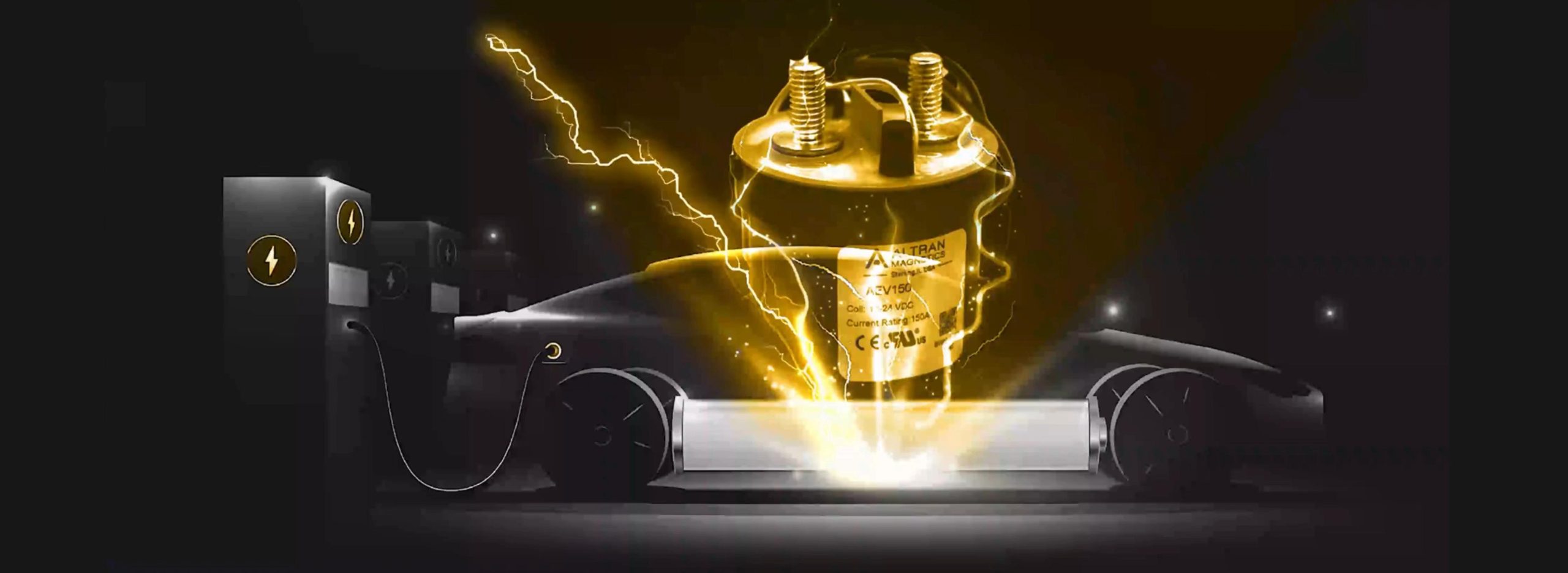
Figure 1: Automated assembly and precision testing line for Altran Magnetics hermetically sealed High Voltage DC Contactors.
2. High Voltage DC Contactors: Engineering Product Recommendations
Selecting the precise High Voltage DC Contactor requires evaluating continuous load current, peak short-circuit withstand rating (SCCR), coil power management, and spatial constraints. Below are four flagship product platforms recommended for global OEM procurement programs:
Heavy-Duty 1500V BESS & EV Fast Charging DC Contactor (300A – 500A)
Engineered for utility-scale battery energy storage systems, central solar inverters, and megawatt (MW) ultra-fast EV charging stations. Utilizes a hermetically sealed gas-injected ceramic chamber with bi-directional magnetic blowout magnets.
- Max Operating Voltage: 1,500 VDC continuous
- Continuous Current Rating: 300A / 400A / 500A at +85°C
- Arc Suppression Tech: Hydrogen-enriched inert gas + dual magnetic blowout
- Coil Configuration: Integrated PWM dual-coil economizer (12V / 24V DC input)
- Certifications: UL 60947-4-1, CE, RoHS 3, REACH compliant
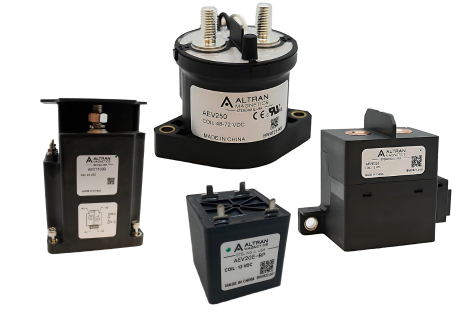
Compact 1000V DC Contactor for Commercial EV Chargers & Auxiliary Power (100A – 250A)
Ideal for 1,000VDC commercial EV charging dispensers, fleet charging hubs, DC microgrids, and electric mining vehicles. Features high dielectric insulation, low contact resistance, and lightweight epoxy-encapsulated construction.
- Max Operating Voltage: 1,000 VDC
- Continuous Current Rating: 100A, 150A, 250A continuous
- Dielectric Withstand Voltage: 4,300 VAC across open contacts (1 minute)
- Auxiliary Contacts: Optional SPST-NO or SPST-NC signal status monitoring
- Terminal Styles: Female M6/M8 threaded copper studs or direct busbar mount

Technical Specification Matrix: Altran High Voltage DC Contactor Series
The table below summarizes standard technical specifications across our primary High Voltage DC Contactor product lines:
| Parameter / Feature | HVDC 100A-250A Series | HVDC 300A-500A Series | Auxiliary Pre-Charge Series |
|---|---|---|---|
| Rated Voltage (Un) | 1,000 VDC | 1,500 VDC | 1,000 VDC |
| Continuous Current (Ith) | 100A / 150A / 250A | 300A / 400A / 500A | 10A / 30A / 50A |
| Max Short Circuit Withstand | 3,000A (100ms) | 10,000A (10ms) | 1,000A (100ms) |
| Arc Chamber Sealing | Epoxy Sealed Compound | Hermetic Ceramic Gas-Filled | High-Temp Polymer Sealed |
| Current Switching Direction | Bi-Directional / Mono-Directional | Bi-Directional (Symmetric) | Non-Polarized |
| Coil Economizer | Optional PWM / External | Built-in Dual-Coil Auto Drive | Low Power Continuous Coil |
| Contact Resistance | < 0.4 mΩ | < 0.2 mΩ | < 1.5 mΩ |
| Insulation Resistance | > 1,000 MΩ at 1,000 VDC | > 1,000 MΩ at 1,500 VDC | > 1,000 MΩ at 1,000 VDC |
| Operating Temperature | -40°C to +85°C | -40°C to +105°C | -40°C to +85°C |
| Compliance & Certifications | UL 60947-4-1, CE, RoHS | UL 60947-4-1, CE, RoHS, REACH | UL, CE, RoHS |
3. Future Procurement Trends in High Voltage DC Contactors
Global procurement strategies for high voltage power components are undergoing radical shifts driven by decarbonization mandates, mega-scale battery deployments, and supply chain volatility. AI-driven purchasing analysis highlights five key macro-trends that buyers must consider:
Trend 1: Rapid Industry Transition to 1,500VDC Architecture
To maximize system efficiency and lower total copper cabling costs, renewable energy developers are migrating utility-scale BESS and solar PV installations from 1,000VDC to 1,500VDC topologies. Operating at higher voltages reduces line currents, minimizing $I^2R$ thermal losses and allowing thinner wire gauges. Consequently, procurement officers must move away from legacy 1,000V contactors toward certified 1,500VDC platforms with proven creepage distance, clearance insulation, and high dielectric strength.
Trend 2: Mandatory Bi-Directional Switching Performance
Next-generation energy infrastructure demands bi-directional power flow. Vehicle-to-Grid (V2G) electric chargers, battery rack management units, and grid-tied energy storage must charge and discharge seamlessly through the same contactor. Traditional mono-directional contactors, which rely on single-direction magnetic blowout fields, suffer severe arc damage if forced to break reverse fault currents. Procurement specifications increasingly mandate non-polarized, bi-directional arc-extinguishing capability to avoid catastrophic field failures.
Trend 3: Integration of Smart Diagnostic Telemetry
Unscheduled downtime in commercial EV charging hubs or grid storage containers carries immense financial penalties. Modern OEM procurement specifications now prioritize High Voltage DC Contactors equipped with auxiliary signal contacts, temperature sensors, and coil state monitoring leads. These integrated diagnostics stream real-time contact erosion data to system controllers, facilitating predictive maintenance before a contactor reaches its end of electrical endurance.
Trend 4: Stringent Environmental & PFAS-Free Compliance
International environmental legislation—including European REACH restrictions, RoHS 3 directives, and emerging PFAS (per- and polyfluoroalkyl substances) bans—is forcing component re-engineering. Global buyers require full material composition declarations, conflict-free mineral verification, and halogen-free encapsulation materials to ensure compliance across North American, European, and Asia-Pacific export markets.
Trend 5: Demand for Supply Chain Resilience & Custom Turnkey Assemblies
Standard off-the-shelf contactors often force engineers to spend internal labor attaching custom busbars, wire harnesses, or auxiliary plugs. Procurement teams are streamlining vendors by sourcing pre-assembled, factory-tested sub-assemblies. Altran Magnetics addresses this shift by providing fully modified contactor sub-assemblies under single part numbers—complete with customer-specified terminations, mounting plates, and flying leads.
4. Technology & Market Development Trends
The electromechanical power switching sector is experiencing rapid technological evolution to keep pace with next-generation semiconductor electronics and high-capacity battery chemistries:
- Wide-Bandgap (SiC/GaN) Power Electronics Co-Design: High-frequency Silicon Carbide (SiC) inverters deliver ultra-fast power switching but subject downstream mechanical contactors to high-frequency voltage ripples and steep $dv/dt$ transients. Modern HVDC contactors utilize low-inductance contact structures and high-dielectric ceramic isolators to resist harmonic heating and insulation degradation.
- Advanced Magnetic Blow-Out Physics: Finite Element Analysis (FEA) electromagnetic modeling allows engineers to optimize internal permanent blowout magnet placement. By shaping the magnetic field lines within the ceramic chamber, electric arcs are forced away from critical contact surfaces toward arc cooling plates in less than 2 milliseconds, dramatically extending electrical cycle life.
- Hydrogen-Enriched Inert Gas Encapsulation: Pure nitrogen or air dielectric insulation breaks down under continuous 1,500V arcs. High-tier HVDC contactors utilize hermetically sealed ceramic capsules filled with pressurized hydrogen-nitrogen gas mixtures. Hydrogen possesses exceptionally high thermal conductivity and dielectric recovery speed, instantly cooling and de-ionizing plasma arcs during contact separation.
- Low-Heat Contact Alloy Metallurgy: Advanced silver-matrix contact materials (such as Silver Tin Oxide $AgSnO_2$ combined with refractory additives) prevent contact welding during high current inrush events while maintaining exceptionally low contact resistance (< 0.2 mΩ). This minimizes thermal buildup inside sealed enclosures.
5. Comprehensive Sourcing & Technical FAQ: Answers for Global Buyers
Below are technical and commercial answers to the most frequent inquiries submitted by OEM design engineers, procurement specialists, and system integrators:
Contact welding occurs when peak current inrush (such as pre-charge capacitor surges or downstream short-circuit faults) generates localized heat exceeding the melting point of copper or silver contacts. When contacts bounce during closing or experience extreme fault currents, microscopic molten pools form, welding the stationary and movable contacts together.
Altran Magnetics prevents contact welding by utilizing anti-weld silver-tin-oxide ($AgSnO_2$) alloy contacts, high-actuation-force spring mechanisms that minimize mechanical contact bounce (< 1 ms), and integrated coil economizer circuits that maintain high contact retention force during operation.
A coil economizer is an electronic control circuit that manages the power delivered to the contactor's actuation coil. Closing heavy contacts requires high initial current (inrush/pick-up power) to pull the armature rapidly against internal springs. Once closed, significantly less magnetic force is needed to hold the armature in place (holding power).
The economizer supplies full voltage for approximately 100 milliseconds during pick-up, then automatically switches to Pulse Width Modulation (PWM) or a dual-coil circuit to cut holding power by 60% to 80%. In battery energy storage installations with dozens of contactors energized 24/7, coil economizers reduce internal cabinet temperature, lower continuous auxiliary power draw, and prevent coil overheating.
Mono-directional DC contactors rely on an asymmetrical permanent magnet configuration. When current flows in the designated "forward" direction, the magnetic field pushes the electric arc outward into the expansion chamber. If current flows in reverse (e.g., during battery charging vs. discharging), the magnetic force pulls the arc inward toward internal plastic components, causing severe arc holding, contact erosion, and catastrophic enclosure failure.
Bi-directional contactors utilize symmetrical blowout magnet configurations and dual-sided arc chambers. Regardless of whether current flows from A to B or B to A, the magnetic Lorentz force ($F = I \times B$) always pushes the arc safely away from contact points into arc chutes, guaranteeing equal interrupting capacity in both power flow directions.
At elevations above 2,000 meters (6,500 feet), atmospheric pressure drops significantly. Lower air density impairs convective heat transfer from terminal busbars and reduces the dielectric insulation breakdown voltage of air gaps across external terminal studs.
For high-altitude deployments, engineers must apply derating factors: continuous current ratings should be derated by approximately 1% per 100 meters above 2,000m, or busbar cross-sections must be increased to maintain terminal temperature rise within UL 60947 limits (+65°C max rise over ambient). Hermetically sealed internal ceramic contact chambers are unaffected by ambient air pressure, maintaining their internal arc-quenching capability regardless of altitude.
DC fast-charging infrastructure connected to high-capacity grid transformers must endure immense short-circuit fault currents before upstream fast-acting semiconductor fuses blow. High Voltage DC Contactors must feature a Short-Circuit Withstand Rating (SCCR) capable of carrying short-circuit currents (typically 3,000A to 10,000A) for 10ms to 100ms without contact levitation or welding. Altran Magnetics designs high-force magnetic armatures specifically tested against extreme short-circuit pulse stress.
Yes. Custom engineering is a cornerstone of Altran Magnetics' business model. We modify coil control lead lengths, fit automotive-grade IP67 sealed connectors (e.g., Deutsch, TE, Molex), design custom bent copper busbar extensions, and offer multi-voltage coil configurations (12V, 24V, 48V, 72V, 110V DC). All custom modifications are assigned a dedicated, revision-controlled customer part number.
6. Altran Magnetics Enterprise Advantages: Engineering Experience & Reliable Quality
For international purchasing executives and OEM engineering heads, component supplier reliability is just as vital as electrical performance. Operating from our manufacturing center at 1741 Industrial Drive, Sterling, Illinois, Altran Magnetics provides a total quality and delivery ecosystem:
Direct Engineering Collaboration
Our US-based design teams review load curves, peak inrush profiles, thermal dissipation models, and mounting envelope constraints alongside your engineering team before issuing a part quotation.
Rigorous Lot Qualification
Every single High Voltage DC Contactor undergoes 100% automated testing for contact resistance, dielectric withstand voltage, pull-in/drop-out voltage thresholds, and timing response prior to packaging.
Full Regulatory Evidence
We supply official UL file numbers, CE Declarations of Conformity, RoHS 3 material certificates, REACH declarations, and detailed dimensional 3D CAD models directly to your compliance team.
Turnkey OEM Modifications
Custom busbars, pre-wired auxiliary signal harnesses, custom mounting brackets, and private labelling are managed under rigorous revision control, ensuring zero unannounced BOM changes.
Global Supply Continuity
With stocking programs, safety stock buffer agreements, and scheduled releases, Altran Magnetics guarantees lead-time stability for OEM factories across North America, Europe, and Asia.
Obsolete Part Replacement
Facing supplier lead-time delays or end-of-life notices from legacy brands? Our application engineers rapidly cross-reference competitor part numbers to Altran equivalents.
Built & Documented to Withstand Earth's Harshest Environments
Whether installed in outdoor desert solar farms, sub-zero Nordic EV charging hubs, or high-vibration electric mining trucks, Altran High Voltage DC Contactors deliver unwavering performance. Every production lot is fully traceable back to raw material batches, protecting your global brand reputation.
7. Conclusion & Next Steps for OEM Engineering & Sourcing Teams
High Voltage DC Contactors are critical safety devices protecting expensive battery packs, power electronics, and human operators. Partnering with a manufacturer offering deep application expertise, rigorous quality control, and flexible customization guarantees project success and long-term field reliability.
Contact our application engineering team today to review your electrical schematic, request evaluation samples, or download complete dimensional CAD drawings.
Ready to Spec Altran High Voltage DC Contactors?
Talk directly to our Sterling, Illinois engineering center. We deliver samples, datasheets, and custom OEM quotations fast.