We Design. We Build. We Deliver.
Precision-engineered electromagnetic and epoxy-sealed DC/AC contactors optimized for EV charging, battery energy storage, HVAC, and industrial automation networks across Kansai and global export channels.
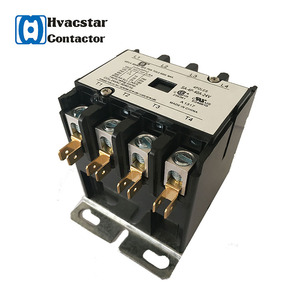
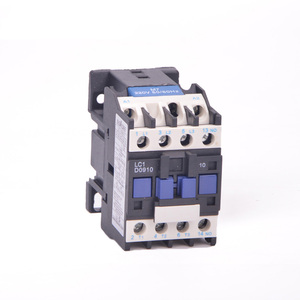
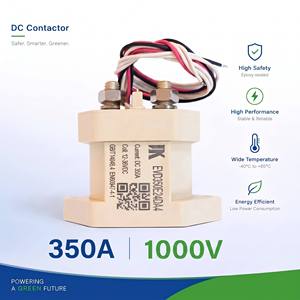
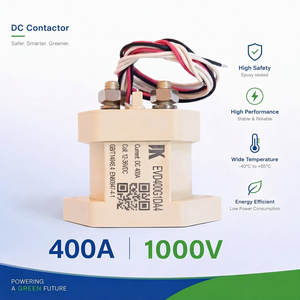
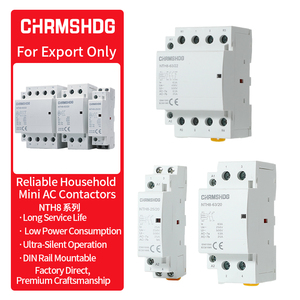
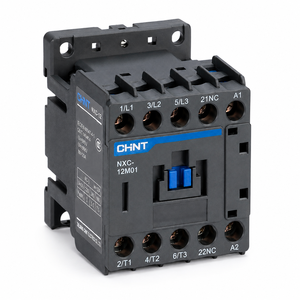
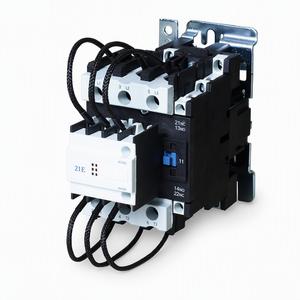
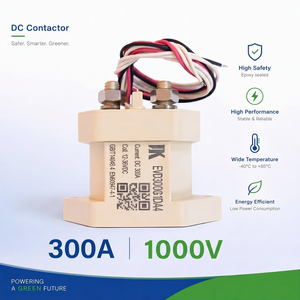
Osaka has long served as the industrial beating heart of Japan's Hanshin Industrial Region, establishing itself as a global epicentre for high-precision electromechanical engineering, industrial power electronics, and advanced energy storage systems. As the world transitions toward high-voltage direct current (HVDC) architectures—ranging from megawatt-scale Battery Energy Storage Systems (BESS) to ultra-fast EV charging hubs (350kW+)—the demand for robust, arc-suppressed High Voltage (HV) Contactors has grown exponentially.
This technical whitepaper examines the core engineering principles, material science innovations, and structural designs defining top-tier HV contactor manufacturing in Osaka. Whether switching high-voltage AC loads for heavy industrial automation or isolating 1,000V+ DC batteries under extreme inrush conditions, understanding the dynamics of arc quenching, contact erosion, and hermetic gas sealing is paramount for systems design engineers and global procurement directors.
Technical Insight: Unlike alternating current (AC) circuits, direct current (DC) lacks a natural zero-crossing point. Breaking a high-voltage DC load generates a continuous, destructive plasma arc. Advanced Osaka-engineered HV contactors utilize hermetically sealed, inert gas-filled chambers combined with powerful magnetic blowouts to stretch, cool, and extinguish DC arcs within milliseconds.
When contact tips separate under load, the dielectric breakdown of the surrounding gas creates an ionized conductive channel—an electrical arc reaching temperatures exceeding 6,000 K. In high-power applications (e.g., 400A at 1,000V DC), uncontained arcing results in contact welding, housing carbonization, and catastrophic system failure.
Top HV contactor manufacturers in Osaka solve this through three synergistic engineering techniques:
Holding heavy electromagnetic actuators in a closed state requires substantial initial pull-in power. However, continuous high-current coil excitation generates excessive parasitic heat within sealed control cabinets. Industry-leading Osaka manufacturers implement integrated electronic coil economizers. Upon pull-in, the economizer circuit automatically throttles the coil drive power by up to 80-90% using Pulse Width Modulation (PWM) or dual-winding switching, maintaining firm contact pressure with minimal watt loss (typically <3.5W hold power).
Evaluating structural and performance trade-offs across conventional open-frame contactors, vacuum interrupters, and modern gas-filled epoxy sealed contactors.
| Technical Characteristic | Conventional Air-Break AC Contactor | Vacuum Interrupter Contactor | Epoxy-Sealed Gas-Filled HV DC Contactor |
|---|---|---|---|
| Operating Voltage Range | 100V – 690V AC | 1kV – 12kV AC / DC | 12V – 1,500V DC / 480V AC |
| Arc Quenching Medium | Atmospheric Air / Arc Chute | High Vacuum (< 10⁻⁴ Pa) | Pressurized Inert Gas (H₂/N₂ Mix) |
| Contact Oxidation Risk | High (Exposed to ambient air/humidity) | Zero (Vacuum sealed) | Zero (Hermetically gas sealed) |
| Polarity Sensitivity | Non-Polarized | Non-Polarized | Bi-directional or Polarized Options |
| Size & Density Ratio | Large / Heavy footprint | Very Large / Substation grade | Ultra-compact / High power-density |
| Environmental Immunity | Low (Dust/Salt mist sensitive) | High | IP67 Sealed / Extreme harsh environments |
Custom-engineered high-voltage switching solutions tailored to Kansai's key industrial clusters, smart city initiatives, and maritime green ports.
Deployment in grid-scale battery storage facilities operated across Osaka and Hyogo prefectures. HV DC contactors serve as main circuit disconnects and pre-charge relays, capable of breaking 1000V/500A fault currents during grid stabilization cycles.
Integrated into 350kW+ DC Fast Chargers along the Meishin and Hanshin Expressways. Features low contact resistance (<0.05mΩ) to prevent thermal runaway during continuous high-amp fast-charging sessions.
Ruggedized 3-pole AC and DC magnetic contactors fitted within heavy machinery, CNC metalworking centers, and automated guided vehicles (AGVs) operating in Sakai's coastal industrial zone.
Epoxy-sealed, IP67-rated high-voltage switching components customized for electric tugboats, hybrid ferries, and shore-to-ship power connection systems, completely impervious to saline moisture corrosion.
The industrial landscape in Western Japan is undergoing a rapid transition under the Osaka Prefectural Government’s Green Transformation (GX) roadmap. Industrial equipment OEMs are aggressively moving from standard 400V DC bus architectures to 1,000V and 1,500V DC systems. Higher operating voltages reduce current levels for identical power throughput, enabling thinner copper cabling, lighter wire harnesses, and lower overall system thermal dissipation.
However, 1,500V DC switching introduces severe electrical stress. Dielectric insulation strength must exceed 2,500V AC withstand for 1 minute, and creepage distances must strictly adhere to IEC 60947-4-1 standards. Osaka-based exporters are leading this shift by developing mini-sized contactors capable of handling 500A continuous current while fitting inside compact NEMA and IP-rated enclosures.
Delivering high-reliability component engineering backed by stringent Japanese quality management systems, full international compliance, and total BOM customization.
Every single unit undergoes automated dielectric withstand testing, contact resistance measurement, coil pull-in/drop-out voltage validation, and hermetic leak checks before packing.
Fully compliant with UL, cUL, CE, CSA, CCC, and RoHS/REACH directives. EMI filter lines validated against CISPR and IEC/EN 61000 standards to ensure frictionless global market entry.
Tailored busbar geometry, custom auxiliary contact configurations, specialized coil operating voltages (12V, 24V, 48V, 110V, 220V), and private-label packaging with full revision control.
Clear answers to critical procurement, engineering compatibility, and export logistics questions from international buyers.
Our AC contactors feature dual-frequency rated coils (50Hz/60Hz) engineered to operate flawlessly whether deployed in Western Japan (Osaka/Kansai, 60Hz) or Eastern Japan (Tokyo/Kanto, 50Hz). DC contactors operate independently of grid frequency, relying solely on DC coil control voltages or wide-input electronic coil drivers.
Under rated continuous load (1000V DC at 350A), our epoxy-sealed gas contactors achieve over 10,000 to 30,000 electrical operations depending on circuit inductance ($\text{L/R}$ ratio). Under mechanical no-load test conditions, service life exceeds 1,000,000 operations.
Yes. We offer non-polarized bidirectional HV DC contactor models specifically designed for energy storage systems (BESS) and Vehicle-to-Grid (V2G) fast chargers, utilizing symmetrical magnetic blowout arrangements to extinguish arcs effectively regardless of current direction.
Every export shipment includes comprehensive technical and customs documentation: Certificate of Origin (COO), Commercial Invoice & Packing List with accurate HS Code classifications (e.g., 8536.49), RoHS/REACH compliance declarations, UL/CE test certificates, and individual batch test inspection reports.
Standard prototype modifications (such as custom threaded stud orientations, extended copper busbars, or specialized wiring harnesses) are typically delivered within 2 to 3 weeks. Mass production runs are completed within 4 to 6 weeks following sample sign-off.