We Design. We Build. We Deliver.
Engineered for high-voltage DC fast charging hubs, severe winter thermal resilience, and heavy-duty power switching in Moscow and the Eurasian Economic Union.
The Metropolitan Area of Moscow is currently executing one of Europe’s most aggressive urban electrification mandates under the flagship "Energia Moskvy" (Энергия Москвы) project and the expansion of the Mosgortrans municipal electric bus (Elektrobus) fleet. Operating within an urban infrastructure spanning the Ring Road (MKAD), Third Transport Ring (TTK), and radial highways, Moscow's EV charging operators require direct current (DC) fast-charging equipment (DCFC) capable of ultra-rapid power transfer ranging from 150 kW up to 480 kW.
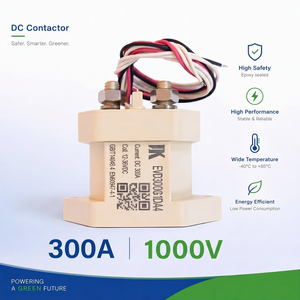
At the mechanical and electrical heart of these high-power DC fast chargers—utilizing dual CCS2 and GB/T charging standard architectures—lies the High Voltage DC Contactor. Unlike alternating current (AC) circuits where current naturally crosses zero twice per cycle to extinguish arcs, high-voltage DC currents maintain continuous ionization during contact separation. In Moscow's severe continental sub-zero winters, where temperatures frequently plummet to -30°C to -40°C, the physical dynamics of DC switching change radically.
Specifying high-voltage DC contactors for Moscow’s municipal chargers, commercial fleet hubs, and highway corridors requires rigorous engineering. Devices must prevent contact welding, withstand dramatic ambient thermal shocks, resist internal condensation from sub-zero freeze-thaw cycles, and strictly comply with Eurasian Economic Union (EAEU) technical regulations (TR CU 004/2011 and TR CU 020/2011).
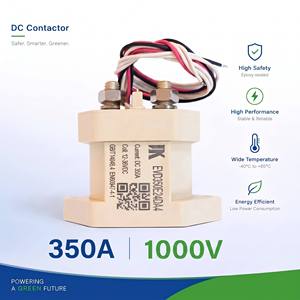
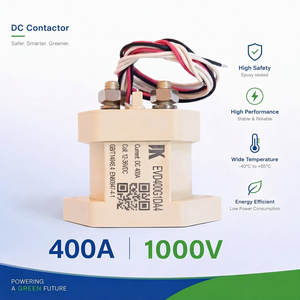
Under -30°C operating conditions, standard industrial contactor elastomer seals embrittle, leading to dielectric gas leakage and catastrophic contact arc flashover. Advanced gas-filled (Hermetically Sealed Hydrogen/Nitrogen mix) or high-grade epoxy-encapsulated DC contactors are mandatory to preserve dielectric integrity and sub-milliohm contact resistance across 500,000 operational cycles.
A comparative engineering audit evaluating global manufacturers serving the Russian and EAEU EV charging infrastructure market based on technical capability, cold-climate thermal ratings, and certification compliance.
| Manufacturer | Origin / Hub | Max DC Voltage | Continuous Current | Arc Isolation Tech | EAC / Cold Rating |
|---|---|---|---|---|---|
| Altran Magnetics | USA / Global | 1,500 VDC | 50 A – 500 A | Gas-Filled Hermetic / Epoxy | -40°C Compliant |
| TE Connectivity (Kilovac) | USA / Europe | 1,000 VDC | 100 A – 500 A | Hermetic Ceramic Chamber | Industrial Grade |
| Sensata Technologies (Gigavac) | USA | 1,500 VDC | 50 A – 600 A | Hermetic Gas Filled | Sub-Zero Rated |
| Albright International | UK | 1,000 VDC | 80 A – 500 A | Open Frame Blowout Magnets | Requires Cabinet Heater |
| Chint Electrics | China | 1,000 VDC | 50 A – 400 A | Epoxy Sealed Arc Chute | EAC Certified |
| ABB Electrification | Switzerland | 1,000 VDC | 100 A – 400 A | Magnetic Blowout Chamber | Standard European |
| Schneider Electric | France | 1,000 VDC | 60 A – 350 A | Vacuum & Gas Chamber | EAC Available |
| TDK Electronics (Epcos) | Germany / Japan | 1,000 VDC | 20 A – 300 A | Hermetically Sealed H2 | High Thermal Range |
| Eaton Electrical | USA / Europe | 1,000 VDC | 100 A – 400 A | Solid State / Hybrid Arc Break | Industrial Rated |
| Hongfa Electro-acoustic | China | 1,000 VDC | 50 A – 350 A | Epoxy Sealed Ceramic | EAC Certified |
To interrupt 1,000V+ DC arcs without contact erosion, internal contactor chambers are injected with pressurized electronegative gases (such as Hydrogen/Nitrogen blends). This gas mix exhibits superior thermal conductivity and dielectric breakdown strength, rapidly cooling plasma arcs in under 5 milliseconds even during emergency shutdown under full load.
Continuous coil energization generates parasitic heat inside sealed EV charging cabinets. Advanced DC contactors incorporate dual-coil or pulse-width-modulated (PWM) electronic economizers. After initial high-inrush pick-up (100ms), current drops to low holding power (under 2W), minimizing thermal dissipation inside Moscow outdoor enclosures during long charge sessions.
At -30°C ambient temperatures, standard silver-alloy contacts can suffer from micro-fractures or increased initial contact resistance if thermal expansion coefficients are mismatched. Premium contactors utilize oxygen-free copper busbars coated with silver-nickel alloys, maintaining ultra-low contact resistance (<0.3 mΩ) to prevent localized runaway Joule heating.
Deployment strategies tailored to regional urban grid dynamics, municipal charging networks, and extreme weather installation requirements.
Moscow’s electric bus network uses roof-mounted pantographs fed by 300kW–450kW ultra-fast DC stations located at transit loops (e.g., VDNKh, Sokolniki, and Polyarnaya hubs). Contactors must endure up to 150 automated plug-in cycle breaks per day, switching 500A continuously under harsh atmospheric moisture and vibration from nearby rail tracks.
Located along the Moscow Ring Road (MKAD) and major federal highways (M-11 Neva, M-4 Don), high-power multi-standard charging stations (GB/T & CCS2 dual guns) operate at 800V–1000V DC. Bi-directional gas-sealed contactors ensure full short-circuit isolation, protecting station power electronics against vehicle-side battery short circuits.
In subterranean parking complexes within Moscow City (Presnensky District) and residential towers, strict fire safety laws demand zero toxic off-gassing and silent operational switching. Epoxy-encapsulated contactors with low acoustic signature offer safe, zero-emission DC isolation in confined urban spaces.
Supplying electromechanical switching components to Moscow-based EV charger original equipment manufacturers (OEMs) and turnkey station integrators requires strict alignment with Eurasian Economic Union regulatory frameworks:
Moreover, local engineering trends in Moscow show a rapid shift toward liquid-cooled charging cables and higher DC bus voltages (800V to 1000V architecture). This migration reduces cable weight while maintaining rapid charge times, demanding that internal DC contactors provide high break capacity without physical volume inflation.
We Design. We Build. We Deliver. OEM-level engineering assistance from schematics to volume delivery.
We review your schematic load profiles, peak inrush spikes, ambient temperature envelope, and mechanical dimensions prior to quote issuance. Customized busbar orientation, flying leads, and auxiliary contact configuration come standard.
Every shipment includes complete material compliance declarations (UL, cUL, CE, RoHS, REACH) along with 100% factory lot testing data for contact resistance, dielectric withstand, and coil timing characteristics.
With authorized international distribution networks and direct factory engineering support from Sterling, Illinois, we ensure scheduled buffer stock, rapid replacement sampling, and uninterrupted global production logistics.
Technical and procurement answers for Russian power system designers and EV charger procurement teams.
Gas-filled contactors utilize an inert gas mixture (primarily Hydrogen/Nitrogen) under pressure within a ceramic hermetic chamber. Unlike air-filled open-frame contactors, cold ambient temperatures do not cause internal moisture condensation or atmospheric density drops that lead to sustained arcing. The gas rapidly quenches electron plasma upon contact separation, keeping contact erosion minimal and preventing micro-welding even under severe cold-start inrush currents.
Modern DC fast chargers supporting Vehicle-to-Grid (V2G) and smart grid interaction require contactors that can interrupt high-voltage direct current regardless of polarity flow. Bi-directional DC contactors utilize optimized magnetic blowout geometries that push arc plasma away from contacts in both forward and reverse current flow directions, ensuring safe isolation under all charging and discharge scenarios.
Yes. Product lines designed for high-voltage DC switching are manufactured to international standards aligned with UL, cUL, CE, and EAEU TR CU technical directives. Full test documentation, datasheets, dielectric verification reports, and CE/UL compliance declarations are supplied with qualification sample lots to facilitate localized EAC certification by regional integrators.
In sealed outdoor charging cabinets operating in extreme seasonal temperatures, internal heat accumulation must be strictly controlled. An economizer module allows the contactor coil to pull high initial power (e.g., 30W) for 100ms to close the contacts firmly, then automatically switches to a low holding power state (<2W). This reduces continuous heat generation inside the cabinet by up to 90%, preventing thermal degradation of surrounding sensitive control microelectronics.
Standard DC contactors offer auxiliary coil driver options including 12 VDC, 24 VDC, and 48 VDC control inputs. Custom coil winding configurations, integrated flywheel diodes, and custom wiring harness terminations are available upon request to directly interface with your station's PLC or main power control board.
Yes. Our engineering application team regularly reviews third-party part numbers, electrical specifications, mounting footprints, and pinouts. We provide direct functional equivalents or recommended upgrades, highlighting any dimensional adjustments needed so your engineering team can maintain uninterrupted production schedules.