We Design. We Build. We Deliver.
Explore our export-ready power switching platforms engineered for solar, HVAC, battery storage, and automation infrastructure across Australia.
Australia presents one of the most demanding operational environments in the world for low-voltage switchgear, solar isolators, and high-voltage direct current (HVDC) disconnect switches. With aggressive targets for renewable integration, rapid expansion of residential and commercial solar PV systems, and large-scale deployment of Battery Energy Storage Systems (BESS), reliable circuit isolation is paramount to operational safety and asset longevity.
As a specialized OEM/ODM Disconnect Switch Manufacturer & Supplier serving the Australia market, our engineering architecture is tailored around the stringent regulatory framework set by Standards Australia and the Clean Energy Council (CEC). Primary among these compliance benchmarks is AS/NZS 60947.3 (Low-voltage switchgear and controlgear - Switches, disconnectors, switch-disconnectors and fuse-combination units), alongside the AS/NZS 3000 Wiring Rules and AS/NZS 5139 for battery system safety.
Technical Insight for Australian Procurement: Unlike traditional AC switching, interrupting direct current (DC) arcs requires active arc-extinguishing mechanisms. Under high ambient temperatures—frequently exceeding 45°C in the Australian Outback—thermal de-rating must be calculated precisely to prevent thermal runaway and contact welding inside rooftop DC isolator enclosures.
Australian outdoor installations face intense solar radiation. Our OEM disconnect enclosures incorporate UL 746C f1-rated UV-stabilized polycarbonate and die-cast aluminum alloys that withstand ambient operating conditions from -40°C up to +85°C without material degradation.
Designed for multi-string photovoltaic arrays and heavy inductive industrial motor loads, our switches deliver bi-directional current interruption, high short-time withstand current (Icw), and rapid knife-edge contact separation.
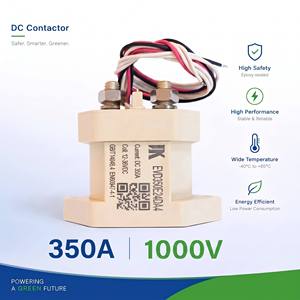
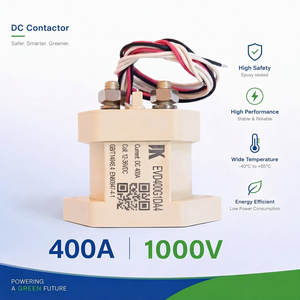
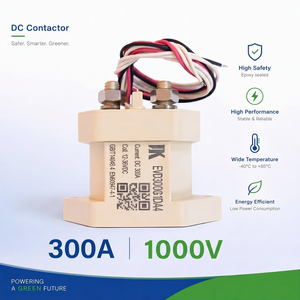
For BESS and EV fast-charging stations, our high-voltage DC contactors utilize epoxy-sealed chambers filled with inert hydrogen-mix gases, suppressing arcing within milliseconds during high-current fault disconnections.
Building reliable electrical isolation hardware demands rigorous component selection, material science, and custom mechanical design. Whether supplying private-label wallboxes for Sydney-based EV charger integrators or enclosed main disconnect switches for utility-scale solar farms in Queensland, our engineering team provides end-to-end ODM/OEM assistance.
Our component design builds upon deep electromechanical heritage—utilizing silver tin oxide (AgSnO2) contact materials to ensure high anti-welding performance under inrush current spikes, and magnetic blowout tech that forces ionizing electrical arcs into ceramic splitter plates.
| Parameter / Feature | High-Voltage DC Contactors (BESS/EV) | Solar PV Enclosed DC Isolators | Industrial AC Load Break Switches |
|---|---|---|---|
| Rated Operational Voltage (Ue) | 12 VDC up to 1500 VDC | 600 VDC to 1200 VDC | 230 VAC to 690 VAC (3-Phase) |
| Continuous Current Rating (Ith) | 10A to 500A Continuous | 16A, 25A, 32A, 50A, 63A | 20A to 630A Heavy Duty |
| Utilization Category | DC-1, DC-3, DC-5, DC-PV2 | DC-PV1, DC-PV2 | AC-21A, AC-22A, AC-23A |
| Arc Suppression Method | Hermetic Gas Chamber / Magnetic Blowout | Multi-break Rotary Knife Contacts | De-ion Arc Chutes & Double-Break Contacts |
| Ingress Protection (IP) | IP67 Internal Sealed Module | IP66 Weatherproof Enclosure | IP65 Enclosed / IP20 DIN Rail |
| Target Australian Standards | AS/NZS 5139, IEC 60947-4-1 | AS/NZS 60947.3, AS/NZS 3000 | AS/NZS 60947.3, UL 508 |
We work directly with original equipment manufacturers, switchboard builders, electrical wholesalers, and engineering procurement construction (EPC) firms across Australia (Sydney, Melbourne, Brisbane, Perth, Adelaide). Our co-development process eliminates supply chain bottlenecks while delivering exact mechanical and electrical fitment.
Our engineering team reviews your target circuit schematics, ambient operating envelope, expected switching cycle frequency, and duty cycle (continuous vs intermittent) to establish exact margin limits.
We provide 3D STEP models and rapid prototype samples for spatial verification inside your custom switchboards, inverter housings, or battery management enclosures.
All customized disconnect switches undergo in-house dielectric strength, temperature rise, contact resistance, and overload break testing prior to submitting files for third-party AS/NZS and UL certifications.
Custom laser-engraved branding, specific terminal lug sizes, pre-wired conduit knockouts, and tailored barcodes are configured to seamlessly integrate into your assembly line logistics.
Every production lot features complete lot traceability, with 100% automated testing of pick-up/drop-out voltage, contact resistance drop, and high-potential insulation withstand.
We support flexible export terms (FOB, CIF, DDP) with streamlined customs documentation, HS classification, and technical compliance certificates for rapid clearance at major Australian ports.
Selecting a primary switch supplier requires proven technical authority, transparent quality control, and dependable component supply continuity. Backed by state-of-the-art manufacturing facilities, deep electromechanical engineering experience, and rigorous compliance documentation, we eliminate sourcing risks for enterprise purchasing managers.
Our manufacturing lines operate under ISO9001 and ISO14001 quality frameworks. Product series maintain comprehensive international file listings including UL, cUL, CE, CCC, CSA, and RoHS/REACH material safety compliance.
From flame-retardant VO-rated polymers to high-conductivity electrolytic copper busbars and silver alloy contacts, every raw material is validated to prevent oxidation, overheating, and early mechanical fatigue.
You speak directly with factory engineers—not sales intermediaries. We solve complex application hurdles, thermal de-rating calculations, and custom mounting challenges in real time.
Clear, authoritative answers for electrical design engineers, procurement specialists, and product managers sourcing disconnect switches for the Australian market.
Require custom switchgear modifications, technical datasheets, CAD models, or volume pricing for the Australian market? Our engineering team is ready to evaluate your schematics and deliver reliable sample units.
Inquire Now