We Design. We Build. We Deliver.
UL, cUL, CE, and RoHS certified motor and magnetic switching solutions designed for continuous duty cycles in demanding Seattle commercial and industrial environments.
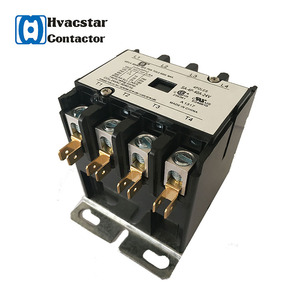
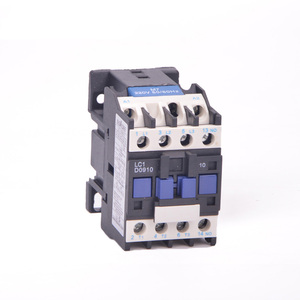
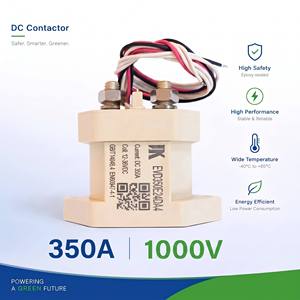
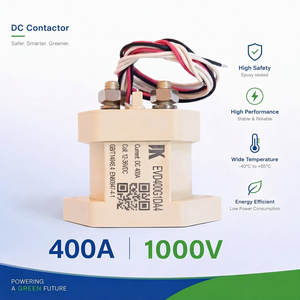
Centrifugal blowers (also termed radial fans) represent the core kinetic engine of commercial HVAC systems, cleanroom filtration units, and maritime environmental controls. Unlike axial fans that move air parallel to the shaft, centrifugal blower motors utilize kinetic energy imparted by rotating impellers to increase pressure and direct air at a 90-degree angle. In high-static-pressure duct systems typical of Pacific Northwest commercial real estate and manufacturing complexes, optimizing the motor-impeller coupling is critical to minimize energy dissipation and acoustic resonance.
When selecting centrifugal blower motors for wholesale procurement in Seattle, OEM engineers must evaluate three primary fluid dynamics and electromechanical characteristics:
1. Impeller Geometry (Forward-Curved vs. Backward-Curved): Forward-curved centrifugal impellers feature a high density of small, forward-inclined blades operating at lower rotational speeds. They yield elevated air volume under medium static pressures, ideal for compact air handling units (AHUs). Conversely, backward-curved impellers feature self-limiting horsepower characteristics and deliver superior energy performance at high static pressures without overloading the drive motor during free-delivery conditions.
2. Moisture Mitigation & Insulation Class: Given Seattle’s wet maritime climate (Köppen climate classification Cfb), relative ambient humidity consistently exceeds 75-85% during winter months. Standard motors suffer insulation degradation due to condensation tracking. Our manufacturing protocol incorporates Class H or Class F continuous resin encapsulation, IP54 to IP66 moisture-proof stator potting, and double-sealed stainless steel ball bearings charged with synthetic rust-inhibiting grease.
3. Harmonic Suppression & Electromagnetic Compatibility (EMC): Variable speed centrifugal blowers using pulse-width modulation (PWM) drives can inject high-frequency harmonic distortion into municipal power grids. Integrated LC/EMI line filters and low-leakage magnetic contactors ensure full compliance with FCC Part 15 Class A/B and IEC 61000-6-3 standards, preventing interference with adjacent tech equipment and data networks.
Tailored motor blowers built to overcome the specific climate, regulatory, and industrial challenges of King County and the Puget Sound region.
Seattle’s temperate climate requires high-efficiency Energy Recovery Ventilators (ERVs) to exchange stale indoor air while capturing sensible and latent thermal energy. Our EC centrifugal blowers deliver smooth 0-10V speed modulating continuous duty, preventing frost formation on heat exchangers while dramatically slashing building operating budgets under the Seattle Energy Code.
Shipyards across Elliott Bay and Lake Union demand marine-grade engine room exhaust blowers and cargo hold ventilation units. Our blowers feature anti-corrosive powder-coated aluminum housings, 316 stainless steel shafts, and salt-mist resistant motors certified for severe marine duty, ensuring long service life without stator corrosion.
The Puget Sound tech corridor (Redmond, Bellevue, South Lake Union) relies on server rack cooling and microelectronics ISO Class 5 cleanrooms. Our dynamically balanced backward-curved centrifugal impellers eliminate structural vibration and audible acoustic hum, maintaining quiet NC-35 noise criteria in high-density server installations.
With Washington State pushing for aggressive fossil-fuel phaseouts in municipal and commercial properties, heat-pump air-handler systems require ultra-low watt-density blowers. Our brushless DC motor configurations operate at optimum torque efficiency across variable airflow rates, boosting LEED credit scoring for overall building energy performance.
Evaluate the operational advantages of upgrading legacy AC blower installations to modern Brushless EC Centrifugal Blower Motor assemblies.
| Performance Parameter | Traditional PSC AC Blower Motor | Shaded Pole AC Blower Motor | Altran Premium EC Centrifugal Motor |
|---|---|---|---|
| Peak Motor Efficiency | 55% - 65% | 30% - 40% | ✓ 85% - 92% (IE5 Rated) |
| Speed Modulation | Stepped Taps or External VFD | Fixed / Single Speed | ✓ Continuous 0-10V / PWM / Modbus |
| Heat Generation & Dissipation | High Stator Temperature Rise | Very High Heat Loss | ✓ Low Thermal Footprint |
| Bearing Service Life (L10) | 20,000 - 30,000 Hours | 15,000 Hours (Sleeve Bearings) | ✓ >50,000 Hours (Ball Bearings) |
| Acoustic / Vibration Profile | Moderate Electrical Hum | High Acoustic Noise | ✓ Ultra-Quiet Dynamically Balanced |
| Harmonic Distortion (THD) | Requires Line Reactors | Uncompensated | ✓ Active PFC / Low EMI Design |
How evolving regional environmental legislation and industrial automation are reshaping OEM motor specifications.
The updated Washington State Clean Buildings Performance Standard mandates strict EUI (Energy Use Intensity) targets for commercial buildings larger than 20,000 sq ft. This has accelerated the replacement of gas-fired furnace blowers with high-static, variable-speed centrifugal fans integrated into cold-climate heat pump air handlers.
Seattle mechanical contractors no longer accept simple relay-switched single-speed fan motors. Modern tenders specify smart centrifugal blowers with RS485 communication protocols, real-time tachometer feedback, diagnostic fault codes, and auto-restart functions directly linked to central Building Management Systems.
Urban density in downtown Seattle, Capitol Hill, and South Lake Union has driven demand for ultra-compact, low-profile centrifugal blower modules. Direct-drive motorized impellers (plug fans) eliminate belt maintenance, slip losses, and bulky housings, saving crucial ceiling space in residential mixed-use construction.
Combining high-capacity, cost-efficient factory production in China with North American engineering standards, stringent quality control, and direct OEM technical assistance.
Our engineering team reviews your exact system curves, static pressure loss calculations, duty cycles, and mounting constraints before issuing quotes. We build to your exact performance curve, not generic off-the-shelf estimates.
Every single centrifugal blower assembly undergoes dynamic impeller balancing to ISO 1940 G2.5 standards, high-voltage dielectric insulation testing, contact resistance testing, and air-volume laboratory verification prior to export packing.
From customized mounting flanges, specialized wiring harness terminations, and custom coil voltages (12V-460V), to private label branding and custom housing powder coating—we build exact drop-in replacement part numbers.
All component families, electrical magnetic contactors, solid-state relays, and motor windings carry verified safety filings. Full material compliance declarations (RoHS/REACH) are supplied with every prototype sample.
We manage complete export documentation, HS code classification, container consolidation, and logistics clearance directly into the Port of Seattle (Terminals 5 & 18), providing predictable lead times and inventory buffering options.
Extensive cross-reference database for obsolete competitor motor parts. Our technical support team assists Seattle equipment retrofit projects with wiring schematics, CAD 3D step files, and field engineering advice.
Detailed technical and procurement answers addressing international logistics, compliance standards, and custom ordering.
We manufacture blower motors tailored to US electrical grid standards: single-phase 115V/230V 60Hz for commercial HVAC/residential blowers, 208V-230V/460V 3-phase 60Hz for industrial plants, and 12V/24V/48V DC for specialized high-voltage battery or off-grid marine applications. Dual-frequency (50/60Hz) motors are also available for equipment exported worldwide from Seattle ports.
Ocean freight transit from our port facilities in China directly to the Port of Seattle typically takes 14 to 18 days on direct ocean lane sailings. Fast-track prototype tooling and air freight delivery (via Sea-Tac Airport) can be arranged within 7 to 10 days for urgent engineering validation programs.
Yes. Our motors and matching electrical power contactors comply with UL 507 (Electric Fans), UL 1004 (Electric Motors), and CSA C22.2 safety standards. Complete UL file numbers and material compliance certificates are provided during the sample approval phase to simplify your UL panel listings and municipal building inspections in King County.
Absolutely. If you provide an OEM model number, physical dimensions, airflow CFM at static pressure (in. w.g.), and mounting hole dimensions, our application engineers will cross-reference or reverse-engineer an exact drop-in replacement with identical electrical terminations and superior motor efficiency.
For standard catalog motor designs, our MOQ starts at 50 units. For fully customized OEM projects (specialized shafting, custom housing tooling, or unique EC firmware), our standard MOQ is 100 to 300 units depending on motor frame size. Qualification samples for laboratory testing are supplied prior to mass production runs.
All marine and outdoor-rated blower motors undergo 500-hour salt spray testing per ASTM B117 standards. Stators feature vacuum pressure impregnation (VPI) with moisture-resistant varnish, stainless steel hardware, and IP55/IP66 rubber shaft seals to prevent moisture ingress into the bearing chamber.
Consult with our engineering directors to request 3D CAD models, detailed motor efficiency curves, custom OEM quotes, or laboratory testing samples for your Seattle manufacturing facilities.
Inquire Now