We Design. We Build. We Deliver.
Engineered to handle extreme grid fluctuations, high ambient operating temperatures, and rigorous power metering specifications across Nigerian residential, commercial, and industrial installations.
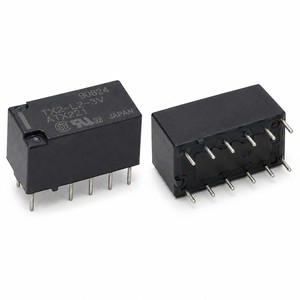
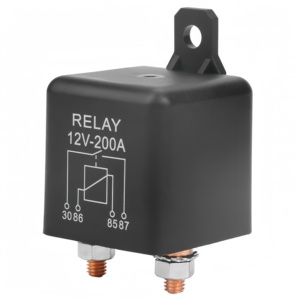
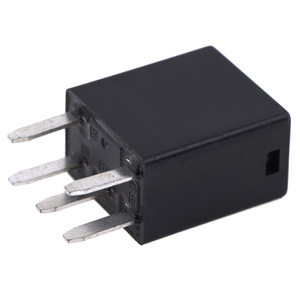
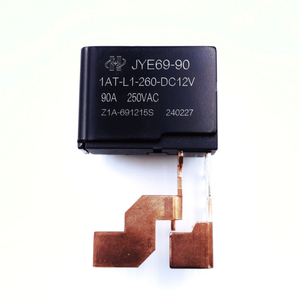
Nigeria’s electrical ecosystem presents a unique challenge for power component engineers. Operating within an environment characterized by frequent grid brownouts, voltage surges exceeding 280V, high harmonic distortion from heavy industrial loads, and extreme ambient humidity, standard electromechanical relays suffer from high failure rates caused by coil burnout and thermal degradation.
Unlike conventional monostable relays that require continuous energized current to maintain their contact state, magnetic latching relays (bistable relays) utilize permanent magnets to hold contacts in either the closed or open position indefinitely. Power is consumed only during a brief excitation pulse (typically 50ms to 100ms) to flip the internal armature mechanism.
Because latching relay coils consume zero continuous power, internal heat generation is virtually eliminated. In Nigerian meter enclosures where internal temperatures often surpass 70°C due to direct solar radiation, eliminating relay coil heat prevents thermal runaway, component degradation, and false trip cycles.
A latching relay operates via two stable states maintained by high-grade neodymium or ferrite permanent magnets embedded within the magnetic circuit assembly:
| Technical Parameter | Standard Electromechanical Relay | Advanced Magnetic Latching Relay |
|---|---|---|
| Holding Power Consumption | 1.5W – 5.0W Continuous Power Loss | 0.0 Watts (Zero Energy Dissipation) |
| Coil Temperature Rise | High (+35°C to +60°C above ambient) | Negligible (< 2°C during pulse) |
| Contact Welding Resistance | Moderate (Prone under load surges) | Ultra-High (AgSnO2 alloy rivets, UC2/UC3 compliant) |
| Vibration & Shock Stability | Medium (Susceptible to contact bounce) | High (Balanced armature magnetic lock) |
| Short-Circuit Fault Current Capacity | Low (Contacts pop open under fault) | Up to 3,000A / 10ms surge withstand |
Our magnetic latching relays are field-proven across key sector deployments managed by Nigerian Distribution Companies (DisCos), solar EPCs, and industrial OEM builders.
Under the Nigerian Electricity Regulatory Commission (NERC) Meter Asset Provider (MAP) framework, DisCos including Ikeja Electric, Eko DisCo, Abuja Electricity Distribution Company (AEDC), and Kano Electricity Distribution Company (KEDCO) require highly reliable single-phase and three-phase disconnect switches.
Our E69 (90A/100A) and NT96L series latching relays are specifically engineered to pass the stringent IEC 62055-31 UC2 and UC3 short-circuit testing. They allow remote credit disconnect and anti-tamper shutoff via STS prepaid protocols while withstanding the severe 3000A short-circuit current surges prevalent on Nigerian urban distribution feeders.
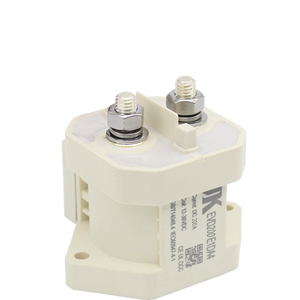
Due to grid unreliability, commercial properties in Lagos, Abuja, and Port Harcourt heavily rely on hybrid solar inverters coupled with Lithium Iron Phosphate (LiFePO4) battery banks. High-capacity DC contactors and latching relays (such as our 200A-500A DC Latching Contactor series) serve as automated battery isolation switches and inverter DC input disconnects.
Because solar storage system efficiency is critical, utilizing latching mechanisms prevents constant battery drain caused by standard relay coils during night-time operation, expanding system autonomy by up to 8%.
Nearly all commercial sites in Nigeria utilize automated generator fallback. Conventional ATS units using standard contactors continuously pull AC power while running, generating extreme internal heat within switchgear panels.
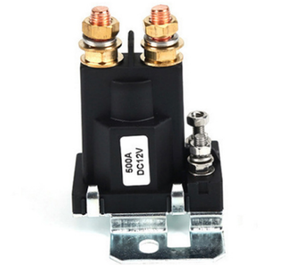
Integrating our high-current 500A Latching Start Relays and Heavy Duty Isolators allows ATS panel manufacturers to build compact, zero-heat transfer mechanisms that switch reliably between PHCN/TCN grid supply and standby diesel gensets (Cummins, Perkins, Caterpillar setups).
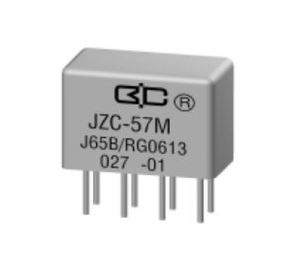
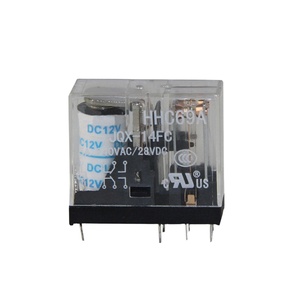
Remote telecom towers scattered across rural Nigerian states operate on complex hybrid energy systems (Solar + Battery + Diesel). Miniaturized, sealed latching relays like the JMC-11M and JQX-14FC series are used in tower controller boards to manage load shedding, tower lighting cycles, and automated DC bus distribution without placing parasitic loads on emergency backup batteries.
Key regulatory updates and economic dynamics shaping the Nigerian electrical component procurement landscape through 2030.
With the signing of the Electricity Act of 2023, Nigerian state governments (such as Lagos, Edo, and Kaduna) gained regulatory autonomy to generate, transmit, and distribute electricity. This has spurred state-level mini-grid developments requiring hundreds of thousands of decentralized metering points, dramatically driving demand for UC2-certified smart meter latching relays.
The World Bank-assisted National Mass Metering Programme (NMMP) aims to close Nigeria’s metering gap of over 7 million unmetered customers. High-volume delivery of reliable 90A–120A latching relays from top China manufacturers is crucial for domestic Nigerian meter assemblers to meet DisCo tender requirements.
Fuel subsidy removal has escalated diesel generator operational costs by over 200% across Nigeria. Factories, hospitals, and commercial real estate in Ikeja Industrial Estate and Agbara Industrial Zone are rapidly converting to heavy solar storage setups, creating massive demand for high-amp DC latching contactors.
With decades of specialized electromechanical engineering, automated production facilities, and stringent quality control, we serve as the OEM/ODM manufacturing backbone for top electrical brands globally.
We formulate custom Silver Tin Oxide (AgSnO2) and Silver Nickel (AgNi) contact material rivets. This guarantees optimal resistance against high inrush electrical arcing, completely eliminating contact welding failure during high-voltage grid reconnects in Nigeria.
Our product families are built to comply with global standard requirements including UL, cUL, CE, TUV, CQC, and RoHS/REACH standards. Test reports are available to support SONCAP certification for seamless import clearance through Lagos ports (Apapa / Tin Can Island).
We don't just supply standard relays; we offer integrated assemblies complete with custom copper flexible braids, integrated manganese-copper shunts for current measurement, specified terminal lugs, and tailored pulse-drive coil voltages (3V to 48VDC).
| Test Item | Standard Applied | Test Condition & Performance Threshold |
|---|---|---|
| UC2 Short-Circuit Test | IEC 62055-31 Clause 5.8.2 | Subjected to 3,000A short-circuit current; relay must maintain structural integrity without exploding or permanent welding. |
| UC3 Fault Current Test | IEC 62055-31 Annex C | Subjected to 100kA peak fault current withstand test with short-circuit protection devices in circuit. |
| Dielectric Withstand Voltage | IEC 61810-1 / UL 508 | 4,000 VAC for 1 minute between coil and open contacts; zero dielectric breakdown or leakage current <1mA. |
| Anti-Magnetic Interference | DisCo Metering Anti-Tamper Spec | Exposed to external 500mT permanent magnet field; relay must remain locked in designated state without false tripping. |
| Thermal Shock & Endurance | GB/T 2423 / IEC 60068 | 100,000 operational cycles under rated load at +85°C ambient temperature with high relative humidity (95%). |
Expert answers addressing customs compliance, technical selection, environmental suitability, and shipping logistics to Nigeria.
Yes, absolutely. Our smart meter latching relays (such as the 90A E69 and NT96L platforms) are fully tested and certified according to IEC 62055-31 (UC2/UC3 standards). We regularly provide complete CE, TUV, and RoHS laboratory test certificates required by the Standards Organisation of Nigeria (SON) to issue SONCAP Product Certificates (PC) and Import Permits for hassle-free clearance through Apapa or Onne ports.
Our relays utilize Class F and Class H high-temperature copper magnet wire for coils, along with glass-filled PBT plastic housings capable of withstanding continuous heat up to 130°C. Additionally, because latching relays operate via short microsecond pulses rather than continuous power, internal heat rise is virtually non-existent, ensuring flawless operation even inside unconditioned outdoor electrical enclosures exposed to direct sunlight in northern states like Kano or Sokoto.
Yes. Custom OEM integration is our core specialty. We can supply latching relays pre-welded with high-precision Manganin current shunts (e.g., 200μΩ or 300μΩ) and customized copper flex braids or brass terminal blocks based on your smart meter casing CAD drawings. This saves Nigerian meter manufacturers significant local assembly time and ensures ultra-low contact resistance.
For standard models (e.g., 200A DC latching contactors or 90A meter relays), our Minimum Order Quantity (MOQ) starts as low as 100 units for sample evaluation, and 1,000 units for bulk production runs. Production lead time is typically 15–20 days. Air freight to Lagos (LOS) takes approximately 5–7 days, while sea freight to Apapa / Tin Can Island takes approximately 30–35 days.
In off-grid solar systems deployed across Nigeria, conserving battery storage energy is critical. A standard 200A DC contactor can waste between 5W to 15W of continuous holding power per hour just to stay closed. A 200A latching relay consumes 0W after switching, preserving valuable solar energy stored in lithium battery packs while maintaining a completely cool operating temperature inside the inverter cabinet.
You can request evaluation samples directly by clicking the "Inquire Now" button on this page. Our technical engineering team will review your electrical schematic, load requirements, terminal specifications, and coil voltage preferences before dispatching expedited DHL/FedEx samples to your facility in Nigeria.
Whether you are assembling smart pre-paid electricity meters for DisCo tenders, manufacturing dual-grid ATS panels, or designing heavy-duty commercial solar energy storage systems in Nigeria, our engineering team is ready to deliver sample qualification units and competitive OEM pricing.