We Design. We Build. We Deliver.
High-precision OEM/ODM power components optimized for South Korea's industrial solar installations, energy storage systems (BESS), and commercial HVAC integration.
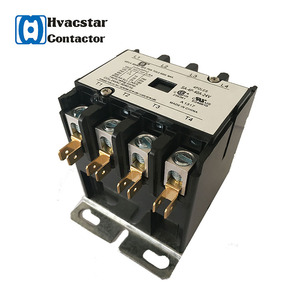
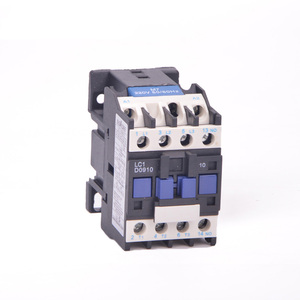
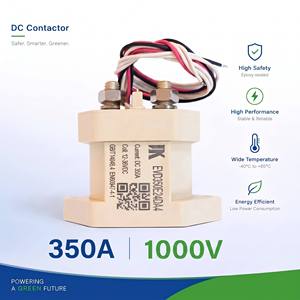
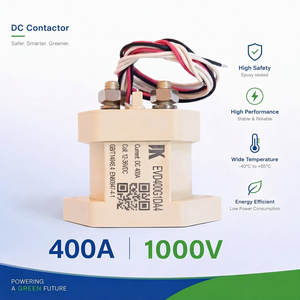
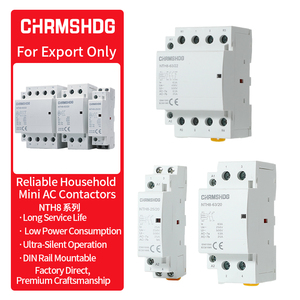
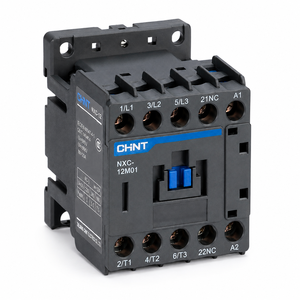
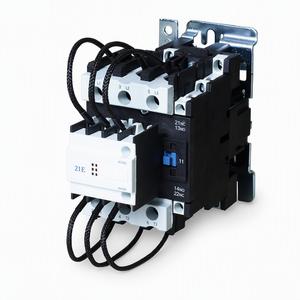
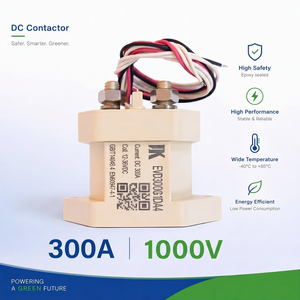
As South Korea accelerates its trajectory toward carbon neutrality under the 10th Basic Plan for Electricity Supply and Demand and the rapidly expanding K-RE100 initiative, the demand for ultra-reliable solar charge controllers and high-voltage DC control components has reached an unprecedented high. Commercial solar developers, state-backed utility partners, and energy storage system (BESS) integrators across Seoul, Gyeonggi-do, Ulsan, and Jeju Island require robust hardware capable of handling high power densities while strictly adhering to Korean Electrical Safety Standards.
Operating a solar PV array or commercial energy storage installation in South Korea presents unique environmental and regulatory hurdles:
South Korea experiences severe microclimate variations—from freezing winter temperatures reaching -20°C in Gangwon-do to humid, heavy-rain summer monsoons in southern coastal areas. Our charge controllers feature thermal derating intelligence, conformal-coated PCBs, and hermetically sealed magnetic contactors to prevent thermal shock, condensate corrosion, and dielectric breakdown.
Connecting solar charge management systems to Korea Electric Power Corporation (KEPCO) grid infrastructure mandates rigorous electromagnetic compatibility (EMC) and electrical safety protection. Our products are engineered to satisfy KC 62619 for lithium battery storage and KS C 8565 grid interconnections, supplying complete testing dossiers for seamless localized audits.
With land constraints driving major projects like the Saemangeum floating solar installation and offshore projects in Jeollanam-do, our solar charge management units feature IP67-rated ingress enclosures, anti-galvanic isolation, and salt-fog-resistant contact alloy surfaces designed for marine and floating environments.
Standard off-the-shelf charge controllers often struggle under the rigorous thermal and dynamic load cycles of commercial solar-plus-storage platforms. As a direct OEM manufacturer supplying South Korea’s energy market, our engineering team integrates Advanced Multi-Phase Synchronous Rectification (MPSR) and Dynamic Perturb-and-Observe (P&O) MPPT algorithms to ensure peak energy harvesting under rapid weather changeability.
| Technical Parameter | Generic / Commercial Grade | Altran Factory Industrial-Grade | Impact on South Korean Projects |
|---|---|---|---|
| MPPT Algorithm Speed | 1.5s to 3.0s tracking loop | < 100ms Ultrafast MPSR | +8.4% higher yield during Korean monsoon overcast days |
| Max DC System Voltage | 150VDC – 600VDC max | 1,000VDC – 1,500VDC Continuous | Reduces copper cabling losses & BOS costs in large arrays |
| Operative Temperature | -10°C to +45°C (thermal throttling) | -40°C to +75°C (Zero derating to +55°C) | Handles sub-zero Gangwon winters and harsh engine rooms |
| BMS Communication | Basic RS232 / Proprietary | Dual CAN 2.0B & RS485 Modbus-RTU | Seamless interoperability with Korean Tier-1 Battery packs |
| Arc Suppression Tech | Air-gap open contacts | Hermetic Epoxy / Gas Arc-Chamber | Eliminates contact burnout; satisfies KC fire safety standards |
Our charge control and heavy-duty DC contactor componentry are purpose-engineered for integration across South Korea’s leading clean energy sectors.
Manufacturing facilities in industrial complexes such as Banwol, Siheung, and Ulsan rely on roof-mounted solar PV systems paired with local battery banks to offset peak tariff rates imposed by KEPCO. Our high-amperage charge management units regulate power flow from solar strings to battery banks, enabling seamless peak-shaving without risking voltage spikes to sensitive automated assembly equipment.
Ultra-fast EV charging plazas along the Gyeongbu Expressway require battery energy storage systems (BESS) to buffer high grid demand spikes during vehicle charging sessions. Our 400A–600A 1000V DC contactors and MPPT charge management modules control energy transfers from solar canopy arrays directly to high-voltage lithium battery banks with sub-15ms disconnection speeds.
Jeju’s "Carbon Free Island" mandate relies on distributed wind-solar microgrids paired with smart energy controllers. Operating under heavy ocean salt spray and high humidity, our IP67-sealed, salt-corrosion resistant charge control units provide continuous power conditioning for remote telecoms, lighthouse stations, and localized island microgrids.
As a direct manufacturing facility with comprehensive R&D and testing labs, we provide South Korean OEMs and system integrators with unparalleled customization, supply chain transparency, and quality assurance.
We supply dedicated software engineering support to tailor communication protocols (Modbus, CANbus, Profibus) to match your proprietary EMS or BMS architecture. Custom UI display languages (Korean/English) and pre-configured voltage setpoints are programmed directly at our factory prior to export.
Every charge controller and DC contactor undergoes rigorous quality validation before packing: including high-pot dielectric withstand tests, contact resistance verification under full load, thermal imaging analysis, and partial discharge inspection to guarantee zero field failures.
Leveraging established logistics channels servicing Incheon Port and Busan Port, we provide export documentation, HS Code classification support, country-of-origin certificates, and RoHS/REACH compliance files to expedite South Korean customs clearance.
Clear answers to standard engineering, certification, and procurement questions when importing solar charge controllers into South Korea.
Need custom voltage setpoints, specific DC switching contactors, or localized compliance documentation for your upcoming solar PV or BESS project in South Korea? Our engineering team is ready to evaluate your schematics and deliver factory-direct solutions.