We Design. We Build. We Deliver.
Explore our certified product range engineered for heavy-duty HVAC, EV charging stations, battery energy storage systems (BESS), solar inverters, and industrial automation control.



An in-depth analysis of high-voltage DC contactors, arc suppression technologies, and electrical endurance benchmarks in modern OEM power architectures.
In contemporary power electronics, electrical switching modules—encompassing high-voltage DC contactors, definite-purpose AC magnetic contactors, solid-state relays (SSRs), and capacitor switching modules—serve as the critical physical bridge between control logic and high-energy loads. As industrial electrification accelerates across electric vehicle (EV) charging networks, megawatt-scale battery energy storage systems (BESS), solar photovoltaics, and advanced HVAC automation, the demand for robust, highly reliable switch module suppliers has reached an unprecedented peak.
Selecting an authoritative manufacturer and exporter requires understanding the physical dynamics of electric arc plasma extinguishment, contact erosion mitigation, dielectric insulation strength, and electromagnetic compatibility (EMC). Unlike low-voltage commercial relays, industrial power contactors operating at potentials up to 1,500 VDC face zero-cross-absence challenges. When breaking direct current, an arc does not self-extinguish at a natural zero-voltage point as it does in AC systems. Consequently, modern high-voltage DC switch modules must incorporate hermetic sealing, hydrogen-rich gas backfilling, magnetic arc blowout runners, and ceramic arc-chambers to safely interrupt full-load fault currents without contact welding or catastrophic thermal runaway.
The structural topology of an electrical switch module directly dictates its operational longevity and environmental resilience. Global OEM engineers typically classify high-current contactor architectures into three primary engineering paradigms:
Utilizing pressurized hydrogen or nitrogen blends within a brazed ceramic cavity. Hydrogen exhibits high thermal conductivity, rapidly cooling and de-ionizing arc plasma to extinguish 1,000V+ DC arcs in milliseconds while preventing contact oxidation.
Cost-effective polymer encapsulations providing IP67/IP69K ingress protection against moisture, salt spray, and dust. Ideal for commercial battery packs, mobile off-highway electric vehicles, and ambient-exposed outdoor power cabinets.
Specialized 3-phase AC contactors featuring auxiliary contact blocks pre-wired with damping resistors. Designed to suppress dangerous peak inrush currents (up to 70x rated current) during power factor correction capacitor switching.
Comparing standardized OEM switch module specifications across key industrial performance parameters.
| Switch Module Category | Voltage & Current Range | Arc Extinction Technology | Electrical Life (Cycles) | Primary Regulatory Compliance |
|---|---|---|---|---|
| High-Voltage DC Contactors | 12V – 1,500 VDC / 10A – 500A | Hermetic Ceramic / Gas Filled (H2) | 20,000 – 100,000 (at rated load) | UL 60947-4-1, CE, CCC, RoHS |
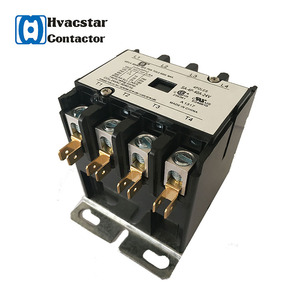
| HVAC Definite Purpose Contactors | 24V – 600 VAC / 20A – 120A | Open/Shrouded Air-Break Arc Chutes | 100,000 – 200,000 | cULus Certified, ARI 780/790 |
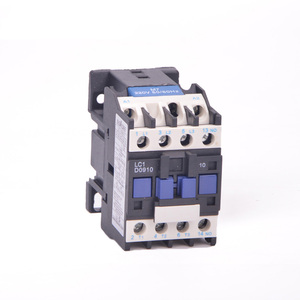
| Industrial AC Magnetic Contactors | 110V – 690 VAC / 6A – 630A | De-ionizing Metallic Grid Plates | 1,000,000+ (Mechanical 10M) | IEC/EN 60947-4-1, CSA, VDE |
| Capacitor Switching Contactors | 220V – 440 VAC / 10 – 100 kVAR | Pre-charge Resistor Damping Lead | 100,000 | IEC 60947-4-6, CE |
| Industrial Solid State Relays (SSR) | 24V – 480 VAC / 10A – 120A | Optocoupled Semiconductor Switching | 10,000,000+ (Zero mechanical wear) | UL 508, CE, CISPR 11 Class A |
As international supply chains shift toward heightened sustainability, localized engineering support, and enhanced digital integration, procurement directors must align with suppliers capable of anticipating market shifts. Over the next decade, four key macro-trends will re-shape the global switch module landscape:
Solar PV and commercial battery storage infrastructures are rapidly standardizing on 1,500 VDC architecture to reduce copper cabling losses. OEM buyers require switch modules certified for continuous 1,500V insulation with low contact resistance (< 0.5 mΩ) to prevent localized thermal hot spots.
Modern industrial switch modules are incorporating IoT sensing elements. Integrated auxiliary feedback loops, coil economizer circuits, and real-time temperature/contact-wear monitoring allow predictive maintenance before contact welding or circuit interruption occurs.
Global legislation is phasing out heavy metals and hazardous potting substances. Leading exporters now utilize cadmium-free contact materials (AgSnO2 instead of AgCdO) and RoHS-compliant epoxy resins to comply with European and North American environmental mandates.
Combining the low-conduction losses of mechanical contacts with the arc-free high-speed switching of semiconductors. Hybrid switch modules eliminate contact arcing during break while avoiding the massive heatsink requirements of pure SSRs during steady-state conduction.
We Design. We Build. We Deliver. Engineered switching components tailored to your exact load profile, enclosure dimensions, and certification requirements.
Headquartered in Sterling, Illinois, our application engineering team reviews your schematics, load profiles, duty cycles, and environmental constraints before issuing customer-specific part numbers under strict revision control.
Every production batch undergoes 100% functional verification, dielectric withstand testing, contact resistance measurement, and insulation check. Declarations of conformity and UL/cUL file references accompany sample packages.
With authorized stocking distributors and direct export representation across North America, Europe, Asia, and Latin America, we provide scheduled buffer stock, custom wire harnessing, and private-label packaging.
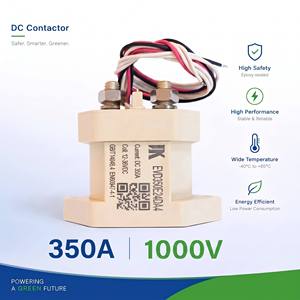
Our high-voltage DC contactor platforms switch continuous loads from 12 VDC up to 1,500 VDC with current ratings ranging from 10 A to 500 A (with short-term peak fault break capacities reaching up to 2,000 A). Hermetically sealed gas-filled arc-suppression modules are designed specifically for EV DC fast-chargers, energy storage string disconnects, and solar power conversion equipment.
Uni-directional DC contactors utilize permanent blowout magnets oriented to pull the electric arc in one specific direction toward the arc chutes. If current flows in reverse, the magnetic field pushes the arc back onto the contacts, causing failure. Bi-directional switch modules use optimized symmetrical contact gaps and dual-direction magnetic blowout structures, allowing safe current interruption during both battery charging and discharging cycles.
Our product families align with UL, cUL, CE, CSA, and CCC standards. EMI filtering components comply with CISPR / FCC Part 15 and IEC/EN 61000 limits. Full material composition statements, RoHS/REACH compliance declarations, and test certificates are supplied with qualification sample lots and high-volume production orders.
Yes. Custom engineering is a core strength. We routinely modify busbar terminations, lead wire lengths, connector headers, coil driver voltages (12V, 24V, 48V, or multi-voltage economizers), mounting bracket footprints, and custom branding. All modified units receive customer-assigned part numbers under formal revision control.
High-power magnetic coils require substantial inrush current to actuate heavy contact armatures against internal springs. Once closed, maintaining contact requires significantly less force. A coil economizer automatically reduces holding power by up to 70–80% after pickup, dramatically minimizing thermal dissipation inside the electrical enclosure and saving energy.
Simply provide our engineering team with your current component part number, operating voltage, continuous and peak current requirements, coil specifications, and spatial footprint. We will cross-reference the specification, highlight any performance or dimensional enhancements, and dispatch engineering sample units for validation.
Connect directly with our application engineers to request datasheets, 3D CAD models, factory quotes, or customized switch module prototypes.
Contact Us