We Design. We Build. We Deliver.
Explore our engineering-grade safety switching lineup designed for functional safety up to SIL 3 / PLe, high-voltage switching, and machine safeguard applications.
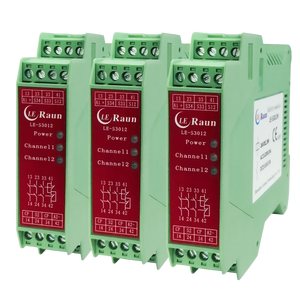
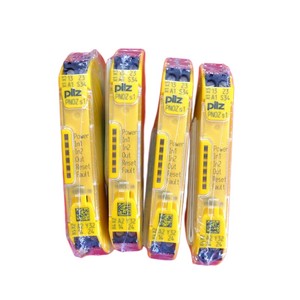
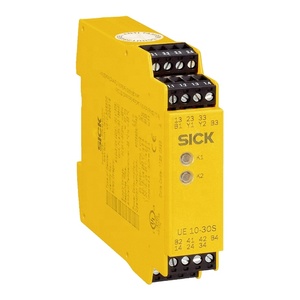
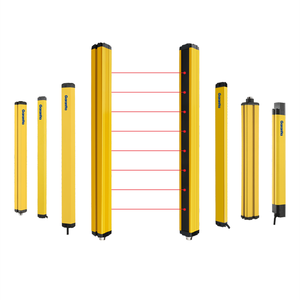
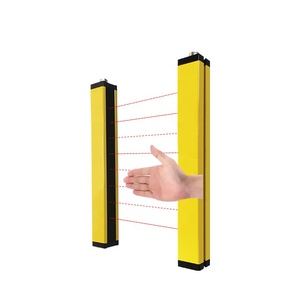
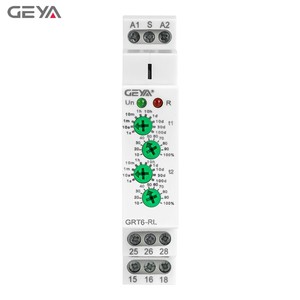
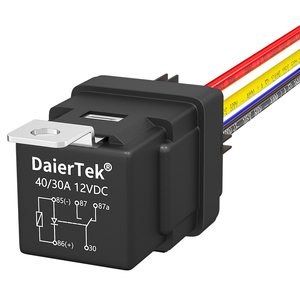
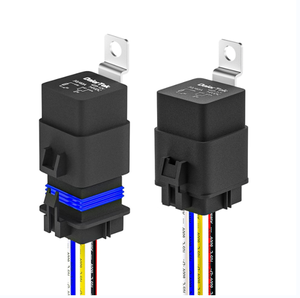
A technical guide for system integrators, compliance managers, and procurement leaders on safety relay selection, hazard isolation, and regulatory risk mitigation.
In modern high-speed industrial manufacturing, the functional safety circuit is the primary defense mechanism protecting human operators from hazardous machine motion, crushed limbs, and high-voltage electrical exposure. Standard general-purpose electromechanical relays are fundamentally insufficient for safety-critical stop loops because standard contacts are susceptible to physical contact welding under short-circuit or electrical overstress conditions. If a single standard contact welds shut, the safety command line remains energized, causing catastrophic failure when an operator opens an interlocked safety gate or depresses an Emergency Stop button.
Certified safety relays solve this systemic vulnerability by incorporating Force-Guided Contacts (EN 50205 Type A compliant). In a force-guided contact assembly, all Normally Open (N/O) safety switching contacts and Normally Closed (N/C) monitoring contacts are mechanically linked together by a rigid internal barrier. If a single N/O contact welds during an electrical transient event, the mechanical linkage physically prevents the N/C contact from closing when the coil is de-energized. This structural constraint enables downstream diagnostic logic to detect the fault, lock out the control circuit, and prevent unsafe machine re-starts.
| System Parameter | Standard Power Relay | Force-Guided Safety Relay | Programmable Safety PLC |
|---|---|---|---|
| Primary Mechanism | Single Spring Return | Force-Guided Mechanical Linkage | Dual Microprocessor Cross-Checking |
| Max Safety Level | Unrated (Category B/1) | SIL 3 / PLe (Cat 4) | SIL 3 / PLe (Cat 4) |
| Fault Tolerant Behavior | Uncontrolled Welding Risk | Mechanical Fault Lockout | Software Redundancy & Logic Lockout |
| Optimal Application | Auxiliary Auxiliary Load Control | E-Stops, Light Curtains, Gates (1-10 Safety Zones) | Large Plant-Wide Automated Lines (>10 Zones) |
| Implementation TCO | Lowest Initial Cost | Cost-Effective & Rapid Validation | High Initial Hardware & Software Engineering Cost |
The global industrial safety market is undergoing a paradigm shift driven by stringent regulatory frameworks, electric vehicle (EV) battery production expansions, and smart factory digital transformations. Global OEMs and System Integrators are altering their procurement models based on three decisive vector trends:
The acceleration of high-voltage DC architectures in EV Fast-Charging stations (400V to 1,000V DC operating buses) and utility-scale Battery Energy Storage Systems (BESS) has created urgent demand for hybrid safety relays and sealed high-voltage DC contactors. Sourcing teams are shifting away from conventional AC switching suppliers to manufacturers capable of providing hermetically sealed, gas-filled arc-extinction chambers that prevent hazardous sustained DC arcs during emergency emergency-off (E-Stop) disconnection events.
Environmental standards such as RoHS 3 (EU 2015/863) and REACH SVHC are altering raw material procurement in relay manufacturing. Historical contact materials like Cadmium Oxide (AgCdO) are widely banned due to toxic heavy metal emissions during refinement and disposal. Forward-thinking procurement officers must specify next-generation environmental contact alloys, predominantly Silver Tin Oxide (AgSnO2) and Silver Nickel (AgNi), which offer superior anti-welding properties, erosion resistance under high-inrush capacitive loads, and 100% regulatory compliance.
Recent geopolitical supply chain disruptions have highlighted the catastrophic risk of single-source procurement models. Tier-1 industrial OEMs now require safety relay manufacturers to furnish full batch traceability down to raw coil copper wire melts and contact plating lots. Factory-direct engineering support, customized customer part numbers, dynamic safety buffer stocks, and localized stocking distribution networks are now baseline requirements for contractual vendor selection.
As Industry 4.0 digitizes shop floors, safety components are evolving from passive electromechanical switches into intelligent safety nodes. Modern engineering procurement requires visibility into three key technological advancements:
As a leading component manufacturer and supplier, our operation combines deep electromechanical engineering expertise with modern scalable factory infrastructure. We bridge the gap between initial schematic review and reliable global supply delivery.
Our engineering team modifies coil voltages, contact terminal geometries, internal harness pinouts, and housing materials to align precisely with your OEM project schematic.
Every single production batch undergoes automated 100% functional verification, dielectric withstand testing, contact resistance measurement, and cycle timing checks before packaging.
Components are manufactured aligned with UL, cUL, CSA, CE, SIL 3, and RoHS specifications, complete with published certificate file numbers and compliance documentation.
Direct answers to common technical queries raised by electrical design engineers, safety auditors, and purchasing officers.
A safety relay utilizes mechanically linked Force-Guided Contacts (EN 50205 compliant). This mechanical design guarantees that if a Normally Open (N/O) safety contact welds due to an overcurrent surge, the associated Normally Closed (N/C) monitoring contact cannot close when the coil drops out. Standard relays lack this mechanical linkage, creating a risk where welded contacts can falsely signal a safe condition, leading to hazardous machine restarts.
Selection depends directly on your machine Risk Assessment (ISO 12100). If a hazard evaluation indicates high severity of potential injury (irreversible or fatal) and frequent exposure, ISO 13849-1 mandates Performance Level e (PLe) or IEC 62061 SIL 3. PLe / SIL 3 requires dual-channel cross-monitored architectures with force-guided safety relays, high Diagnostic Coverage (>99%), and high MTTFd (Mean Time to Dangerous Failure).
Yes. Safety relays featuring dual PNP/NPN transistor inputs or cross-fault short circuit monitoring (such as our LE-S3012 or SICK evaluation modules) accept standard OSSD (Output Signal Switching Device) signals directly from light curtains, laser scanners, and magnetic interlocks, providing dry-contact relay outputs to disconnect machine actuators.
With every qualification sample package, we issue full datasheets, 3D STEP drawings, UL/cUL file references, CE Declarations of Conformity, RoHS 3/REACH SVHC material compliance statements, and factory test verification reports to ensure rapid compliance approval by your internal audit team.
As a direct manufacturer, custom engineering is core to our operations. We offer customized coil operating ranges (12VDC, 24VDC, 48VDC, 110VAC, 230VAC), customized wire harness pinouts, IP67 weather-sealed connectors (Deutsch, Amphenol, Molex), and private-label laser marking under complete revision control.
Our high-voltage DC switching contactors feature sealed ceramic or epoxy chambers filled with specialized arc-suppression gas (such as Hydrogen/Nitrogen mixes) combined with magnetic arc-blowout structures. This design rapidly stretches, cools, and extinguishes high-voltage DC arcs up to 1,500 VDC within milliseconds, preventing contact erosion and catastrophic fire hazards.
Consult directly with our component engineers. Send us your load specifications, circuit schematics, or target competitor cross-references for fast technical evaluation and factory-direct pricing.
Send an Inquiry