We Design. We Build. We Deliver.
Explore our flagship high-torque hybrid, closed-loop, miniature, and specialized tin-can stepper motor platforms engineered for extreme precision, thermal stability, and long service life.
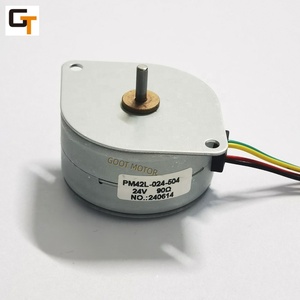
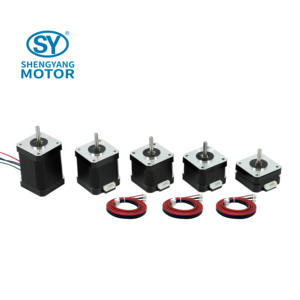
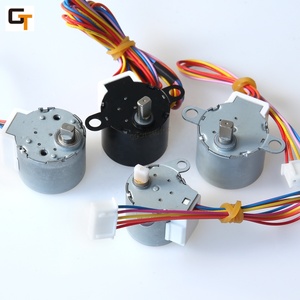
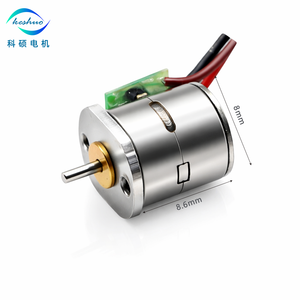
As modern industrial automation demands sub-micron repeatability, lower resonance, and superior energy management, the global manufacturing landscape for stepper motors has underwent a profound technological pivot. Selecting the right China Stepper Motor Supplier & Exporter requires more than evaluating holding torque figures; OEM procurement teams must scrutinize stator geometry, rare-earth magnet stability, winding slot fill factors, and dynamic torque-to-inertia ratios.
Traditional open-loop stepper motors often suffer from mid-band resonance issues and positional step loss under sudden transient loads. To solve this critical industry pain point, our advanced engineering facilities utilize stator laminations made of high-permeability cold-rolled silicon steel coupled with automated precision coil winding. By optimizing magnetic flux density across the air gap (typically maintained within ±0.015mm tolerances), our hybrid motors deliver up to 22% higher torque output compared to standard market offerings without increasing frame dimensions.
Furthermore, closed-loop stepper motor systems—combining high-resolution optical or magnetic encoders with vector-controlled digital DSP drivers—have drastically narrowed the performance gap between traditional step systems and expensive AC servos. By operating in closed-loop current vector mode, heat dissipation is reduced by up to 40%, while audible noise drops significantly across low-to-mid speed bandwidths.
Engineers and sourcing executives must align the motor architecture with the mechanical dynamics of the end application. Stepper motors are broadly categorized into three distinct electromechanical designs, each serving dedicated performance niches:
Combines multi-toothed rotor structures from Permanent Magnet (PM) and Variable Reluctance (VR) designs. Features high positional accuracy (typically 1.8° or 0.9° step angle) and maximum holding torque in standardized NEMA frame sizes (NEMA 08 through NEMA 34).
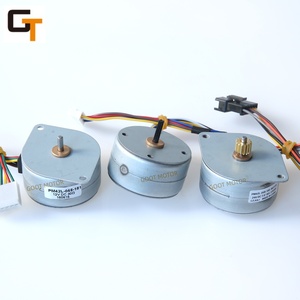
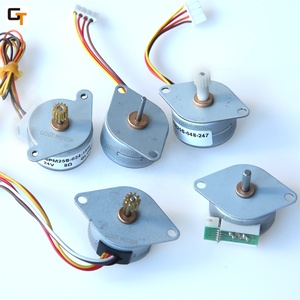
Utilizes a radially magnetized cylindrical rotor. Commonly known as "Can-Stack" or "Tin-Can" motors (e.g., 24BYJ48, 42BY series). Cost-effective, reliable, and ideal for consumer electronics, HVAC dampers, and smart home IoT devices.
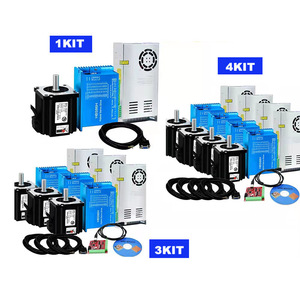
Equipped with 1000-line to 4096-line encoders for continuous real-time position verification. Eliminates micro-stepping resolution degradation, prevents stalling, and delivers peak torque efficiency during extreme velocity changes.
| Series & Type | Step Angle Precision | Holding Torque Range | Current Draw | Primary Industrial Sector |
|---|---|---|---|---|
| NEMA 17 (42BYGH Series) | 1.8° / 0.9° ±5% | 0.22 N.m – 0.85 N.m | 0.4A – 2.5A / Phase | 3D Printers, Medical Analyzers, Desktop Automation |
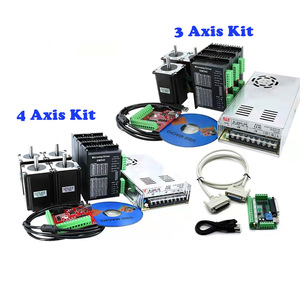
| NEMA 23 Heavy Duty Kit | 1.8° ±3% | 1.2 N.m – 3.0 N.m | 2.0A – 5.0A / Phase | CNC Mills, Woodworking Machinery, Textile Automation |
| NEMA 34 Closed Loop Servo | 1.8° (Closed-Loop Verified) | 4.5 N.m – 12.0 N.m | 4.0A – 8.2A / Phase | Laser Cutters, Industrial Robotics, Heavy Engravers |
| Miniature PM (08BY / 20BY) | 18° / 7.5° Step | 3.5 mN.m – 15 mN.m | 100mA – 300mA | Surgically Invasive Devices, Optical Zoom, Micro-Valves |
| Geared Can-Stack (28BYJ48) | 5.625° / 64 (Gear Ratio 1:64) | 30 mN.m – 120 mN.m | 5V – 12V DC Constant Voltage | Smart Home Louvers, Security IP Cameras, HVAC Actuators |
The global motion control industry is transitioning rapidly toward digital integration, miniaturization, and green supply chain compliance. When vetting a long-term manufacturing partner in China, international procurement executives must align with suppliers capable of meeting future-proof technological trends:
Modern OEMs are moving away from centralized control cabinets. The market demand is surging for integrated motors combining the stepper body, encoder, and CANopen/EtherCAT bus communications into a single compact housing.
With global sustainability mandates like IE3/IE4 standards and strict EU RoHS/REACH directives, leading China exporters are re-engineering motor windings to minimize copper losses ($I^2R$) and iron core eddy current losses.
Surgical robotics, automated insulin dosing pumps, and lab diagnostic machines are driving demand for sub-10mm miniature stepper motors (such as our 08BY series) equipped with ultra-fine optical feedback encoders.
As an industry-leading Chinese manufacturer and global exporter, our reputation is built upon uncompromised build quality, absolute technical transparency, and full engineering support. Following US and European OEM standards—such as those proven by premier electromechanical component developers—we build precision motion control units designed to perform reliably under harsh industrial environments.
An open-loop stepper motor moves according to step pulses sent from the controller without positional feedback. If the mechanical load exceeds the motor's holding torque, step loss occurs without the system detecting it. In contrast, a closed-loop system (hybrid servo) integrates a high-resolution encoder on the rear shaft. The driver continuously monitors position (at microsecond intervals), adjusts current dynamically to match load demand, prevents stalling completely, and minimizes heat generation during idle or low-load states.
Driver selection depends on operating voltage, peak phase current, and microstepping requirements. The TB6600 driver is an entry-level driver suited for smaller NEMA 17/23 motors requiring up to 4.0A peak current and simple microstepping. The DM542 and DM556 are advanced DSP digital drivers utilizing anti-resonance algorithms; the DM542 supports up to 4.2A current (24-50VDC range), while the DM556 supports up to 5.6A (20-50VDC range). Modern DSP drivers deliver vastly superior smoothness, quiet operation, and significantly higher high-speed torque performance.
Yes, custom electromechanical engineering is one of our primary core capabilities. We routinely supply customer-specific shaft configurations (including flat D-cuts, dual-ended shafts, keyways, cross-drilled holes, and leadscrew/acme integration). Furthermore, wire harnesses can be customized with specific wire gauges, Teflon insulation, IP65/IP67 protective sleeves, and pre-crimped connectors from brands such as JST, Molex, Hirose, or AMP.
Standard hybrid stepper motors operate with a surface temperature rise of 40°C to 80°C above ambient under full rated continuous current. Our motors utilize Class B (130°C) or Class H (180°C) insulation systems. To maximize motor service life, buyers should consider installing heat sinks, ensuring adequate forced-air ventilation, or using drivers with automatic idle current reduction features (which drop current to 50% when the motor is stationary).
As an international exporter supplying top global OEMs, every batch shipment includes comprehensive quality documentation: Certificates of Analysis (CoA), CE Declarations of Conformity, RoHS and REACH compliance statements, material safety data, and UL file verification references. Full batch lot traceability is maintained on all stator windings, bearings, and magnets to support quality audits.
Standard catalog samples are dispatched within 3 to 5 working days. For custom shaft designs, non-standard windings, or customized cable harness assemblies, our sample prototyping lead time is typically 10 to 14 business days. You can submit your mechanical drawings (2D CAD or 3D STEP files) directly to our engineering desk via the inquiry button below.
Whether you require high-torque NEMA hybrid motors, closed-loop servo kits, or ultra-compact miniature PM actuators, our engineering team is ready to review your exact specifications and deliver optimized prototypes.