We Design. We Build. We Deliver.
Industrial-grade AC/DC contactors, high-voltage relays, and optoelectronic components designed for HVAC, solar PV, BESS, and smart lighting export programs.
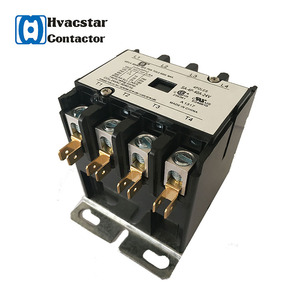
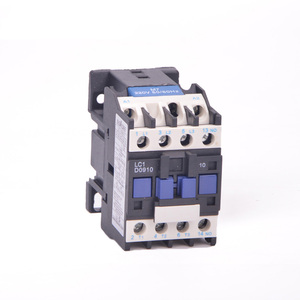
In modern smart grids, municipal infrastructure, and commercial energy management systems, the convergence of precision light sensing (photo controls) and robust power switching electronics (AC/DC contactors and solid-state relays) forms the backbone of operational reliability. As a preeminent China Light Sensor Supplier & Exporter, our engineering division bridges the gap between optoelectronic signal processing and high-voltage power actuation.
The fundamental objective of an industrial photocontrol or light sensor is to mimic the human eye's photopic spectral response (CIE V-Lambda curve standard) while maintaining absolute thermal stability from -40°C to +70°C. Traditional legacy sensors utilized Cadmium Sulfide (CdS) photoconductive cells. However, modern environmental regulations (RoHS/REACH compliance) and performance requirements have driven the shift toward filtered Silicon Phototransistors and IR-Filtered CMOS Photodiodes.
Key optical design considerations implemented across our sensor product lines include:
Precision lux metering utilizing optical darkrooms calibrated against NIST traceable light standards to guarantee +/-5% switching accuracy across bulk export shipments.
Integrated Metal Oxide Varistors (MOVs) offering 320 Joule to 640 Joule transient surge suppression, rated to withstand up to 20kV / 10kA lightning strikes per ANSI C136.10/C136.41.
Hermetic epoxy sealing and UV-stabilized polycarbonate/PBT enclosures achieving IP65, IP66, and IP67 ingress protection against moisture, dust, and salt haze erosion.
When light sensing controls signal a master power cabinet, heavy-duty electromechanical contactors execute the primary current disconnect or connection. In renewable energy microgrids, EV charging stations, and battery energy storage systems (BESS), breaking direct current (DC) arcs presents an extraordinary physical challenge compared to AC current, due to the absence of a natural zero-voltage point.
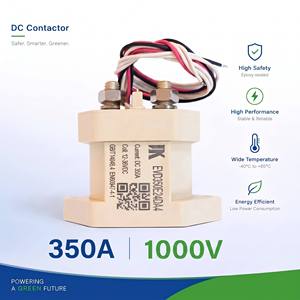
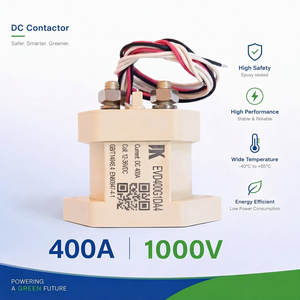
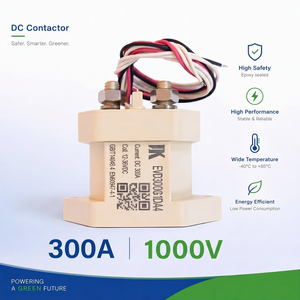
Our export-grade DC contactors (such as the 350A and 400A 1000V units highlighted above) incorporate gas-filled hermetic ceramic chambers containing hydrogen-rich inert gases. This technology rapidly quenches electric arcs, prevents contact oxidation, and allows reliable breaking of 1,500 VDC loads without explosive plasma release.
Engineered selection benchmark for OEM procurement managers, electrical system designers, and international distributors.
| Parameter / Technology | Thermal Photo Control | Electronic Light Sensor | Smart IoT Light Node | High Voltage DC Contactor |
|---|---|---|---|---|
| Primary Element | Bimetallic Disc + CdS / Resistor | Filtered Phototransistor + Relay | CMOS Photodiode + MCU + LoRa/Zigbee | Hermetic Ceramic / Arc Chute |
| Operating Voltage | 120V - 277V AC | 105V - 480V AC / 12V-24V DC | 100V - 480V AC (ANSI C136.41) | 12V up to 1,500V DC |
| Response Time | 30 - 120 Seconds (Thermal Delay) | 2 - 5 Seconds (Instant Instantaneous) | Configurable (Real-time Telemetry) | <30 ms Make / <10 ms Break |
| Power Consumption | <1.5 Watts | <0.5 Watts | <0.2 Watts (Standby) | Coil Economizer: <3.0 Watts |
| Fail Mode Status | Fail ON (Standard Safety) | Fail ON / Fail OFF Configurable | Fail ON with Diagnostics Alert | Normally Open / Normally Closed |
| Expected Service Life | 5,000 Operations (~5 Years) | 15,000 Operations (~10-15 Years) | 100,000+ Cycles (Solid State) | 200,000 Mechanical Operations |
| Primary Application | Standard Street Lighting | Commercial Facilities & High-Bay LED | Smart Cities / Centralized CMS | EV Charging (DCFC), BESS, Solar PV |
Strategic insights for global importers, EPC contractors, and OEM component buyers navigating technological shifts.
The global municipal lighting market is rapidly transitioning from legacy 3-pin NEMA twist-lock receptacles to standard 7-pin ANSI C136.41 and compact Zhaga Book 18 architectures. Procuring sensors equipped with 0-10V or DALI-2 dimming interfaces enables future-proof retrofitting into smart centralized management software (CMS) without replacing entire luminaire bodies.
As commercial facilities adopt direct DC microgrids powered by rooftop solar arrays and localized battery banks, light sensing systems must interface directly with high-voltage DC contactors. Future procurement strategies demand component bundling—pairing optoelectronic daylight harvesting sensors with 1000V+ DC disconnect relays to reduce inversion energy losses.
Environmental enforcement agencies across the European Union, North America, and Japan are tightening exemptions on Cadmium Sulfide (CdS) photo cells. Sourcing managers must audit supply chains to ensure all light sensors utilize RoHS-compliant silicon-based photodetectors, eliminating heavy metal toxicity risks in post-consumer electronic waste streams.
Next-generation light sensors now feature embedded low-power microcontrollers capable of learning micro-climate ambient patterns. Instead of static lux thresholds, these sensors dynamically adjust turn-on levels during foggy, rainy, or heavily polluted atmospheric conditions, optimizing energy conservation while maintaining civil safety standards.
How our manufacturing footprint, testing laboratories, and global compliance systems protect international buyers from risk.
As an established export leader and partner to global brands, our production facilities integrate strict ISO 9001 quality control workflows alongside direct engineering consultation. We do not simply ship standard off-the-shelf part numbers; we design, build, and deliver customized electrical assemblies tailored to your exact bill of materials (BOM) constraints.
Every single light sensor and magnetic contactor undergoes automated dielectric withstand testing, contact resistance measurement, and optical darkroom calibration before sealed packaging.
Our product lines hold valid UL, cUL, CE, CCC, and CSA certificates. Full test reports, material composition disclosures, and certificates of origin accompany every containerized shipment.
Custom coil voltages (12VDC to 480VAC), modified mounting brackets, custom wiring harnesses, private-label branding, and bespoke attenuation curves engineered to your specific enclosure drawings.
Direct technical responses to common questions raised by overseas buyers, electrical engineers, and supply chain directors.
To specify an optimal photo control unit, we require the nominal input voltage range (e.g., 105-305VAC or 480VAC), total switching load type (LED driver inrush current, magnetic ballast, or incandescent), physical connector interface (3-pin NEMA, 7-pin ANSI C136.41, or Zhaga), lux switching setpoints (standard ON: 10-20 Lux; OFF: 30-60 Lux), and enclosure IP rating requirements depending on regional ambient humidity and dust exposure.
Our 350A, 400A, and 500A high-voltage DC contactors utilize hermetically sealed ceramic chambers injected with pressurized hydrogen gas. This environment rapidly cools and extinguishes the electrical arc during contact separation. Furthermore, contact tips are crafted from specialized silver alloy (AgSnO2) compounds that resist micro-welding during peak capacitive inrush events inherent to battery energy storage system (BESS) pre-charge circuits.
Yes. Our heavy-duty outdoor photo control series incorporate internal Metal Oxide Varistors (MOVs) rated for standard 10kV / 5kA surge protection, with upgraded industrial options offering up to 20kV / 10kA transient protection compliant with ANSI C136.10 and IEEE C62.41 standards.
Standard catalog components maintain an MOQ of 50 to 100 units with typical lead times of 2 to 3 weeks. Customized OEM orders (specialized wiring harnesses, customer-branded laser etching, or customized lux thresholds) generally carry an MOQ of 500 units with a manufacturing cycle of 4 to 6 weeks depending on component tooling requirements.
Absolutely. Our application engineering department regularly assists global purchasers by performing side-by-side technical cross-references. Simply provide us with the original part datasheet or structural drawing, and we will identify the direct drop-in replacement across our contactor, relay, or photo control portfolios—complete with pinout verification and thermal performance validation.
All export orders are processed under standard Incoterms (FOB, CIF, DDP, or EXW). We issue complete Commercial Invoices, Packing Lists, Certificates of Origin (Form E, Form F, or General COO), Bill of Lading, and pre-formatted HS classification code declarations (e.g., HS 853649 for relays/contactors and HS 853650 for light control switches) to facilitate seamless clearance at destination ports.
Connect directly with our senior application engineers to review your schematics, request qualification samples, or receive factory-direct wholesale quotations within 24 hours.