We Design. We Build. We Deliver.
Precision-engineered AC/DC contactors, capacitors, and power switching modules optimized for solar systems, energy storage, and industrial automation.
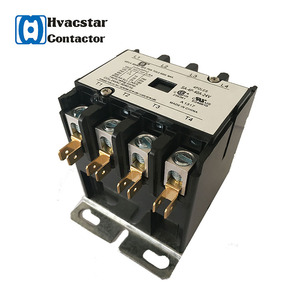
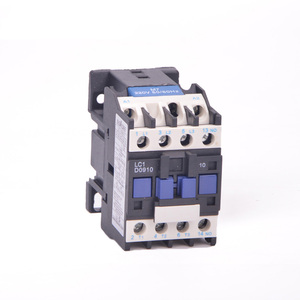
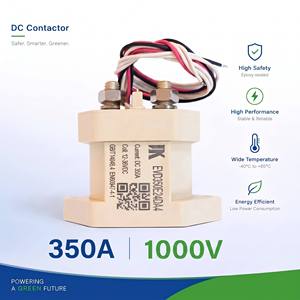
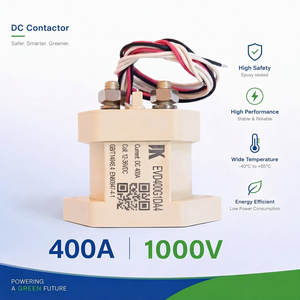
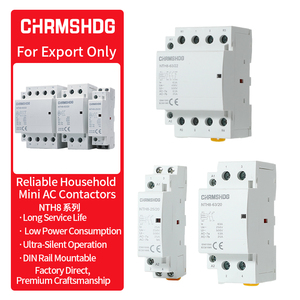
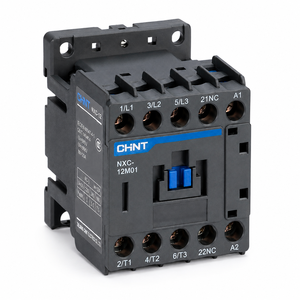
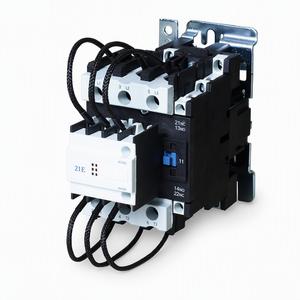
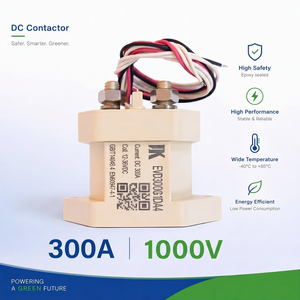
Engineering excellence, total quality control, and scalable high-voltage manufacturing infrastructure built for international energy systems.
In high-voltage solar charge controller circuits operating above 1000V DC, breaking continuous direct current creates severe electric arcs. Our DC contactors utilize hermetically sealed ceramic and epoxy chambers filled with inert gas mixtures (Hydrogen/Nitrogen). This quenches electrical arcs within milliseconds, preventing contact welding and eliminating short-circuit failure risks.
We provide complete design-in engineering services for tier-1 solar charge controller manufacturers. From tailoring coil voltages (12V, 24V, 48V, 110V DC) to modifying busbar terminal geometries, auxiliary signal contacts, and economizer control boards, our engineering team ensures seamless mechanical and electrical integration into your system enclosure.
Every batch of charge controller switching relays and contactors undergoes 100% dielectric withstand voltage testing, contact resistance measuring, and full functional timing validation. Products carry UL, cUL, CE, and RoHS certifications, supported by complete material composition declarations and batch production lot tracking for international customs compliance.
As off-grid solar, commercial microgrids, and utility-scale Battery Energy Storage Systems (BESS) scale rapidly, charge controllers must manage extreme current surges, bidirectional power flows, and elevated operating temperatures. Our factory in China combines automated assembly lines with advanced testing rigs to supply high-reliability switching components worldwide.
We support complete application engineering review—analyzing your system's load profile, peak surge currents, thermal dissipation specs, and EMC mitigation requirements before prototype release.

Analyzing the shift toward 1500V architecture, SiC-hybrid MPPT designs, and automated supply chain resilience for enterprise procurement leaders.
Commercial and utility solar installations are rapidly migrating from 1000V DC to 1500V DC topologies to reduce BOS (Balance of System) cable costs and improve system efficiency. Charge controller manufacturers require switching relays and contactors capable of handling higher dielectric stress with wider contact gaps and upgraded creepage/clearance distances.
Modern MPPT charge controllers no longer just regulate unidirectional power from solar PV panels to battery banks. With Vehicle-to-Grid (V2G) and hybrid battery storage growth, components must support bi-directional power switching, enabling seamless power routing between solar arrays, battery systems, and local AC/DC microgrids.
To maximize net system efficiency, charge controllers cannot afford high parasitic losses from continuously energized relay coils. Modern DC contactors feature integrated dual-coil electronic economizers that reduce holding power by up to 80% after pickup, drastically reducing internal cabinet heat generation.
Key design criteria for selecting switching components across solar charge regulation and battery protection circuits.
| Component Specification | Standard AC/DC Relays | Industrial Magnetic Contactors | Hermetic HV DC Contactors |
|---|---|---|---|
| Max Rated DC Voltage | 250V - 440V DC | 600V DC | 1,000V - 1,500V DC |
| Continuous Current Range | 10A - 40A | 20A - 100A | 100A - 500A+ |
| Arc Suppression Tech | Air Break / Magnetic Blowout | Deionizing Chutes | Hermetic Gas Chamber (H2/N2) |
| Auxiliary Signal Contacts | Optional / External | Integrated (1NO/1NC) | Integrated Auxiliary Feedback |
| Parasitic Coil Loss | High Continuous Load | Medium Continuous Load | Ultra-Low (with PWM Economizer) |
| Primary Target Application | Residential Solar Controllers | Commercial HVAC & Motors | Utility Solar, BESS & Fast EV Chargers |
Essential answers for global purchasing managers, electrical engineers, and OEM procurement directors importing charge controller components from China.
A qualified manufacturer must maintain internationally recognized quality management systems (ISO 9001), possess direct UL, cUL, CE, and TUV safety certifications, and offer complete material compliance (RoHS/REACH). Additionally, leading suppliers provide comprehensive test reports (dielectric withstand, contact resistance, vibration endurance) with qualification sample shipments to ensure smooth compliance auditing.
When a charge controller breaks high DC loads under emergency fault conditions, continuous arcing occurs due to the lack of a zero-crossing point in DC current. Hermetically sealed gas-filled contactors enclose the contacts in an inert hydrogen/nitrogen environment. Hydrogen possesses high thermal conductivity and dielectric breakdown strength, extinguishing the electric arc in milliseconds before the contact points melt or weld together.
Yes. Our engineering team routinely performs side-by-side technical cross-referencing. By submitting your existing part number, electrical ratings (voltage, continuous current, peak surge), mounting dimensions, and coil specifications, our engineers will identify the exact drop-in functional equivalent, highlighting any pinout, busbar, or dimensional differences for your approval.
Standard product samples ship within 3 to 5 business days for engineering evaluation. Full production batches generally carry a 3 to 5-week lead time. For contracted OEM programs, we support safety-stock buffer inventory in warehousing hubs, scheduled releases, and direct EDI integration to ensure uninterrupted assembly line operation.