We Design. We Build. We Deliver.
Engineered for extreme duty cycles, high insulation resistance, arc suppression, and certified international safety compliance across HVAC, EV, solar, and industrial control environments.
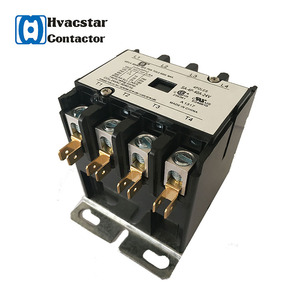
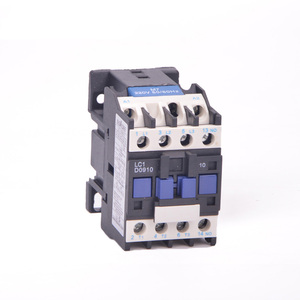
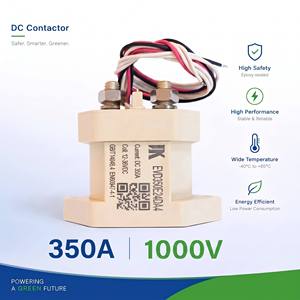
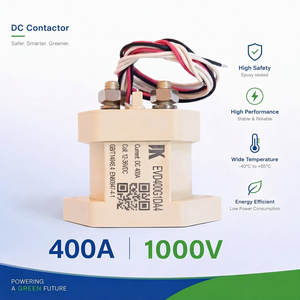
An objective engineering breakdown of leading timing control component manufacturers, evaluating production scalability, arc suppression technology, thermal design, and international regulatory compliance.
In modern industrial automation, energy storage systems (BESS), HVAC commercial platforms, and EV charging infrastructure, Time Delay Relays (TDRs) and magnetic contactors represent critical operational backbone components. These devices execute essential sequences, such as star-delta motor starting, compressor anti-short-cycling, pre-charge capacitor timing, and automated safety shedding. Selecting an optimal OEM factory requires evaluating more than unit cost; engineering directors must evaluate contact metallurgy, coil thermal dissipation, dielectric isolation ratings, and long-term manufacturing lot consistency.
Below is a comparative analysis of the top 10 global manufacturers specializing in timer relays, solid-state delay modules, and high-duty magnetic contactors:
| Manufacturer | Primary HQ | Core Product Strengths | Max Voltage / Current | Primary Target OEM Sectors |
|---|---|---|---|---|
| Altran Magnetics | Sterling, IL, USA | Custom DC Contactors, Solid State Relays, EMI Filters & Timers | 1,500 VDC / 500A | EV Charging, BESS, Commercial HVAC, Solar PV |
| Schneider Electric | Rueil-Malmaison, France | Telemecanique LC1D Contactors, Zelio Logic Delay Relays | 690 VAC / 630A | Industrial Automation, Building Management |
| Siemens AG | Munich, Germany | SIRIUS 3RP Timing Relays, High-Density DIN Rail Control | 690 VAC / 500A | Heavy Industry, Machinery, Railway Systems |
| Omron Corporation | Kyoto, Japan | H3Y / H3CR Microcontroller Multi-Function Timers | 250 VAC / 10A | Precision Packaging, Robotics, PLC Control |
| ABB Ltd. | Zurich, Switzerland | CT Series Electronic Timers, AF Contactors with Electronic Coils | 1,000 VAC / 2,850A | Power Utilities, Marine, Process Automation |
| Eaton Corporation | Dublin, Ireland | ETR4 Timing Relays, DILM Contactors, SmartWire-DT Integrated | 690 VAC / 1,600A | Motor Control Centers, Commercial Panels |
| Finder S.p.A. | Almese, Italy | Modular 80/86 Series DIN Timers, Ultra-Compact Relays | 400 VAC / 16A | Panel Building, Building Automation |
| TE Connectivity | Berwyn, PA, USA | AGASTAT Aerospace-Grade Timers, Kilovac High-Voltage DC | 1,000 VDC / 1,000A | Aerospace, Defense, EV Infrastructure |
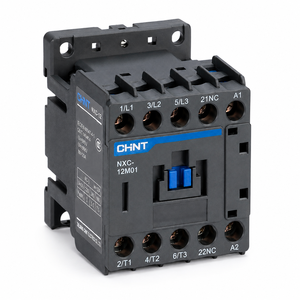
| Chint Electrics | Wenzhou, China | NXC Series Magnetic Contactors, JSZ Modular Timer Series | 690 VAC / 630A | Cost-Sensitive OEM Machinery, Power Distribution |
| Panasonic Industrial | Osaka, Japan | PM4H Digital Timers, Compact Hermetic EV Relays | 1,000 VDC / 300A | Automotive EV, Precision Instruments |
When procurement managers negotiate supply contracts with timing relay factories, simple functional testing is insufficient. High-gain information guidelines dictate a deep dive into the mechanical and semiconductor physics governing timing circuits:
Superior factories utilize Silver Cadmium Oxide (AgCdO) or Silver Tin Oxide (AgSnO2) contacts. AgSnO2 offers exceptional anti-welding properties during high-inrush capacitive and motor switching cycles.
For high-voltage DC delays above 48VDC, sustained plasma arcing degrades contacts rapidly. Top-tier suppliers integrate permanent magnetic blowouts and sealed hydrogen/nitrogen gas chambers.
Modern timer relays incorporate pulse-width modulation (PWM) economizer circuits, reducing holding current power consumption by up to 70%, decreasing control cabinet internal heat rise.
A detailed breakdown of timing logic modes, control signal requirements, and hardware implementations for system control designers.
When input voltage is applied, the timing sequence begins. Output contacts remain in their normal state until the preset time delay elapses, at which point contacts transfer. Removal of input voltage resets the timing circuit immediately.
Requires continuous input power plus a trigger signal. When the trigger is activated, contacts switch immediately. When the trigger is removed, the time delay begins. Contacts remain energized until the delay expires.
Application of input voltage immediately energizes output contacts. The contacts remain energized strictly for the duration of the preset time delay, then return to their unpowered state regardless of input voltage persistence.
Controls continuous ON/OFF cycling while input voltage is present. Advanced units feature independently adjustable ON-time (T1) and OFF-time (T2) potentiometers or microprogrammable digital registers.
How electrification, IoT connectivity, and green energy demands are reshaping time-delay relay component engineering and factory selection.
The global market for industrial timing relays and magnetic switching components is undergoing structural shifts driven by decarbonization, high-voltage battery system adoption, and smart factory digital transformation. Strategic procurement teams must position their supply chains to accommodate five defining trends over the coming five-year planning horizon:
Utility-scale solar PV and mega-watt EV fast chargers (MCS) are migrating from 1,000V DC to 1,500V DC operating limits. This transition demands hermetic epoxy sealing and specialized inert gas fill to quench dielectric breakdown.
Pure mechanical contactors face arc wear, while pure solid-state relays generate steady-state thermal losses. Hybrid relays combine solid-state timing for zero-cross turn-on with mechanical bypass contacts for ultra-low resistance.
Discrete analog potentiometers are increasingly replaced by micro-relays equipped with IO-Link, Modbus RTU, or CANbus interfaces. Equipment operators can dynamically adjust timing sequences via PLC software without panel access.
Geopolitical volatility and shipping bottlenecks have exposed single-source reliance on East Asian manufacturing hubs. Western OEMs are actively establishing qualified dual-source partnerships with North American engineering factories like Altran Magnetics in Sterling, Illinois, establishing local buffer stock to guarantee assembly line uptime.
Compliance with RoHS 3, REACH SVHC, and Conflict Minerals requirements is non-negotiable for European and North American market clearance. Enterprise procurement contracts now enforce mandatory mill test reports for contact metals and full polymer flame-retardant (UL94-V0) certification packages.
Bridging high-performance power switching design with reliable global supply continuity.
Operating from our primary facility at 1741 Industrial Drive, Sterling, Illinois, Altran Magnetics, LLC provides direct engineering support to global OEMs. Rather than offering fixed off-the-shelf components, our team partners with client engineering groups early in the development cycle to review load profiles, duty cycles, inrush currents, thermal limits, and enclosure constraints before establishing part numbers.
We modify auxiliary contacts, coil actuation voltages (DC 12V to 277V AC), mounting footprints, terminal blocks, wiring harnesses, and custom filter attenuation curves to your exact drawing specification.
Every single contactor and timing module undergoes rigorous automated testing, including dielectric withstand (Hi-Pot), contact resistance verification, timing delay calibration, and functional pull-in/drop-out voltage checks.
Product lines carry fully traceable UL, cUL, CE, CSA, and RoHS certifications. Complete material compliance statements and test data documentation accompany qualification sample shipments.
Expert engineering answers to critical questions regarding specification, certification, thermal derating, and cross-referencing.
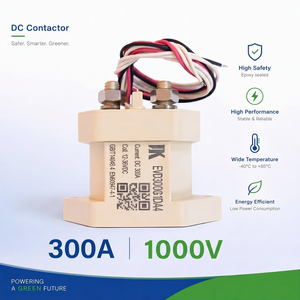
Our high-voltage DC contactor platforms switch electrical loads from 12 VDC up to 1,500 VDC, with continuous current ratings spanning 10A to 500A. Epoxy-sealed and hydrogen gas-filled arc-suppression constructions are available for EV charging cabinets, battery energy storage systems (BESS), solar PV disconnects, and heavy industrial DC drives.
Select an On-Delay timer if your equipment must wait for a specified period after power application before starting (e.g., staggering motor startups or allowing compressor pressure equalization). Select an Off-Delay timer if you require an output load to remain active for a predetermined period after the control trigger is turned off (e.g., cooling fans blowing over heating elements after burner shutdown).
Yes. Product families are built to comply with UL, cUL, CE, CSA, and RoHS/REACH directives. Our complementary EMI filters are validated against IEC/EN 61000 and CISPR/FCC Part 15 emission limits. Official declarations of conformity, UL file numbers, and test reports accompany all engineering qualification samples.
Electromechanical relays (EMRs) utilize a physical coil armature and metallic contacts. They provide complete physical galvanic isolation and low open-contact capacitance at lower unit costs, but contact arcing limits mechanical life to 100,000–1,000,000 operations. Solid-State Relays (SSRs) utilize semiconductors (thyristors, Triacs, or MOSFETs) to switch loads optical isolation without moving parts, enabling millions of silent cycles without contact degradation, ideal for high-duty-cycle heating controls.
High ambient panel temperatures increase coil resistance, elevating the minimum pick-up voltage required for coil activation. Additionally, high thermal environments reduce continuous current ratings due to heat dissipation limits. Altran Magnetics designs coils with Class H (180°C) or Class F (155°C) magnet wire and provides detailed thermal derating curves for high-temperature panel designs.
Yes. Provide our engineering team with the original competitor part number, electrical load ratings, coil control voltage, mounting dimensions, and safety certification requirements. Our application specialists will cross-reference the specification, highlight any pinout or mechanical dimensional differences, and supply sample prototypes for design validation.
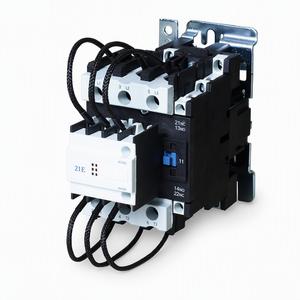
Uncharged capacitors act as near short-circuits during the initial millisecond of energization, generating severe high-frequency inrush currents up to 100 times rated current. Standard contacts can weld instantly under these spikes. Specialized capacitor contactors (like the CJ19 series featured above) incorporate early-make auxiliary contact blocks equipped with damping resistors to safely dissipate peak inrush currents before main contacts close.
Standard prototype samples for engineering evaluation ship within 1 to 2 weeks. Custom production orders featuring modified lead lengths, custom coil voltages, or private-label markings typically carry lead times of 4 to 6 weeks, supported by buffer stocking programs and scheduled releases for long-term production agreements.
Consult with our Sterling, Illinois application engineering team today. We review your schematics, load requirements, and compliance standards to recommend or build the precise component solution for your system.