We Design. We Build. We Deliver.
UL, cUL, CE, and RoHS compliant power switching components engineered for battery systems, EV infrastructure, and heavy industrial automation.
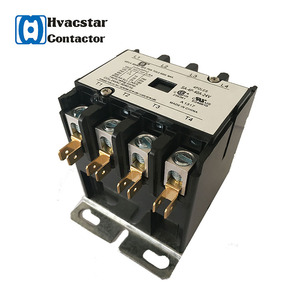
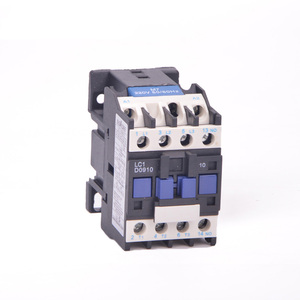
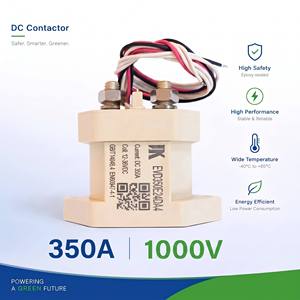
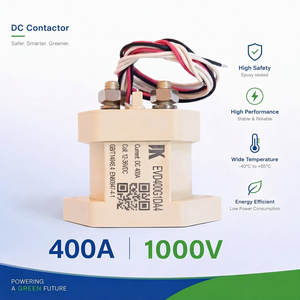
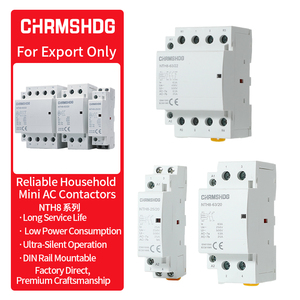
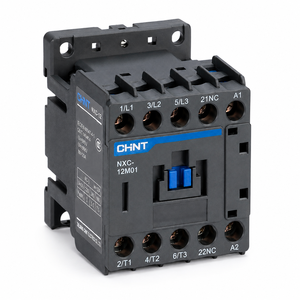
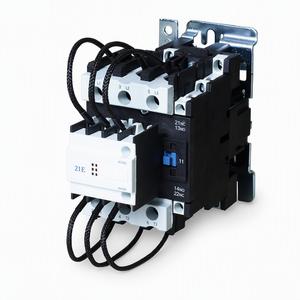
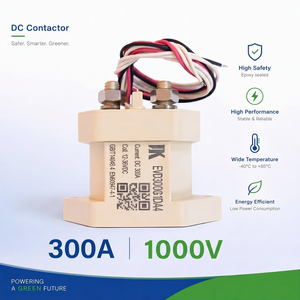
In modern electromechanical engineering, the term "Battery Switch" has evolved beyond simple manual rotary master-disconnect switches used in marine and automotive systems. As commercial fleet electrification, Grid-Scale Battery Energy Storage Systems (BESS), and Ultra-Fast EV DC Charging infrastructure scale globally, global OEMs require dynamic, high-voltage hermetically sealed DC Contactors and intelligent isolators capable of safely interrupting continuous DC currents from 100A up to 1,000A at voltages scaling from 12VDC up to 1,500VDC.
Direct current (DC) switching introduces unique electromechanical challenges not present in traditional AC switching. Because AC current naturally passes through a zero-voltage threshold 100 to 120 times per second, extinguishing the electrical arc during contact separation is relatively straightforward. Conversely, DC current maintains a constant magnitude, causing severe, continuous plasma arcing when contacts separate under load. Without advanced arc-suppression technologies—such as hermetic gas quenching, magnetic arc blowouts, and ceramic vacuum chambers—sustained DC arcing leads to rapid contact erosion, contact welding, and catastrophic thermal runaway.
OEM Engineering Insight: When specifying battery switches and DC contactors for energy storage systems (BESS), contact resistance must be maintained below 0.5 mΩ over the component lifecycle. Excessive contact resistance generates severe localized I²R heating, accelerating seal degradation and increasing system failure risks.
Strategic procurement teams must evaluate OEM suppliers based on technical rigor rather than unit cost alone. When conducting audit reviews for battery disconnect factories, leading engineering groups scrutinize four structural metrics:
Utilizing hydrogen-rich inert gas fill inside epoxy-resin or ceramic chambers quenches electrical arcs up to 10x faster than open-air switches, eliminating contact oxidation.
Modern battery energy storage systems feature bi-directional power flow (charging vs discharging). Contactors must incorporate dual magnetic blowouts to drive plasma arcs away regardless of current direction.
Integrated PWM economizers reduce holding coil power consumption by up to 80% after actuation, minimizing parasitic energy draw in off-grid solar and battery installations.
Headquartered in Sterling, Illinois (1741 Industrial Drive), Altran Magnetics, LLC has established itself as an authoritative manufacturer of specialized electronic, electrical, and electromechanical component solutions. Operating under a rigorous quality ethos—"We Design. We Build. We Deliver."—Altran Magnetics addresses the complex supply chain demands of tier-1 OEMs across North America, Europe, and Asia-Pacific.
| Performance Dimension | Altran Magnetics Enterprise Specification | Industry Standard Supplier Metric |
|---|---|---|
| Operating Voltage Range | 12 VDC to 1,500 VDC Continuous Breakdown | 12 VDC to 480 VDC Average Limit |
| Arc Suppression Tech | Inert Gas (Hydrogen Mix) Hermetic Epoxy Seal | Standard Air-Break Chutes / Unsealed Housing |
| Continuous Current Range | 10A up to 500A (Peak Overload up to 3000A) | 50A to 250A Restricted Capacity |
| Regulatory Approvals | UL, cUL, CE, CSA, RoHS, REACH, CISPR 15 EMC | Basic CE Marking without Third-Party UL File |
| Custom Engineering | Custom Busbars, Wiring Harnesses, Coil Voltages & Labels | Fixed Catalog Part Numbers Only |
Unlike standard component distributors, Altran Magnetics provides end-to-end design-in support. OEM engineers can specify customized termination geometry (threaded studs, custom copper busbars, or Molex connectors), tailored coil voltages (12V, 24V, 48V, or wide-range AC/DC drivers), and application-specific attenuation curves for integrated EMI suppression.
Every single production batch undergoes 100% functional verification, dielectric strength isolation testing (up to 4,000 Vrms), and low-level contact resistance validation before shipment, establishing robust audit trails for international compliance verification.
Procurement teams navigating the current semiconductor and electromechanical components ecosystem must plan for several key technological shifts driving the battery disconnect sector over the next five years:
Traditional mechanical switches provide absolute physical galvanic isolation but suffer from mechanical contact bounce and wear over millions of operations. Solid-state relays (SSRs) offer infinite cycle life and zero-arc switching but exhibit small leakage currents and thermal dissipation challenges. The market is shifting rapidly toward Hybrid Disconnect Architectures, where a solid-state element breaks high-speed fault currents in microseconds, followed by a mechanical battery switch opening to establish safe galvanic isolation.
Modern battery switches are no longer passive mechanical links. Next-generation factory platforms integrate micro-Hall-effect current sensors, localized RTD temperature sensors, and auxiliary status switches directly into the contactor body. Utilizing CAN bus or Modbus communication protocols, these smart disconnect units transmit real-time thermal and contact degradation data to the central Battery Management System (BMS), enabling predictive maintenance before failures occur.
Driven by utility-scale solar PV and massive BESS installations, system voltages have migrated from 1,000V up to 1,500VDC to minimize conductive line losses and cabling cross-sections. Procurement leaders must ensure factory suppliers maintain active UL 60947-4-1 and IEC 60947-3 certifications specifically rated for continuous duty at 1,500V operating ceilings.
Geopolitical volatility and international freight risks have altered OEM procurement strategies. Tier-1 manufacturers prioritize suppliers with dual-region manufacturing capabilities, US-based technical application support, and fully traceable material composition declarations (RoHS/REACH). Altran Magnetics fulfills this requirement by pairing U.S. design engineering in Illinois with validated global manufacturing networks.
Detailed technical responses addressing common queries raised by OEM engineering leads and B2B procurement managers during component qualification.
A manual battery switch requires physical mechanical rotation by a technician to isolate a battery bank, primarily used for service lock-out/tag-out (LOTO). An automated DC contactor uses an electromagnetic coil or electronic driver to open or close contacts remotely in milliseconds, controlled automatically by the Battery Management System (BMS) during pre-charge, normal operation, or emergency fault states.
Air breaks at high voltages allow sustained plasma arcing that melts contact materials. Hermetically sealing the contact chamber with dense inert gases (such as hydrogen or nitrogen blends) quenches the electrical arc rapidly due to the high thermal conductivity and dielectric strength of the gas, preventing arc flare-ups and contact welding.
Continuous current (I_continuous) represents the maximum thermal current the contactor can carry indefinitely without exceeding insulation temperature limits (e.g., 350A continuous). Short-time withstand current (I_cw) defines the short-circuit fault current the closed contacts can handle for a brief duration (e.g., 2,000A for 100 milliseconds) without welding or exploding open due to magnetic repulsion forces.
For North American grid and equipment integration, components must carry UL listings or recognized component status under standards such as UL 60947-1 / UL 60947-4-1 or UL 508. For European markets, CE marking backed by compliance with IEC/EN 60947-3 standards and RoHS/REACH material safety compliance is strictly required.
Yes. Altran Magnetics specializes in legacy and competitor cross-referencing. Engineering teams review electrical load profiles, physical mounting footprints, terminal styles, and coil specifications to provide direct drop-in replacement part numbers complete with engineering drawing packages and qualification test reports.