
Comprehensive Engineering Guide: Custom OEM/ODM Automatic & Manual Transfer Switching Systems
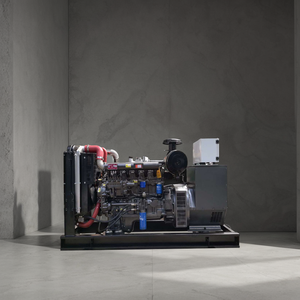
In modern industrial automation, telecommunications, critical healthcare infrastructure, commercial real estate, and microgrid power management, continuous supply integrity is non-negotiable. An Automatic Transfer Switch (ATS) acts as the central intelligence element in electrical distribution networks, automatically seamless switching electrical loads between a primary utility source (Normal Power) and an auxiliary power source (Standby Generator, Solar PV Inverter, or Battery Energy Storage System - BESS) whenever grid voltage drops, phase unbalance, or total blackout occurs.
As a global premier OEM/ODM Transfer Switch Supplier & Exporter, our manufacturing methodology blends heavy-duty power electromechanical switching with intelligent, micro-processor-driven sensing controls. Incorporating world-class engineering standards inspired by established component pioneers like Altran Magnetics, our power switching solutions guarantee minimal contact resistance, zero sustained arcing, superior electromagnetic compatibility (EMI), and maximum operational endurance under extreme thermal stress.
Technical Classification: PC-Class vs. CB-Class Transfer Switching Equipment
Selecting the appropriate Transfer Switch Equipment (TSE) for an OEM application demands an intimate understanding of system short-circuit withstand capabilities and breaking mechanisms. According to global standards such as IEC 60947-6-1 and UL 1008, ATS devices are broadly classified into two engineering categories:
PC-Class ATS (Power Contact)
Built with robust electromechanical contactor mechanisms designed to withstand and break overload currents without integral overcurrent release devices. PC-Class devices offer extraordinarily high short-circuit withstand ratings (SCCR) and long mechanical switching endurance (up to 10,000 cycles).
CB-Class ATS (Circuit Breaker)
Utilizes integrated Miniature Circuit Breakers (MCB) or Molded Case Circuit Breakers (MCCB) equipped with thermal-magnetic or electronic overcurrent releases. CB-class switches serve dual roles: transferring source power and delivering down-stream overcurrent and short-circuit protection.
CC-Class ATS (Contactor Type)
Designed primarily for residential, light commercial, and small generator changeover applications. Operates via solenoid-driven or motorized linkages, balancing budget optimization with fast transfer times (<15ms).
Architectural Deep Dive: Arc Mitigation & Contact Resistance Optimization
The operational lifespan of a dual-power automatic transfer switch hinges on its ability to extinguish electrical arcs during high-current inductive switching. When shifting from utility main power to a diesel generator set under full rated load (e.g., 400A or 630A), the opening contacts pull a plasma arc reaching temperatures above 5,000°C.
Our custom OEM transfer switches incorporate advanced physical and chemical arc mitigation systems:
- Silver-Cadmium Oxide (AgCdO) and Silver-Tin Oxide (AgSnO2) Contacts: Engineered via powder metallurgy to maximize resistance against contact welding, erosion, and material transfer during repetitive switching events.
- Arc Chute Splitter Plates: Magnetically draw and fragment the electric arc into smaller segments inside an insulated ceramic/epoxy arc chamber, cooling and quenching the arc in less than 5 milliseconds.
- Galvanic Isolation & Mechanical Interlocking: High-precision mechanical interlocks guarantee that Source A (Mains) and Source B (Generator) can never close simultaneously, preventing cataclysmic cross-phase short circuits or back-feeding into dead utility lines.
- Gas-Filled & Epoxy-Sealed Arc Chambers: Derived from high-voltage DC contactor architecture, select custom models utilize hermetically sealed enclosures filled with specialized arc-suppression gas mix to isolate internal components from moisture, salt spray, and atmospheric oxidation.
System Comparison: Open Transition vs. Closed Transition Transfer Switches
When engineering custom power distribution cabinets for global clients, choosing the correct transition mode is crucial for system safety and equipment protection.
| Transition Type | Switching Logic | Transfer Time | Typical Applications | OEM Complexity |
|---|---|---|---|---|
| Open Transition (Break-Before-Make) | Completely disconnects from the primary power source before connecting to the standby source. | 10 ms – 150 ms (Fast Break) / 1s – 5s (Delayed) | General emergency standby systems, residential generator transfer, non-critical commercial loads. | Standard mechanical / electrical interlocking. Cost-effective. |
| In-Phase Open Transition | Monitors phase angle between sources; executes transfer precisely when phase alignment crosses near zero. | < 16 ms (Phase-matched) | Inductive motor loads, HVAC chillers, industrial pumping systems avoiding high inrush current spikes. | Requires microprocessor phase-sync sensing control module. |
| Closed Transition (Make-Before-Break) | Momentarily parallels both power sources (typically <100ms) to transfer load without any interruption in voltage. | 0 ms (Seamless overlap) | Data centers, semiconductor cleanrooms, hospitals, mission-critical processing plants. | High; requires sync protection relays, utility grid interconnection approval. |
| Solid-State Static Transfer Switch (STS) | Uses silicon-controlled rectifiers (SCRs) or solid-state thyristors to switch sources electronically. | < 4 ms (Sub-cycle switch) | High-speed financial transaction servers, sensitive telecom switching centers. | Very High; involves solid-state relay power electronics & active heat dissipation. |
Global Procurement & Sourcing Trends (2026–2030)
As global energy infrastructure pivots toward decentralized microgrids, smart distribution grids, and distributed renewable energy, the strategic procurement criteria for Transfer Switch Equipment are undergoing significant shifts. Purchasing departments and OEM electrical design engineers must adapt to five overarching trends:
1. Microgrid & Dual Energy Storage System (BESS) Integration
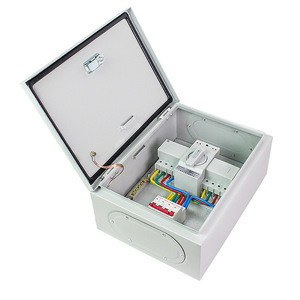
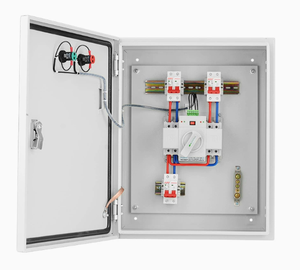
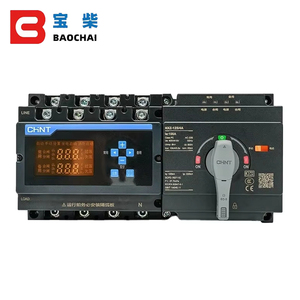
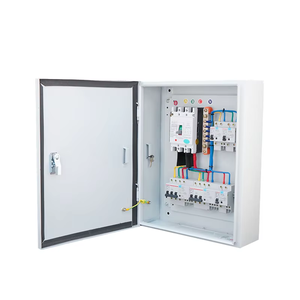
Modern commercial buildings no longer rely solely on a utility-to-diesel generator scheme. Modern ATS configurations must manage multi-source switching: Utility Grid, On-site Solar PV Inverters, Battery Storage, and Backup Gensets. OEM demand for 4-Pole (4P) ATS units with programmable timed changeover features (such as our Constant Power Timed Transfer Switch Box) has surged by over 45% worldwide.
2. IoT Telemetry and Modbus RTU / Ethernet Connectivity
Procurement teams are moving away from basic analog transfer switches. Modern ATS panels require embedded microprocessors offering real-time RS485 communication, enabling remote monitoring of phase voltage, frequency, contact wear status, and event logging directly into Building Management Systems (BMS) or cloud-based predictive maintenance dashboards.
3. Compact Footprints with High Short-Circuit Withstand Rating (SCCR)
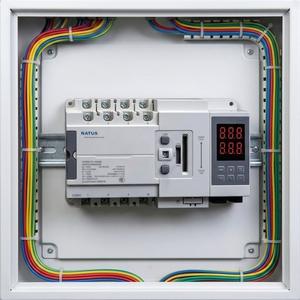
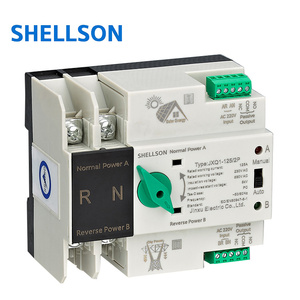
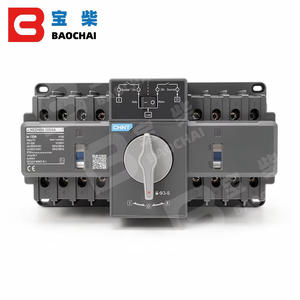
With real estate inside distribution cabinets at a premium, OEMs demand ultra-compact DIN-rail mounted 2P and 4P transfer switches (e.g., 16A to 125A units) that deliver high short-time withstand currents (Icw) without expanding panel dimensions.
4. Stringent Harmonized Global Compliance (UL / CE / RoHS)
Exporters of complete generator sets, medical equipment, and HVAC platforms require transfer switch sub-components that hold cross-border certifications. Purchasing certified component lines backed by complete safety documentation (UL 1008, IEC 60947-6-1, CE, CSA, RoHS, REACH) dramatically accelerates the final product’s export clearance across North America, Europe, and Asia-Pacific markets.
5. Demand for OEM Private-Label Customization
Industrial buyers seek strategic manufacturing partners capable of delivering turnkey customized solutions: custom busbar bend configurations, pre-wired auxiliary control harnesses, specialized enclosure IP ratings (IP54 to IP66 outdoor protective boxes), and private-label brand branding directly from the factory floor.
Future Technology & Development Trends in Power Transfer Engineering
To maintain a competitive edge, our R&D centers focus on next-generation power transfer innovations designed to set new benchmarks in reliability and switching dynamics:
- Hybrid Electromagnetic/Solid-State Switching: Combining the zero-wear, high-speed advantage of SCR solid-state relays with the low-loss, cool-running performance of mechanical contactors. Solid-state devices take the arc during the transition millisecond, after which heavy-duty mechanical contacts lock in for steady-state conduction.
- Wide Bandgap (SiC/GaN) Power Semiconductor Controls: Integrating Silicon Carbide drivers into ATS control logic modules to drastically lower standby power consumption, increase surge immunity, and improve thermal resilience in ambient environments exceeding 70°C.
- Self-Diagnostic AI Contact Life Algorithms: Utilizing localized micro-sensors to measure temperature rise ($\Delta T$) across copper terminals and arcing duration per cycle, dynamically calculating remaining mechanical contact life and alerting maintenance teams prior to failure.
- Enhanced Arc Flash Mitigation Chambers: Utilizing advanced fluid dynamics simulations to optimize arc chute vent geometry, capturing and dissipating ionized gases instantly without risking enclosure over-pressurization.