We Design. We Build. We Deliver.
Explore our engineered line of UL, cUL, CE, and CCC certified isolation switches, magnetic contactors, and high-voltage DC switching relays tailored for custom OEM/ODM manufacturing programs.
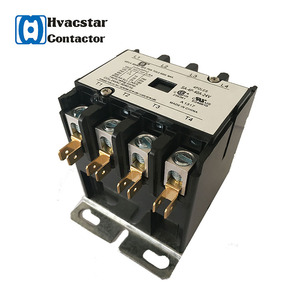
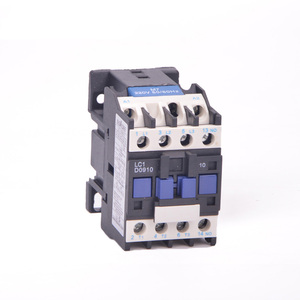
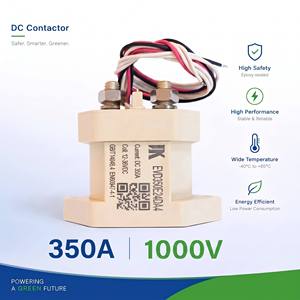
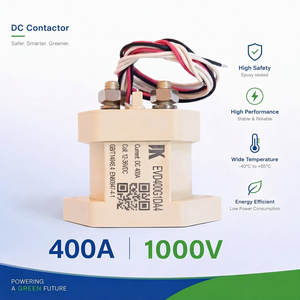
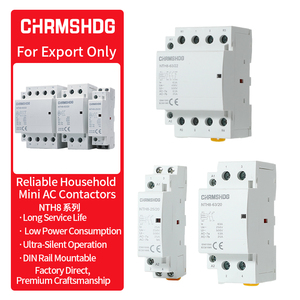
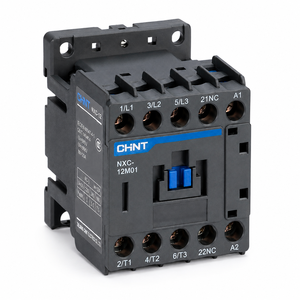
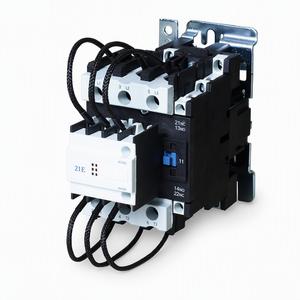
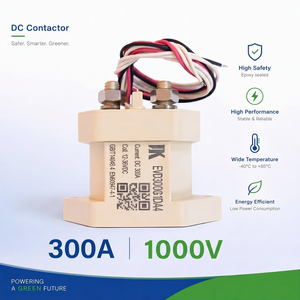
Delivering high-reliability isolation switches, DC contactors, and custom switching assemblies built to exact customer drawings under rigorous quality management controls.
In high-power electrical engineering, an isolation switch serves as the critical line of defense for system safety, circuit maintenance, and fault isolation. Unlike standard load-break switches or protective circuit breakers, industrial isolation switches must guarantee absolute physical separation of electrical conductors under demanding continuous duty cycles, high ambient temperatures, and transient fault conditions. As global power architectures migrate toward higher direct-current (DC) voltages—driven by rapid advancements in Megawatt EV Fast-Charging Networks, Battery Energy Storage Systems (BESS), and Commercial Solar PV Generation—the physics of isolation switching has undergone a fundamental transformation.
Traditional air-break disconnectors rely on mechanical air gaps to quench arcs. However, when switching high-voltage DC currents above 48V, electrical arcing does not naturally experience a zero-crossing point as AC currents do. Without specialized arc extinction mechanisms, a sustained plasma arc can quickly destroy contact tips, weld contacts together, or cause catastrophic phase-to-ground flashovers. As a leading OEM/ODM Isolation Switch Manufacturer, our engineering design methodology integrates advanced gas-filled hermetic sealing, ceramic-encapsulated arc chambers, and permanent-magnet magnetic blowouts to stretch, cool, and extinguish plasma arcs in milliseconds.
For original equipment manufacturers (OEMs), choosing between off-the-shelf catalog switches and custom-engineered ODM solutions directly impacts system longevity, enclosure volume footprint, and safety certification timelines (such as UL 60947-3, UL 489, CE, and IEC/EN 60947-3). Our manufacturing facilities at Altran Magnetics specialize in bridging the gap between custom design requirements and high-volume component production, offering tailormade coil voltages, terminal orientation geometry, auxiliary contact feedback, and specialized contact alloys (such as Silver Tin Oxide AgSnO2) that resist material transfer and micro-welding under heavy inrush currents.
From initial schematic evaluation to certified production runs, our team works directly with your design engineers to eliminate integration bottlenecks.
Proprietary epoxy resin sealing and inert gas pressurization (Hydrogen/Nitrogen blends) prevent contact oxidation and suppress high-voltage arcs across continuous DC switching applications up to 1,500VDC.
We custom-engineer dual-coil actuation drivers and pulse-width modulation (PWM) electronic economizers to reduce steady-state coil power consumption by up to 85%, eliminating cabinet thermal buildup.
Every part number undergoes full functional testing, contact resistance measuring, insulation testing, and dielectric withstand verification. All shipments are tied to strict lot records with revision-controlled BOMs.
As global supply chains face geographic shifts and environmental mandates, engineering buyers and procurement directors are re-evaluating their sourcing strategies for critical power components. Sourcing high-voltage isolation switches and contactors is no longer merely a unit-cost decision; it is a holistic evaluation of risk management, regulatory compliance, energy efficiency, and lead-time predictability.
1. Acceleration of 1500VDC Architecture in Energy Transition Platforms: Commercial battery storage system (BESS) containers and ultra-fast EV charging hubs are rapidly transitioning from 800V to 1500V DC topologies. Procurement teams must source isolation switches that feature elevated clearance and creepage distances (exceeding IEC 60664-1 standard parameters) while maintaining compact enclosure profiles. Manufacturers offering gas-filled ceramic chambers are rapidly capturing market share from traditional open-air mechanical isolators due to their superior thermal performance and compact footprint.
2. Demand for Smart Condition Monitoring & Telemetry Integration: Modern industrial machinery requires real-time operational feedback. Future procurement trends indicate a steep increase in demand for isolation switches equipped with auxiliary microswitches, integrated temperature sensors, and contact erosion feedback loops. OEM designers are opting for switches that feed state-of-health data directly to central PLC controllers via Modbus or CANbus protocols to execute predictive maintenance prior to catastrophic system failure.
3. Supply Chain Resiliency & Engineering Transparency: International buyers now heavily scrutinize single-source dependencies. Component manufacturers that maintain US-based engineering oversight, rigorous compliance verification (RoHS, REACH, Conflict Minerals), and flexible multi-tier assembly locations present a distinct competitive advantage. Procurement teams prioritize factory partners capable of issuing custom drawing packages, rapid prototyping, and controlled engineering change notifications (ECN) to prevent assembly line stoppages.
| Feature / Parameter | Gas-Sealed HVDC Isolation Switches | Traditional Air-Break Disconnectors | Capacitor Duty AC Contactors |
|---|---|---|---|
| Target Voltage Range | 12VDC – 1,500VDC | 100VAC – 690VAC | 220VAC – 480VAC (3-Phase) |
| Arc Quenching Technology | Hermetic Gas + Magnetic Blowout | Atmospheric Air Gap + Arc Chutes | Damping Resistors / Pre-contacts |
| Contact Erosion Rate | Extremely Low (Oxidation Free) | Moderate to High | Low (Inrush Suppressed) |
| Environmental Protection | IP67 / Hermetically Sealed | IP20 – IP40 (Open Frame) | IP20 DIN Rail Mount |
| Primary Applications | EV Charging, BESS, Solar PV, AGV | Industrial Distribution Panels | Power Factor Correction Racks |
To stay ahead of market demands, research and development teams at advanced factories are focusing on three main technological pillars:
Bi-Directional DC Breaking Capability: With battery energy storage systems actively charging and discharging power to and from the grid, isolation switches must be capable of breaking full load currents in both forward and reverse polarities without degradation of the magnetic blowout force. Advanced permanent magnet array designs now ensure uniform arc displacement regardless of current direction.
Hybrid Solid-State & Mechanical Switching Topologies: By pairing semiconductor switches (IGBTs/Silicon Carbide MOSFETs) in parallel with mechanical isolation contacts, next-generation switches achieve instantaneous zero-arc interruption via the semiconductor layer, followed immediately by galvanic physical isolation via the mechanical contacts. This hybrid approach delivers virtually infinite contact electrical life for mission-critical aerospace, military, and naval power networks.
Eco-Friendly Dielectric Media: In compliance with global environmental regulations limiting SF6 (Sulfur Hexafluoride) and halogenated compounds, modern gas-filled switches utilize environmentally neutral nitrogen-helium dielectric gas mixtures combined with lead-free solder alloys and REACH-compliant polymers.
Combining US application engineering expertise with robust international manufacturing capabilities to deliver uncompromised quality.
Our teams review schematics, load profiles, duty cycles, and enclosure constraints before issuing a quotation—ensuring zero unexpected field failures.
We maintain dedicated customer-specific part numbers, custom wire harness assembly, laser marking, and specialized packaging under full revision control.
Component families are built to UL, cUL, CE, CSA, CCC, and RoHS requirements. Declarations of conformity and test reports accompany all samples.
Buffer stock management, scheduled releases, and global logistics support keep your assembly lines operating without interruption.
Answers to common engineering and procurement inquiries regarding isolation switches and high-voltage contactors.
Collaborate directly with our engineering team to solve your electrical isolation, arc suppression, or space-constraint challenges. Fast turnaround on quotes, custom samples, and technical datasheets.
Send an Inquiry