We Design. We Build. We Deliver.
Explore our factory-direct, international-grade high voltage DC contactors and AC switching magnetic relays, specifically engineered for EV charging cabinets, BESS microgrids, commercial HVAC, and heavy industrial automation.
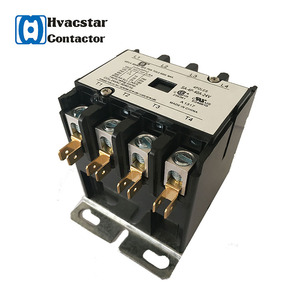
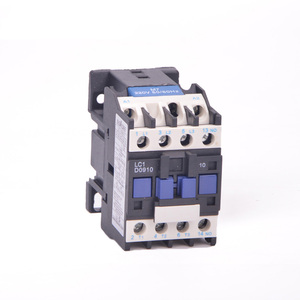
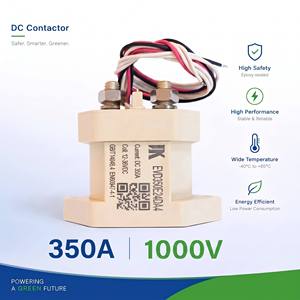
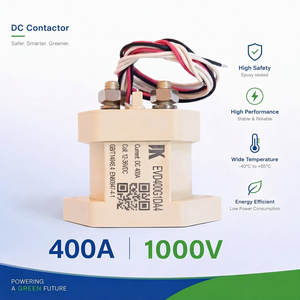
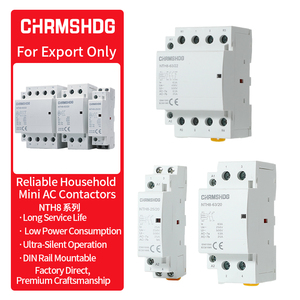
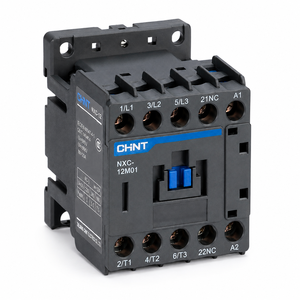
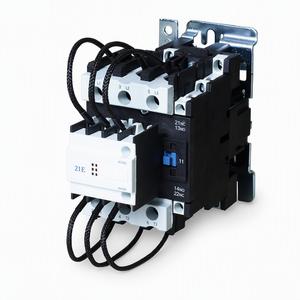
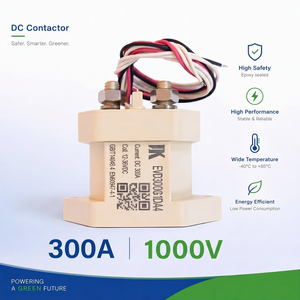
In modern high-power electromechanical engineering, switching high-voltage Direct Current (HVDC) presents physics-based challenges fundamentally distinct from traditional Alternating Current (AC) breaking. Because DC current lacks a natural "zero-crossing" point, breaking high-current DC loads generates sustained plasma arcs that rapidly destroy contact materials, compromise insulation resistance, and present severe thermal runaway risks. As a global OEM/ODM manufacturer, Altran Magnetics leverages advanced gas-quenching technologies, hermetic ceramic seals, and optimized magnetic blowouts to design contactors capable of reliable interruption up to 1,500 VDC.
Direct current arcing at voltages above 400V requires specialized dielectric environments. Our high-voltage DC contactor series utilizes vacuum-sealed ceramic or specialized epoxy enclosures injected with high-thermal-conductivity inert gases (such as hydrogen and nitrogen mixtures under pressure). This structure rapidly extinguishes electron movement during contact separation, preventing arc continuation even under extreme short-circuit fault conditions.
To break high ampacities (300A to 600A continuous), integrated permanent magnets generate directional magnetic fields across the contact gap. Utilizing the Lorentz force ($F = q(E + v \times B)$), the plasma arc is forcefully stretched and pushed away from the silver-alloy contact tips into designated arc chutes. This process reduces contact erosion, lowers terminal temperature rise, and guarantees mechanical endurance beyond 200,000 operations.
Continuous coil power consumption generates unwanted parasitic heat in enclosed battery power distribution units (PDUs) and EV charging stations. Our dual-coil dynamic pick-up systems feature internal electronic PWM (Pulse Width Modulation) coil economizers. This technology reduces steady-state holding power by up to 80% post-actuation while maintaining maximal contact retention force under high shock and vibration.
| Architecture Parameter | Air-Break AC Contactor | Epoxy-Sealed HV DC Contactor | Hermetic Ceramic HVDC Contactor |
|---|---|---|---|
| Target Voltage Range | 24V AC – 690V AC | 12V DC – 1000V DC | 12V DC – 1500V DC Next-Gen |
| Arc Suppression Medium | Ambient Air / De-ion Grids | Epoxy Resin Enclosure | Pressurized $H_2 / N_2$ Gas Cavity |
| Bi-Directional Breaking | Limited / Frequency Dependent | Polarized / Non-Polarized Options | Fully Bi-Directional Capable |
| Infiltration Rating | IP20 – IP40 | IP67 Sealed | IP68 Hermetic Seal |
| Dielectric Withstand | 2,500 VAC / 1 min | 3,000 VDC / 1 min | 4,500 VDC / 1 min |
| Typical Applications | HVAC, Motor Control, Lighting | Solar Inverters, Commercial BESS | Megawatt Charging (MCS), Heavy EV |
As global electrification accelerates across commercial transit, renewable energy storage systems (BESS), and ultra-fast DC charging networks, procurement executives and systems design engineers must align with critical technology transitions occurring in electromechanical components.
Commercial energy storage systems and ultra-fast electric vehicle charging networks (800V to 1500V architecture) are rapidly replacing legacy 600V/1000V systems to minimize ohmic losses ($I^2R$) and cable thickness. Procurement specifications for contactors are shifting toward units with 1500V isolation ratings, higher impulse withstand voltages, and reduced contact resistance ($<0.5\ m\Omega$) to maintain thermal safety during high-C-rate fast charging.
Vehicle-to-Grid (V2G), dynamic battery balancing, and localized microgrid power feeding require high-voltage contactors to switch current reliably in both forward and reverse directions. Legacy polarized contactors rely on unidirectional permanent magnets, which risk explosive thermal failure under reverse-current breaking. Modern OEM/ODM procurement prioritizes non-polarized, dual-directional magnetic blowout geometry.
Preventative maintenance schedules in industrial utilities are giving way to real-time component health tracking. Next-generation HV DC contactors incorporate integrated auxiliary sensors to monitor contact wear, ambient temperature, auxiliary status feedback, and coil degradation. This predictive diagnostic capability enables system controllers to isolate faults before catastrophic contact welding occurs.
Headquartered in Sterling, Illinois, Altran Magnetics provides deep engineering expertise, strict component traceability, and comprehensive regulatory documentation across global energy and industrial automation markets.
We work directly with engineering teams to configure custom coil voltages (12VDC, 24VDC, 48VDC, 110VDC, or custom AC ranges), customized copper busbar geometry, specialized wire harness assemblies, and mounting brackets tailored to your physical enclosure constraints.
Every single contactor batch undergoes 100% functional verification prior to packaging. Our testing protocol includes dielectric voltage withstand checks, insulation resistance testing, contact drop/resistance measurement under full load, and dynamic coil pull-in/drop-out voltage validation.
We eliminate regulatory import risks. Component families are backed by active UL, cUL, CE, CSA, and RoHS/REACH compliance certifications. Complete material breakdown statements, declaration of conformity documents, and test data accompany all sample and production orders.
With established distributor networks across North America, Europe, and Asia-Pacific, Altran Magnetics supports scheduled releases, safety-stock buffering programs, and dual-region sourcing strategies to guarantee factory line continuity for international buyers.
Need custom terminal configuration, internal economizers, or high-volume project quotes?
Inquire NowGet quick, detailed technical answers to common queries regarding high-voltage switching component selection, certification, and customization options.
Hermetically gas-filled DC contactors feature a completely sealed ceramic or specialized epoxy arc chamber injected with pressurized inert gas (typically hydrogen/nitrogen blends). This gas suppresses arc formation, prevents internal contact oxidation, and allows switching at significantly higher voltages (up to 1,500 VDC) in compact housing dimensions. Non-sealed or open-air contactors rely on air-break distance, resulting in larger physical sizes, vulnerability to dust/moisture ingress, and lower maximum DC voltage ratings.
Polarized DC contactors utilize internal permanent magnets placed in a specific orientation to blow the arc into arc chutes during break operations. They offer high breaking capacity in a lighter frame but must be connected with correct polarity ($A1+$ to positive load). If current flows in reverse (e.g., during bidirectional battery charging/discharging), the magnet draws the arc inward, causing destruction. Non-polarized contactors use symmetric arc-extinction chambers, allowing seamless bidirectional breaking for V2G, BESS, and regenerative braking setups.
Our product platforms are manufactured in alignment with UL 60947-4-1, IEC 60947-4-1, CE, CSA, and CCC compliance standards. Full UL file numbers, declarations of conformity, and test reports (covering insulation, dielectric withstand, thermal rise, and short-circuit capability) are provided directly to qualified engineering and procurement teams during the sampling phase.
Yes. Our application engineering team regularly assists OEMs with cross-referencing obsolete, expensive, or high-lead-time switching components from major manufacturers. By comparing electrical parameters (continuous ampacity, peak voltage, contact resistance, coil drive, mounting footprint, and auxiliary configuration), we provide drop-in or functional replacements with minimal engineering modification required.
Standard model samples are typically dispatched within 3 to 5 business days for engineering evaluations. Custom OEM/ODM orders (with modified terminal block geometry, custom coil leads, or integrated harnesses) generally take 2 to 3 weeks for initial prototypes. We maintain flexible MOQ tiers to support customer production ramp-ups from pilot validation to full volume manufacturing.
Connect directly with our factory-direct application engineers to request sample units, 3D STEP models, technical datasheets, or volume OEM pricing tailored to your program schedule.