We Design. We Build. We Deliver.
Engineered for high continuous currents, rapid dielectric recovery, EV charging networks, and industrial power distribution.
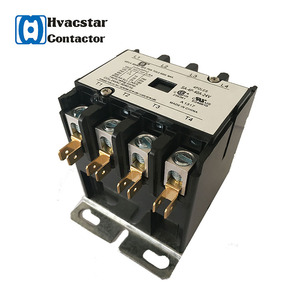
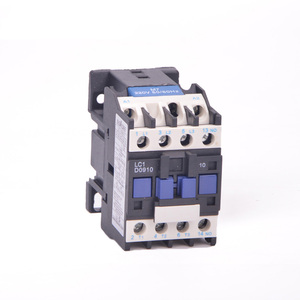
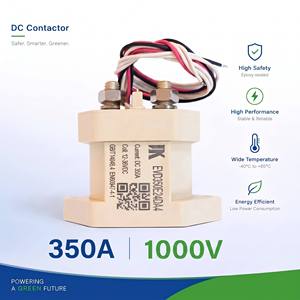
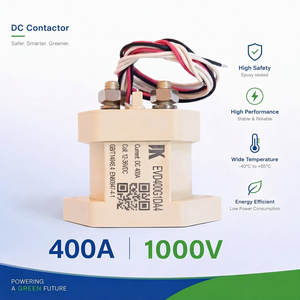
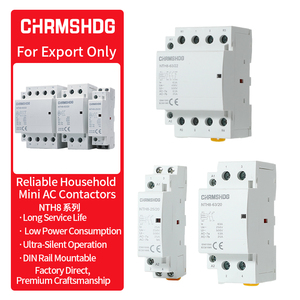
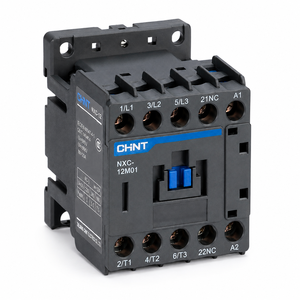
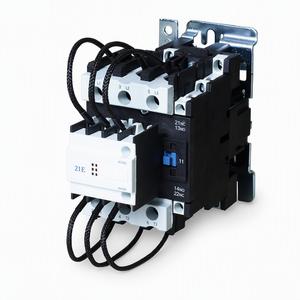
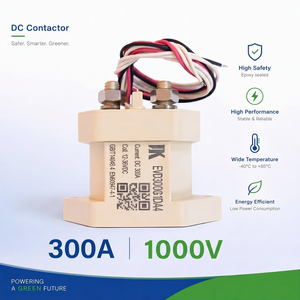
In high-voltage, high-current switching applications, standard air-break magnetic contactors suffer from rapid contact degradation, ionization arcing, and severe electromagnetic interference (EMI). Custom OEM vacuum contactors replace atmospheric air gaps with hermetically sealed ceramic or glass vacuum bottles (interrupters), maintaining internal pressures below 10-4 Pa (10-6 mbar). At this vacuum level, the mean free path of residual gas molecules exceeds the distance between the contacts, preventing electron avalanche breakdown according to Paschen's Law.
When the contacts separate under load, a metal vapor arc is created exclusively from the erosion of the contact material itself. As the alternating or direct current approaches a zero-crossing (or during forced DC commutation), this metal vapor rapidly condenses onto surrounding ceramic walls and dedicated vapor shields within microseconds. The dielectric strength across the contact gap recovers at rates exceeding 20 kV/μs, preventing arc reignition even under extreme inductive loads (AC-3, AC-4, and DC-5 duty cycles).
Technical Insight for OEM System Designers: Modern custom vacuum contactor designs utilize Axial Magnetic Field (AMF) or Transverse Magnetic Field (TMF) contact geometries. AMF contacts force the vacuum arc to remain in a diffuse state rather than contracting into a localized, destructive arc column. This reduces local contact erosion by up to 75%, maintaining contact resistance below 0.3 mΩ over hundreds of thousands of operations.
The choice of contact material dictates the performance ceiling of an OEM vacuum contactor. Altran Magnetics leverages proprietary powder metallurgy processes to create specialized contact alloys tailored to specific load profiles:
Based in Sterling, Illinois, Altran Magnetics designs, builds, and delivers certified switching components for critical OEM projects worldwide.
The global transition toward electrification, renewable energy integration, and megawatt-scale direct current (DC) distribution networks is accelerating the demand for sophisticated high-voltage vacuum contactors. Traditional air-break and oil-immersed contactors are rapidly being phased out due to environmental regulations, size constraints, and high maintenance overhead. Key industry trends driving next-generation custom vacuum contactor development include:
Battery Energy Storage Systems (BESS) and Commercial EV Mega-Chargers are transitioning from 600V bus architecture to 1000V and 1500V DC structures to minimize $I^2R$ copper losses. However, breaking direct current is inherently difficult because DC lacks a natural zero-crossing point. Future vacuum contactors integrate auxiliary magnetic blowouts and active LC resonant commutating circuits. These hybrid systems force a transient current zero within the vacuum interrupter bottle, enabling safe arc interruption up to 1500 VDC at 500+ Amperes without gas-filled explosive risks.
Industry 4.0 demands intelligent power components. Advanced OEM vacuum contactors are now designed with integrated optoelectronic sensors, piezo-electric vibration transducers, and temperature sensing arrays directly embedded in the contact housing. These sensors measure micro-changes in contact wear, stroke length, coil temperature, and actuation speed, transmitting health metrics via Modbus or CANbus interfaces to enable predictive maintenance before catastrophic line failures occur.
Sulfur Hexafluoride (SF6) gas possesses a global warming potential 23,500 times higher than CO2 and faces strict legislative phase-outs in Europe and North America. Sealed ceramic vacuum technology provides a zero-emission alternative that requires no gas monitoring, operates safely across extreme ambient temperatures (-40°C to +85°C), and generates zero toxic byproducts during high-energy arc extinction.
High-inrush pickup coils automatically switch to low-power holding circuits, reducing coil power consumption and internal thermal dissipation by up to 85%.
Epoxy and ceramic brazed outer shells prevent gas oxidation, allowing full contact insulation resilience in explosive, high-humidity, or marine environments.
Engineered for capacitive bank switching and heavy motor starts with pre-strike resistance contacts that damp peak inrush currents by thousands of Amperes.
For procurement directors and senior electrical engineers, selecting a custom OEM vacuum contactor manufacturer requires balancing electrical performance, regulatory compliance, total cost of ownership (TCO), and supply chain continuity. Purchasing off-the-shelf components for custom power equipment often leads to sub-optimal thermal performance, footprint mismatches, and expensive field recalls.
We Design. We Build. We Deliver. Technical excellence and manufacturing accountability from Sterling, Illinois.
Our US engineering team reviews your exact schematics, load curves, duty cycles, and enclosure constraints before issuing a single quotation—ensuring zero first-article failures.
Every batch undergoes 100% dielectric withstand, insulation resistance, contact resistance, and functional timing tests. Complete lot traceability protects your brand during audits.
We provide vendor-managed inventory, safety stock buffering, and EDI ordering to prevent assembly line stoppages for global OEMs in North America, Europe, and Asia.
Direct technical insights regarding custom vacuum contactor design, selection, and application.
Our OEM vacuum contactor platforms support AC voltages from 1.1 kV up to 15 kV and DC voltages up to 1,500 VDC. Continuous current ratings span from 100 A to 800 A, with short-time withstand current capabilities up to 8kA for 1 second. Custom multi-pole configurations are available upon request.
Air-break contactors experience a significant reduction in dielectric strength at altitudes above 2,000 meters due to lower atmospheric pressure. Because vacuum contactors operate in a permanently sealed vacuum envelope (<10-4 Pa), their internal dielectric breakdown strength remains completely unaffected by high altitude, ambient humidity, or explosive atmospheres.
For high-inrush capacitive loads (such as power factor correction banks), Copper-Chromium (CuCr) alloys are recommended to prevent contact welding. For applications requiring ultralow current chopping to protect sensitive motor winding insulation, Copper-Bismuth (CuBi) or specialized Silver-based alloys provide the optimal balance.
Yes. Custom engineering is a core strength of Altran Magnetics. We routinely design bespoke copper terminal busbars, custom mounting baseplates, harness connectors, and custom coil economizers (e.g., 12VDC, 24VDC, 110VAC, 220VAC) to retrofit into legacy OEM enclosures without cabinet modifications.
Qualification samples ship with comprehensive technical documentation packages including UL/cUL file numbers, CE Declarations of Conformity, RoHS and REACH compliance statements, 3D CAD models (STEP files), and complete factory test reports covering dielectric withstand, contact resistance, and timing performance.
Dual-coil economizers utilize a high-power "pickup" coil to overcome mechanical spring tension and close the contacts in under 30 ms. Once closed, an internal electronic switch automatically transitions power to a low-power "holding" coil, reducing holding power consumption by up to 85% and significantly lowering cabinet thermal loads.
Consult directly with our Sterling, Illinois application engineers to configure custom vacuum contactors, high-voltage DC relays, or EMI filters tailored to your exact application.