We Design. We Build. We Deliver.
Explore our flagship electromechanical contactor platforms engineered for bi-directional motor control, capacitive switching, and high-voltage DC load break.
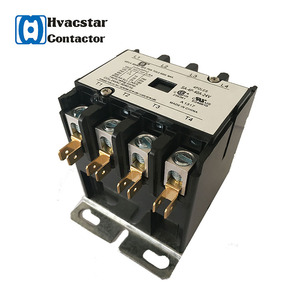
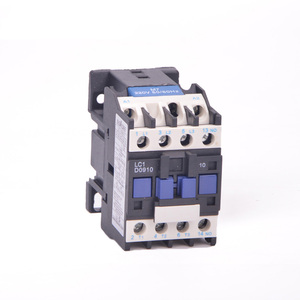
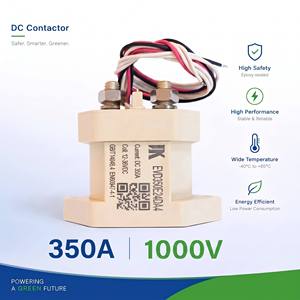
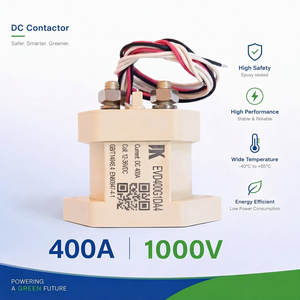
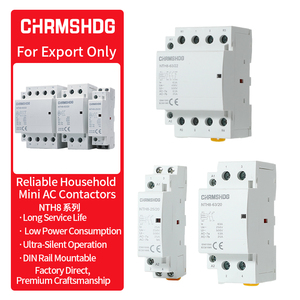
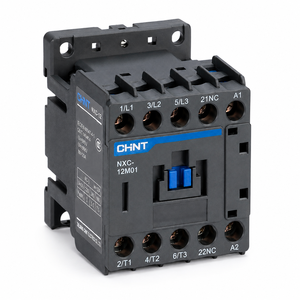
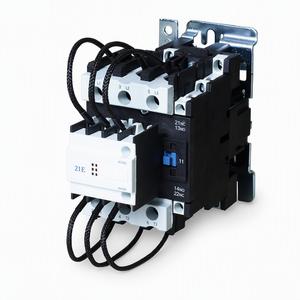
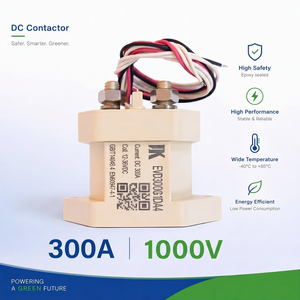
Reversing contactor assemblies represent a specialized class of electromechanical power control hardware designed specifically to reverse the operational polarity or phase sequence supplied to electric motors, DC drive trains, battery energy storage system (BESS) charging circuits, and automated hoist mechanisms. Unlike standard single-direction magnetic contactors, a custom OEM reversing contactor incorporates two mechanically and electrically interlocked contactor units mounted on a shared chassis or sub-plate.
When selecting a custom OEM manufacturing partner, engineering buyers and system integrators must evaluate how the reversing switch architecture prevents catastrophic phase-to-phase short-circuits during high-frequency switching operations. A direct phase-to-phase fault in 3-phase AC motor reversing (e.g., swapping L1 and L3 lines) can trigger severe arc-flash events, line voltage dips, welded main contacts, and system-wide trip outages. Consequently, world-class OEM contract manufacturing relies on dual-layer protection mechanisms:
Physical interference levers or slide bars physically block the armature of Contactor B from pulling in whenever Contactor A is in the energized position, ensuring zero cross-conduction even under shock or vibration.
Normally Closed (NC) auxiliary contacts are wired in series with the opposing contactor coil circuit. Energizing Coil A automatically breaks the control circuit to Coil B before main contacts make.
For high-voltage DC applications (up to 1,500VDC), hermetically sealed hydrogen-mix gas-filled chambers blow out high-energy ionization arcs within milliseconds to preserve contact integrity.
Custom reversing contactor specifications vary dramatically depending on the electrical system architecture, operating environment, and load profiles. The following matrix details engineering selection criteria across core industrial verticals:
| Application Segment | Typical Load Voltage | Primary Duty Cycle | Critical Engineering Features | Recommended Contact Alloy |
|---|---|---|---|---|
| Heavy Commercial HVAC/R | 24V - 480V AC | AC-3 / Definite Purpose | Low-noise AC magnetic structure, anti-chatter coils, 4P layout | AgSnO2 (High Erosion Resistance) |
| EV Charger & V2G Systems | 400V - 1000V DC | DC-1 / Bi-directional break | Epoxy sealed, gas-filled ceramic chamber, bi-directional current flow | Fine Silver / Copper Matrix |
| Industrial Hoists & Cranes | 230V - 690V AC | AC-4 (Inching/Plugging) | Heavy-duty mechanical lockout lever, high electrical switching endurance | AgCdO or AgNi (High Anti-Weld) |
| Battery Storage (BESS) Disconnect | 750V - 1500V DC | DC-5 / Inductive Break | Magnetic blowout magnets, integrated economizer coil, high isolation resistance | Custom Silver Alloy with Arc Splitters |
Operating from our Sterling, Illinois facility and global manufacturing nodes, Altran Magnetics designs, builds, and delivers high-reliability electrical switching components engineered directly to OEM partner drawings.

As global energy infrastructure transitions toward electrification, higher operating voltages, and decentralized renewable power, the design requirements for reversing contactors are undergoing rapid evolution. Procurement teams and engineering directors must account for five structural technology shifts over the next decade:
Driven by utility-scale solar inverters and next-generation Megawatt EV Charging Systems (MCS), high-voltage DC contactors are shifting from legacy 600V/1000V thresholds to 1,500 VDC continuous isolation standards. Custom reversing units for 1,500V DC require advanced gas-filled hermetic ceramic envelopes filled with high-purity hydrogen-nitrogen gas mixtures to cool and suppress high-voltage DC arcs fast enough to prevent contact degradation during emergency break operations.
While solid-state relays (SSRs) provide silent, high-speed switching with zero contact wear, electromechanical contactors maintain complete physical air-gap galvanic isolation. Modern OEM designs are moving toward hybrid switching topographies: solid-state semiconductors handle the high-frequency polarity commutation to eliminate arcing, while parallel electromechanical contacts carry the continuous load current to minimize thermal heat dissipation losses.
Legacy magnetic contactors utilize continuous AC or DC coil excitation, generating substantial internal heat inside tight electrical enclosures. Future OEM reversing contactors integrate smart Pulse-Width Modulation (PWM) coil economizers. These drivers deliver high initial inrush current to close the armature within 10–15ms, then automatically ramp down coil energy by up to 80% to hold the contactor closed, vastly reducing overall power consumption and cabinet temperatures.
Smart factory architectures require predictive maintenance data. Advanced OEM contactors are now being designed with embedded micro-sensors that measure contact tip temperature rise, coil resistance changes, total switching cycle counts, and contact erosion rates. This telemetry data is transmitted via RS-485 Modbus or IO-Link to edge controllers, alerting maintenance teams before contact welding or coil failure occurs.
Detailed answers to technical, regulatory, and logistics queries encountered during custom reversing contactor procurement.
A mechanical interlock is a physical safety mechanism (lever, rocker, or pin) that mechanically prevents the armatures of two contactors from closing at the same time, even if both coils are energized. An electrical interlock uses Normally Closed (NC) auxiliary contacts wired into the opposite contactor's coil control line. Using both together provides redundant safety against phase-to-phase short circuits.
Coil economizers drastically reduce holding power consumption (often by 75% to 85%) after the contactor closes. This minimizes thermal dissipation inside the panel, reduces power supply sizing requirements, and prevents coil burnout caused by thermal overheating in continuous-duty applications.
Yes. Custom engineering is core to our OEM services. We routinely customize coil voltages, terminal orientation, quick-connect spade lugs, custom copper busbars, pre-wired mechanical/electrical interlock harnesses, and custom customer-branded labeling under strict revision control.
Silver Tin Oxide (AgSnO2) is highly recommended for high-inrush and motor reversing loads (such as AC-3 and AC-4 duty) due to its exceptional resistance to contact welding and material erosion. Silver Cadmium Oxide (AgCdO) remains popular for general AC inductive loads, while pure Silver or Silver Nickel is preferred for low-resistance DC switching.
Product lines manufactured by Altran Magnetics comply with UL, cUL, CE, CSA, and RoHS/REACH standards. Engineering documentation, file references, dielectric withstand test reports, and material compliance certificates are provided with prototype sampling.
You can provide us with the original manufacturer part number along with your system voltage, continuous current rating, duty cycle, coil drive voltage, and physical envelope constraints. Our application engineering team will map out the closest Altran platform, highlight mechanical/electrical variances, and supply a custom drop-in equivalent sample for testing.
Work directly with our application engineers in Sterling, Illinois to specify, prototype, and manufacture contactors built precisely to your performance, dimension, and compliance standards.