We Design. We Build. We Deliver.
Directly integrated from our ISO-certified production lines. Custom pinouts, specialized optical isolation, hermetic sealing, and customized coil voltages are available upon request.
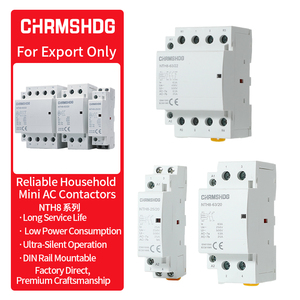
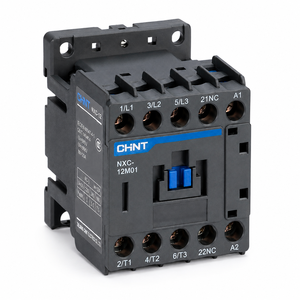
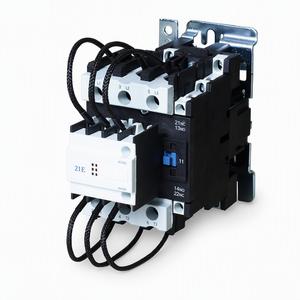
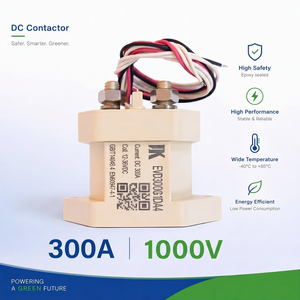
In high-reliability industrial automation, EV charging architectures, medical instrumentation, and smart grid systems, selecting the appropriate Custom OEM Optical Sensor Supplier is the single most critical factor in guaranteeing total system uptime and electromagnetic compatibility (EMC).
Modern industrial applications require more than off-the-shelf optical switches. They demand custom optoelectronic sensor assemblies tuned for precise spectral responses, low signal-to-noise ratios (SNR), and high optical noise immunity. Optical sensor manufacturing encompasses photo-interrupters, Time-of-Flight (ToF) distance sensing units, ambient light monitoring arrays, and optocoupler-isolated feedback switches engineered to perform under extreme ambient illuminance and severe thermal cycling.
Factory-customized bandpass filters (from 850nm/940nm IR to UV spectra) eliminate optical crosstalk and ambient daylight degradation in solar, outdoor, and high-bay industrial settings.
Utilizing epoxy potting, silicone gel encapsulations, and gas-filled glass-to-metal hermetic seals to protect delicate photodiode arrays from moisture ingress, chemical exposure, and high shock/vibration environments.
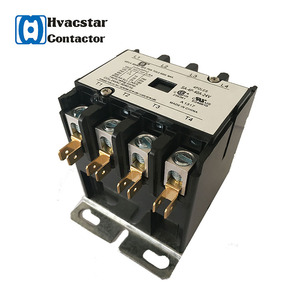
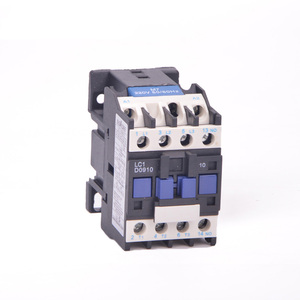
Seamless fusion of high-speed optical sensing feedback loops directly into electromechanical AC/DC contactors and solid-state relays for zero-wear arc interruption and microsecond protection triggers.
Navigating the next decade of electronic component manufacturing requires strategic alignment with suppliers who understand miniaturization, supply chain resilience, and rigorous regulatory compliance.
Chief Procurement Officers (CPOs) and Lead OEM Design Engineers face compounding pressures: shortening product development cycles while eliminating component failure rates. Key procurement trends dominating the 2026–2030 landscape include:
Understanding the total cost of ownership (TCO) and long-term risk profile between off-the-shelf catalog parts and factory-customized OEM solutions.
| Evaluation Parameter | Standard Off-the-Shelf Components | Custom OEM Engineered Solution | OEM Buyer Advantage |
|---|---|---|---|
| Optical Spectrum Calibration | Fixed broad-band response (unfiltered) | Custom narrow-band optical filters (UV / IR / Visible) | Eliminates ambient light noise & optical crosstalk |
| Mechanical & Pinout Footprint | Rigid standard packages | Tailored lead-frame, cable harness, custom enclosure | Zero-redesign drop-in fit for OEM enclosures |
| Hermetic & Environmental Sealing | IP50 to IP65 open-frame | IP67 / IP68 fully potted, epoxy-sealed, or gas-filled | 100% resistance to humidity, dust, and corrosive vapors |
| Electrical Isolation Rating | 1,500 V – 2,500 V RMS | Up to 5,000 V RMS optical-galvanic isolation | Maximum safety for high-voltage DC battery architectures |
| Revision Control & BOM Stability | Risk of unannounced EOL / component changes | Locked customer part number under document control | Guaranteed 10+ year supply continuity without redesigns |
| Tooling & NRE Flexibility | Zero NRE, high unit markup | Amortized NRE with low piece-part costs at scale | Lowest Total Cost of Ownership (TCO) for volume builds |
Founded on an engineering-first philosophy in Sterling, Illinois, our manufacturing infrastructure bridges North American design verification with cost-optimized global production.
Unlike brokers or catalog trading entities, our teams work directly with your lead design engineers from preliminary schematic review through tool validation and high-volume SMT manufacturing. Every part number is locked under strict revision control, ensuring zero unannounced component changes across multi-year program lifecycles.

Essential technical and commercial insights for international procurement managers and engineering teams evaluating custom optical sensors and power components.
We provide complete optical customization, including custom optical bandpass filters tailored to specific wavelengths (such as 850nm, 940nm, or visible light spectra). We customize photodiode sensitivity profiles, optical aperture sizes, emitter-receiver pitch, silicon-phototransistor gain ratings, and custom plastic/epoxy housings designed to block ambient IR interference from factory lighting or sunlight.
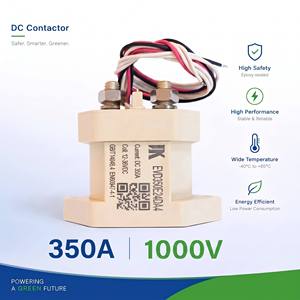
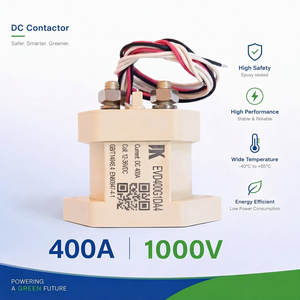
Our high-voltage DC contactor platforms switch loads from 12 VDC up to 1,500 VDC with continuous current ratings from 10 A to 500 A. We utilize epoxy-sealed and gas-filled arc-suppression chambers to extinguish high-energy DC arcs rapidly, making them ideal for EV charging stations, battery energy storage systems (BESS), and solar disconnect units.
For minor modifications (e.g., custom lead wire harnesses, special connectors, or modified coil voltages), prototype samples are typically delivered in 2 to 3 weeks with zero NRE. For fully custom optomechanical enclosures or newly tooled contactor frames, NRE ranges from $1,500 to $8,000 depending on mold complexity, with first-article samples delivered in 4 to 6 weeks. Standard production MOQs start at 100 to 500 units depending on the platform size.
All custom OEM orders are assigned a locked, customer-specific part number under strict revision control. No raw material vendor, internal layout, contact alloy, or optical resin formulation can be altered without issuing a formal Engineering Change Notice (ECN) and obtaining written customer approval. Full PPAP Level 3 documentation is available upon request.
Yes. Our components are built to meet UL, cUL, CSA, CCC, and CE safety specifications. EMI filtering lines are validated against CISPR, FCC Part 15, and IEC/EN 61000 emission limits. Full material compliance declarations (RoHS 3, REACH, Conflict Minerals) accompany all qualification sample submissions.
Yes. Our engineering department specializes in reverse-engineering and pin-compatible cross-referencing for obsolete or long-lead component part numbers. Simply provide us with the original datasheet, electrical parameters, mounting constraints, and target annual volume; our team will provide a drop-in replacement proposal accompanied by 3D STEP models and compliance test reports.
A streamlined, risk-mitigated path from initial engineering specification to mass production fulfillment.
Reviewing optical light paths, ambient interference, electrical load parameters, thermal dissipation profiles, and mechanical space constraints alongside your design team.
Rapid 3D modeling, optical sample assembly, dielectric withstand testing, and functional verification under simulated worst-case operating environments.
Short-run production tooling verification, 100% AOI checking, material certification compilation, and formal PPAP Level 3 document package release.
Controlled volume manufacturing with automated end-of-line testing, serialized lot tracking, scheduled releases, and safety buffer stock programs.