We Design. We Build. We Deliver.
Built to UL, cUL, CE, and RoHS standards. Designed for extreme duty cycles, arc suppression, and maximum signal integrity in demanding grid environments.
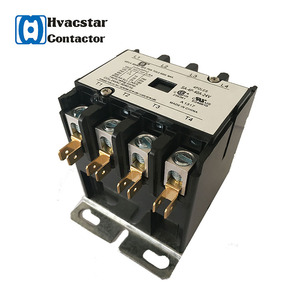
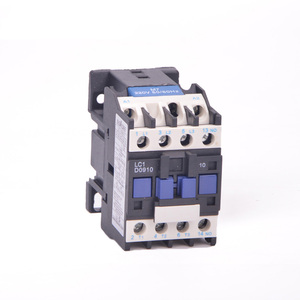
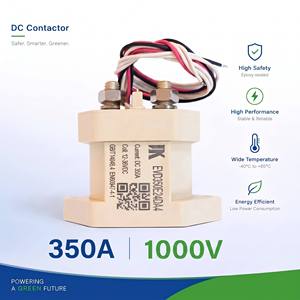
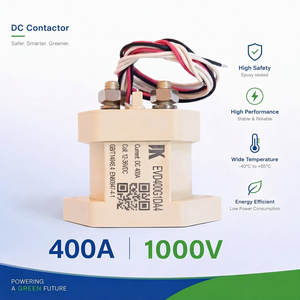
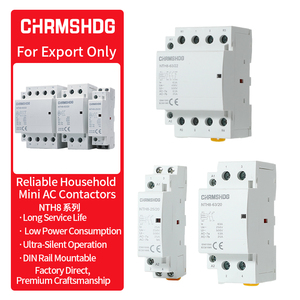
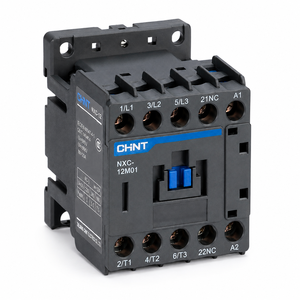
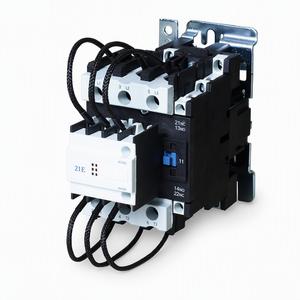
Backing every component with full material composition, complete testing protocols, and traceable revision control.
We go beyond off-the-shelf component supply. Our U.S.-backed engineering framework reviews your complete electrical topology—mitigating conductive noise, harmonic interference, and thermal loss before mass production.
We modify common-mode and differential-mode attenuation curves, tuning choke core material selection (nanocrystalline, manganese-zinc ferrite) to neutralize transient high-frequency PWM switching noise from SiC/GaN inverters.
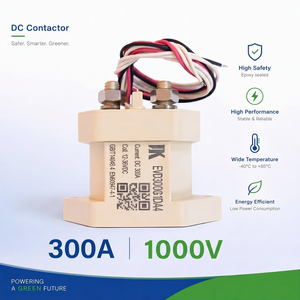
Our DC contactor designs utilize hermetically sealed, gas-filled arc chambers (SF6/nitrogen blends) combined with magnetic blowout arrangements to extinguish high-energy DC arcs instantly under fault conditions.
Every shipment is accompanied by complete compliance documentation including UL file numbers, CE Declarations of Conformity, RoHS 3/REACH composition statements, and factory insertion loss test reports.
From custom busbar terminations and terminal block pinouts to specialized IP67 potted enclosures, we tailor form factor and mechanical mounting directly to your enclosure envelope.
Facing end-of-life (EOL) notices from legacy suppliers? Our application engineers rapidly cross-reference electric performance, footprint, and thermal curves to supply drop-in replacement modules without redesign delays.
In modern high-power electronics—ranging from ultra-fast Electric Vehicle (EV) charging stations and Battery Energy Storage Systems (BESS) to industrial Variable Frequency Drives (VFDs) and commercial HVAC infrastructure—electromagnetic interference (EMI) presents a critical threat to system operational stability and regulatory compliance. As a specialized Custom OEM Noise Filter Supplier & Exporter, Altran Magnetics bridges the gap between raw power switching capability and stringent electromagnetic compatibility (EMC).
Fast switching transients produced by wide-bandgap semiconductors (Silicon Carbide - SiC, and Gallium Nitride - GaN) inject severe high-frequency high voltage/current noise ($dv/dt$ and $di/dt$) into standard AC lines and DC buses. Without custom-engineered noise suppression and robust magnetic switching, this conducted and radiated noise degrades digital control circuits, triggers false sensor readings, and violates international grid injection standards such as CISPR 11/32, FCC Part 15, and IEC 61000-6-4.
Designing an efficient, compact OEM noise filter requires precise identification of conductive noise modes within the power pathway:
In high-voltage DC applications (up to 1,500VDC), power line noise filters and contactor relays operate in symbiotic proximity. Switching high DC currents creates energetic electric arcs upon contact separation. Standard open-air contactors suffer from contact erosion, welding, and high noise propagation back into the power system.
Altran Magnetics solves this by pairing low insertion loss multi-stage EMI noise filters with hermetically sealed DC contactors. Featuring gas-filled ceramic arc chambers, low contact resistance alloy contacts, and economized PWM coil drivers, our contactor platforms contain arcing while our noise filters smooth the resulting transient spike—delivering clean, reliable power break under continuous load.
The global OEM supply chain for power components is undergoing a fundamental transformation. Purchasing managers and chief technology officers are shifting away from off-the-shelf single-component sourcing toward fully integrated, validated sub-assemblies. Key procurement trends shaping the market include:
Sourcing noise filters from one vendor and DC contactors or relays from another often leads to unexpected EMC test failures during final system integration. OEMs increasingly mandate single-source suppliers capable of supplying pre-validated filter-contactor topologies. This approach guarantees that line filter attenuation characteristics match the exact switching profile of the system's contactors, reducing time-to-market by up to 40%.
As EV charging cabinets and commercial ESS units push for smaller physical footprints, component volume is constrained. The market favors modular, multi-stage noise filters with integrated DIN rail or chassis busbar mounts that combine common-mode, differential-mode, and transient surge protection within a single encapsulated metal housing.
Regulatory frameworks such as EU RoHS 3, REACH SVHC, and Conflict Minerals legislation require absolute transparency in material composition. Global exporters must supply full documentation packages alongside lot-coded hardware to enable swift root-cause analysis in the event of field failures.
To stay ahead of evolving power electronics architectures, noise filter and electromechanical component manufacturing is advancing rapidly across several technological fronts:
Replacing traditional manganese-zinc ferrite with advanced nanocrystalline magnetic ribbon alloys offers superior permeability over temperature swings (-40°C to +125°C), enabling up to 50% physical volume reduction in high-current noise chokes without core saturation.
While passive LC filter networks remain the backbone of heavy industrial filtering, hybrid filter architectures utilizing active sense-and-inject circuits are emerging to eliminate ultra-high frequency ripple generated by multi-level 1200V SiC traction inverters.
Modern DC magnetic contactors now incorporate micro-controlled dual-coil economizers. High pick-in energy ensures rapid contact closure, followed by automatic duty-cycle reduction to hold power, cutting coil heat dissipation by over 80% and extending component lifespan.
Direct engineering answers to technical, regulatory, and procurement questions frequently asked by OEM buyers.
Insertion loss requirements are determined by comparing your un-filtered equipment's baseline spectrum analyzer scan against the target regulatory emission limits (such as CISPR 11 Class A for industrial or Class B for residential). The difference in dB across the frequency band (150 kHz to 30 MHz) establishes the minimum required insertion loss curve. Our engineering team calculates choke inductance and capacitance values to achieve this target with a safety margin of at least 6dB.
For custom noise filters, provide: operating line voltage/frequency, continuous and peak load currents, phase count (1-phase, 3-phase + neutral), maximum allowable leakage current, environmental operating ambient, and terminal style. For DC contactors, provide: continuous current, maximum switching voltage, bi-directional break requirements, coil voltage/economizer preference, and auxiliary contact configurations.
Leakage current is dictated by the Y-capacitors connected between phase lines and ground. Industrial filters prioritize aggressive common-mode noise attenuation using larger Y-capacitors (resulting in higher leakage currents, e.g., 0.5mA to 5mA). Medical-grade filters (IEC 60601-1) strictly cap touch and chassis leakage currents to microamp levels (<100µA or <10µA for patient contact), requiring low-capacitance designs compensated by higher-inductance nanocrystalline chokes.
Yes. Our product lines carry extensive international safety approvals including UL, cUL, CSA, and CE markings. All materials comply with EU Directive 2011/65/EU (RoHS 3) and REACH SVHC requirements. Complete technical data packages, UL file references, and certificates of origin accompany mass-production shipments.
Yes. Custom engineering is a core service. We can match or exceed the electrical performance, attenuation curve, mounting hole footprint, terminal orientation, and pinout of obsolete or extended-lead-time components from legacy manufacturers—ensuring zero disruption to your active assembly lines.
All noise filters generate internal $I^2R$ resistive heating under load. When installed inside sealed NEMA or IP-rated enclosures with limited airflow, ambient temperatures can exceed standard nominal ratings (+40°C or +50°C). We supply detailed thermal derating curves and can utilize high-temperature insulation classes (Class F +155°C or Class H +180°C) with custom potting compounds to ensure continuous rated current without thermal breakdown.
Consult directly with our Sterling, Illinois design engineers. Request technical drawings, custom attenuation modeling, or rapid sample prototyping for your active program.
Inquire Now