We Design. We Build. We Deliver.
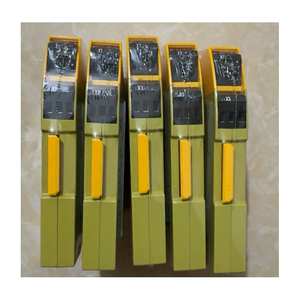
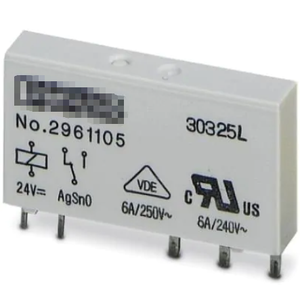
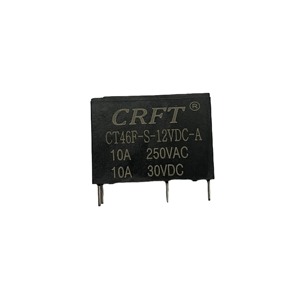
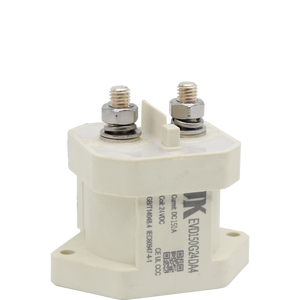
Standard and customized switching components engineered to meet global OEM safety specifications (UL, cUL, CE, CSA, RoHS). Select a model below to request detailed technical datasheets, CAD drawings, and volume pricing.
Understanding contact physics, thermal dynamics, and dielectric breakdown mechanisms in modern electromechanical and solid-state power switching systems.
In high-power industrial control, automotive electric powertrains, and renewable energy conversion systems, power relays serve as critical electrical isolation and circuit protection nodes. As a leading China power relay exporter, our engineering teams focus on solving complex physics-of-failure modes including contact arcing, material transfer, thermal runaway, and insulation resistance degradation over millions of switching operations.
A power relay operates on the principle of electromechanical electromagnetic activation or solid-state opto-isolation. Electromechanical power relays utilize silver-alloy contacts (such as AgSnO2, AgNi, or AgCdO) to switch current loads ranging from 2 Amperes to over 500 Amperes. The choice of contact material directly dictates resistance to contact welding, erosion rates under inductive loads, and contact resistance stability over operational lifespans.
Key Design Principle: The replacement of traditional AgCdO contacts with eco-compliant AgSnO2 (Silver Tin Oxide) has become mandatory for RoHS compliance, offering superior arc-erosion resistance without toxic heavy metal emissions under extreme thermal switching environments.
For high-voltage direct current (HVDC) applications—such as Battery Energy Storage Systems (BESS) and Level 3 DC Fast Charging infrastructure—switching DC loads presents distinct physical challenges compared to alternating current (AC). AC current naturally passes through zero-voltage points twice per cycle, quenching electric arcs organically. Conversely, DC currents sustain continuous arc discharge across opening contacts, generating plasma temperatures exceeding 5,000 Kelvin capable of destroying conventional open-frame relay housings.
Epoxy-sealed ceramic and metal chambers filled with pressurized Nitrogen/Hydrogen gas mixes suppress electron avalanche arcing, enabling 1,500 VDC load breaking within millisecond thresholds.
Integrated permanent magnetic blowout fields physically stretch and stretch the electric arc away from primary contact surfaces, guiding plasma into quenching chutes to prevent contact welding.
Dual-winding or PWM pulse-width-modulated coil circuits reduce continuous pick-up power consumption by up to 80% once contacts seat, dramatically minimizing cabinet heat generation.
An evaluation of supply chain evolution, tariff mitigation strategies, quality compliance frameworks, and component standardization for tier-1 OEMs.
The global power relay market is undergoing a seismic shift driven by the electrification of transport, clean energy integration, and smart factory automation. International procurement managers seeking reputable power relay exporters in China are moving past basic unit-cost evaluation to prioritize Total Cost of Ownership (TCO), engineering compliance agility, and supply chain transparency.
Over the next five years, global procurement strategies will be defined by three distinct structural shifts:
| Relay Architecture | Typical Load Voltage | Primary Target Applications | Key Selection Parameters | Compliance Mandates |
|---|---|---|---|---|
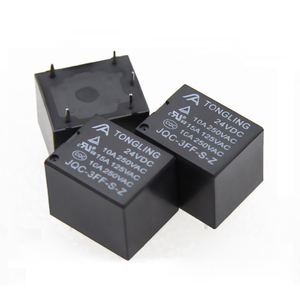
| Miniature PCB Power Relay | 12 VDC – 250 VAC (5A–16A) | Smart Home Appliances, HVAC Control, Automation PLCs | Pin pitch spacing, coil dissipation (W), creepage distance | UL 508, VDE, RoHS, REACH |
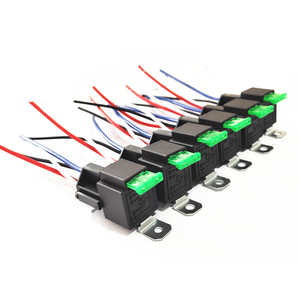
| Automotive Sealed Relay | 12 VDC – 48 VDC (40A–80A) | Automotive Auxiliary, Commercial Fleet, Off-Highway Equipment | IP67 water ingress protection, vibration tolerance, fuse integration | ISO 7588, IATF 16949 |
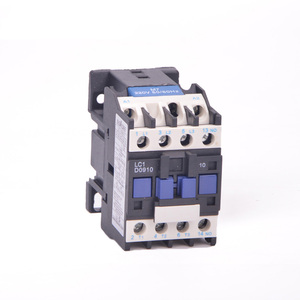
| High-Voltage DC Contactor | 12 VDC – 1,500 VDC (100A–500A+) | EV Charging Stations, Battery Storage (BESS), Solar Inverters | Arc chamber gas pressure, magnetic blowout field, continuous current rating | UL 60947-4-1, CE, IEC 60947 |
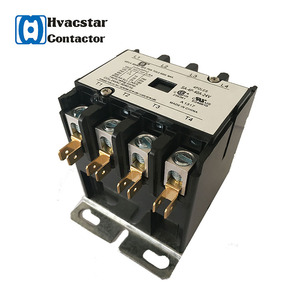
| Definite Purpose AC Contactor | 24 VAC – 480 VAC (20A–90A) | Commercial Air Conditioning, Refrigeration, Compressors | Full Load Amps (FLA), Locked Rotor Amps (LRA), pole configuration | cULus, ARI 780/790 standard |
How next-generation power relay manufacturing combines wide-bandgap semiconductors with traditional electromechanical structures.
The boundaries between traditional mechanical relays and electronic switches are dissolving. Emerging technological innovations focus on combining the zero-voltage-drop performance of metallic contacts with the infinite switching cycle durability of Solid State Relays (SSRs).
1. Hybrid Solid-State Relay (HSSR) Architectures: By placing a silicon carbide (SiC) MOSFET or GaN transistor in parallel with mechanical contacts, the semiconductor handles the microsecond opening arc during current interruption, after which the mechanical contact opens with zero arcing. This eliminates contact wear while retaining low operational thermal loss.
2. Smart Diagnostic Telemetry: Modern industrial power relays are increasingly integrated with micro-sensors that measure real-time coil resistance, contact temperature, and switching latency. This data enables predictive maintenance algorithms in Industry 4.0 smart factory environments, flagging contact oxidation before complete system failure occurs.
Information Gain Insight: Laboratory endurance testing indicates that hybrid switching topologies extend electromechanical contact operational life from 100,000 cycles to over 5,000,000 cycles under full rated inductive load conditions.
Complete oversight from raw material component incoming inspection to automated functional verification and international export compliance.
Our manufacturing philosophy is built around eliminating compliance risks for overseas buyers. Before a single part number is finalized for mass production, our application engineering team conducts thorough schematic reviews, transient load modeling, and enclosure heat dissipation analysis.
Unlike standard trading exporters, our facility maintains rigorous revision control on all custom customer part numbers. Every batch undergoes 100% automated testing for dielectric withstand voltage, contact resistance, pick-up/drop-out timing, and coil insulation integrity.

Direct engineering answers to common technical queries raised by global purchasing officers and design engineers.
Need assistance selecting the ideal power relay for your system schematics? Speak with our Senior Application Engineers or download our complete product datasheets.