We Design. We Build. We Deliver.
Explore our top-tier solid state relays, AC/DC magnetic contactors, and high-voltage power battery disconnect solutions manufactured under strict UL, cUL, CE, and RoHS quality control frameworks.
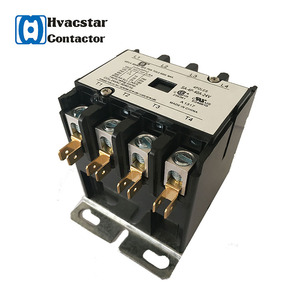
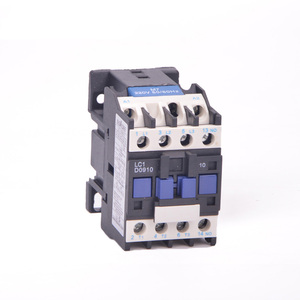
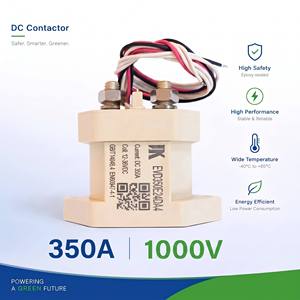
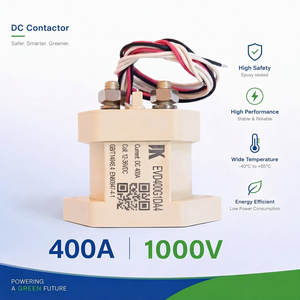
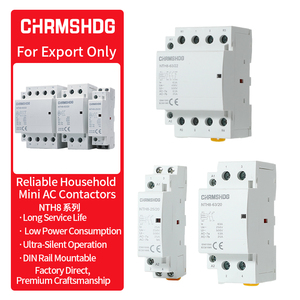
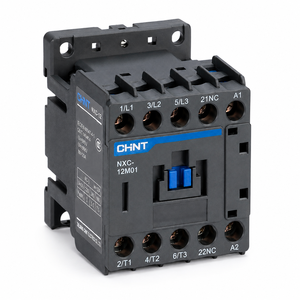
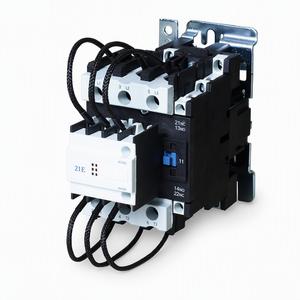
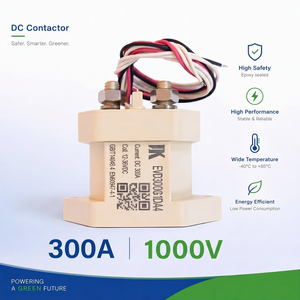
In modern high-duty-cycle industrial automation, energy storage systems (BESS), HVAC machinery, and electric vehicle (EV) fast-charging infrastructure, conventional electromechanical relays (EMRs) frequently present mechanical fatigue, contact arcing, and contact welding under high surge conditions. Solid State Relays (SSRs) have evolved into the premier power control standard, offering silent, zero-wear semiconductor switching capable of executing tens of millions of operations without performance degradation.
Information Gain Insight: Unlike basic mechanical contactors, modern industrial SSRs utilize advanced opto-isolated back-to-back SCR (Silicon Controlled Rectifier) arrays and zero-crossing trigger circuits. This architecture suppresses total harmonic distortion (THD), eliminates electromagnetic interference (EMI) at turn-on, and isolates low-voltage control microcontrollers from 1,000V+ power lines.
Selecting the optimal solid state relay requires an intimate understanding of load characteristics and switching physics. Global OEM engineers categorize solid state relays based on their gating logic:
| SSR Switching Type | Core Semiconductor Topology | Primary Target Applications | Key Performance Advantage |
|---|---|---|---|
| Zero-Cross Switching | Dual SCR / Triac + Zero-Detect Optocoupler | Resistive Heaters, Ovens, Packaging Machinery | Minimizes current inrush & EMI generation by turning on at V=0. |
| Random Turn-on | Instantaneous Gating Opto-Triac Array | Inductive Loads, Phase-Angle Control, Motors | Microsecond response; allows precise power phase-angle modulation. |
| DC Load Switching | Power MOSFET / IGBT H-Bridge / Isolated Gate Driver | EV Charging Stations, Solar Converters, Battery Banks | Zero reverse recovery losses, microsecond DC arc interruption. |
| Three-Phase SSR | Triple Back-to-Back SCRs + Integrated Heatsink | 3-Phase HVAC Blowers, Pumps, Heavy Automation | Balanced phase switching with reduced line-to-line transient stress. |
The principal bottleneck in solid state switching is internal thermal dissipation. A power semiconductor experiences a forward voltage drop ($V_f$) of approximately 1.0V to 1.6V during conduction. Consequently, for every 10 Amperes of switched load current, an SSR generates roughly 10 to 15 Watts of waste heat. Failure to evacuate this thermal load leads to thermal runaway and semiconductor punch-through failure.
To calculate the necessary heatsink thermal resistance ($R_{\theta SA}$), engineering teams apply the following thermodynamic relation:
Thermal Calculation Formula:
$$R_{\theta SA} = \frac{T_{j,max} - T_{ambient}}{P_{dissipation}} - (R_{\theta JC} + R_{\theta CS})$$
Where $T_{j,max}$ is maximum junction temperature (typically 125°C), $R_{\theta JC}$ is junction-to-case resistance, and $R_{\theta CS}$ represents thermal interface material (TIM) contact resistance.
As a leading China Solid State Relay supplier, our engineered SSR platforms incorporate direct-bonded copper (DBC) ceramic substrates and integrated thermal cutoff switches that protect the internal SCR die under ambient temperature spikes up to 85°C.
The global power switching component landscape is undergoing radical technological shifts driven by decarbonization, electrification, and Industry 4.0 automation. Global procurement directors and system architects are focusing on three pivotal trends when evaluating OEM suppliers in China:
Silicon Carbide (SiC) and Gallium Nitride (GaN) power MOSFETs are replacing traditional silicon triacs. SiC SSRs offer 10x higher switching speeds, lower $R_{DS(on)}$, and minimal heatsink footprints, making them essential for 1500V ultra-fast EV charging hubs.
Modern industrial SSRs now feature embedded current transformers and IO-Link communications. Real-time monitoring of load degradation, heater open-circuit faults, and thermal threshold warnings allows preventative maintenance before factory shutdown.
High Voltage DC Contactors for energy storage system (BESS) disconnect switchgear utilize hermetically sealed ceramic chambers filled with hydrogen-rich inert gas to extinguish 1,000V+ DC arcs in under 5 milliseconds.
Compliance with international regulatory standards is non-negotiable for Tier-1 OEMs exporting machinery to North America and Europe. Industrial solid state relays and high-voltage contactors must satisfy stringent dielectric withstand, transient surge immunity, and electromagnetic compatibility (EMC) benchmarks.
Key international certifications governing our product lines include:
Selecting a top-tier Solid State Relay supplier from China requires evaluating design engineering capability, custom tooling flexibility, and strict quality control verification. Our manufacturing facilities combine American engineering design principles with China's agile component supply chain infrastructure.
We work directly with OEM design teams to review schematic load profiles, inrush current curves, and enclosure space limits before issuing custom component part numbers under revision control.
Every single manufactured SSR, magnetic contactor, and DC switch undergoes full-load dielectric withstand testing, contact resistance check, and thermal cycle testing before automated packaging.
From custom copper busbars, auxiliary contact configurations, and low-power economizer coils to private-label markings and specialized wiring harnesses, custom modifications are executed rapidly.
We maintain multi-tier raw material buffers, export packaging compliance, HS classification clarity, and comprehensive logistics support for seamless delivery across North America, Europe, and Asia-Pacific.
Get authoritative answers to technical, engineering, and procurement queries regarding solid state relays, contactors, and international supply chain logistics.