We Design. We Build. We Deliver.
As industrial electrification, Electric Vehicle (EV) infrastructure, commercial HVAC systems, and renewable battery energy storage systems (BESS) accelerate globally, selecting an authoritative China BLDC Motor Manufacturer and Power Switching Component Factory has become a critical strategic decision for OEM purchasing managers and design engineers.
Modern Brushless DC (BLDC) motors represent a quantum leap over legacy brushed DC and basic AC induction motors. By replacing mechanical commutators and brushes with electronic commutation drivers, high-energy NdFeB (Neodymium-Iron-Boron) permanent magnets, and precision-wound stators, contemporary BLDC systems achieve power densities exceeding 90% efficiency. However, a BLDC motor cannot operate in isolation. It relies on an integrated electromechanical ecosystem comprising high-voltage DC contactors, magnetic relays, electromagnetic interference (EMI) line filters, and solid-state power switches.
Standard catalog sourcing often fails to account for transient inrush surges, harmonic distortion, thermal derating at high duty cycles, and switching arc containment. This technical guide synthesizes empirical manufacturing data, international testing benchmarks (UL, cUL, CE, CSA), and material sourcing insights directly from certified engineering facilities in Sterling, Illinois, and high-capacity manufacturing plants across China.
Explore our flagship product platforms, featuring precision magnetic contactors, high-voltage DC relays, and suppression components engineered for industrial automation, HVAC blower systems, solar inverters, and battery systems.
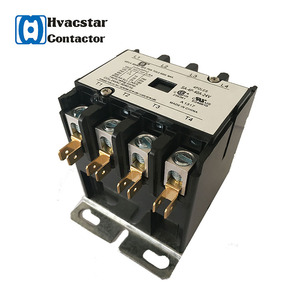
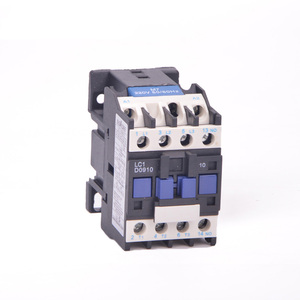
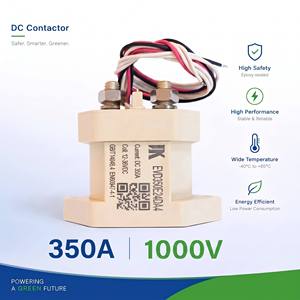
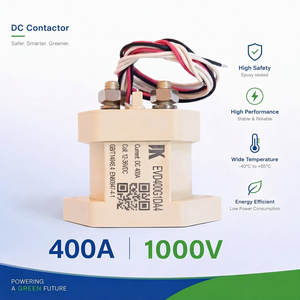
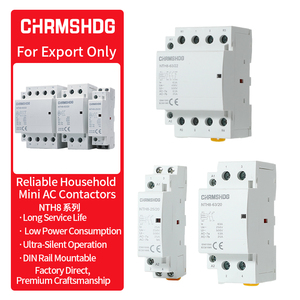
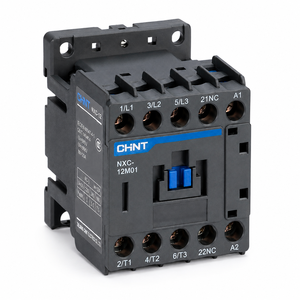
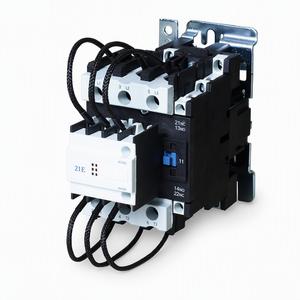
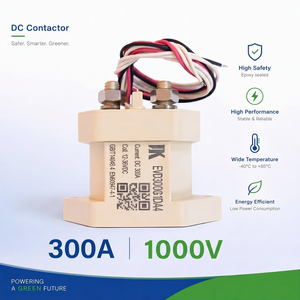
The BLDC manufacturing landscape in China has shifted dramatically from simple labor-intensive assembly to advanced electromagnetic simulation, automated stator needle winding, and integrated wide-bandgap driver modules.
Legacy BLDC motors relied on physical Hall-effect sensors for rotor position feedback. modern industrial factories are engineering sensorless BLDC architectures using FOC algorithms. Sensorless control estimates rotor magnetic position via Back-Electromotive Force (Back-EMF) zero-crossing detection or high-frequency signal injection. This eliminates hall-sensor wiring harnesses, reduces failure points in high-temperature environments (up to 150°C), and delivers smooth, ripple-free torque output at sub-10 RPM operating speeds.
The convergence of Gallium Nitride (GaN) and Silicon Carbide (SiC) MOSFETs into integrated motor drive electronics is redefining power density. Traditional Silicon IGBT switches max out around 20 kHz switching frequencies. Next-generation BLDC controllers built with SiC power switches operate cleanly at 100 kHz+, reducing acoustic motor noise, minimizing heat dissipation, and enabling ultra-compact inverter housings mounted directly inside the motor end-bell.
Leading Chinese BLDC factories have migrated from traditional inner-rotor winding to segmented stator tooth core designs. By stamping individual stator teeth and using precision CNC needle winding machines, factories achieve slot fill factors exceeding 70% (compared to 45% on continuous stators). Higher copper density reduces I²R copper loss, maximizes magnetic flux density, and decreases total active motor length by up to 25% for equivalent torque ratings.
In high-voltage DC systems (such as 800V EV platforms and 1500V DC energy storage buses), switching inductive BLDC driver loads can create dangerous, continuous electrical arcing. Top China factories utilize hydrogen/nitrogen mixture gas-filled hermetic ceramic or epoxy encapsulation chambers. The high thermal conductivity of the gas rapidly quenches arc plasma within milliseconds, protecting copper contacts from welding and extending electrical life cycles past 100,000 operations.
| Motor / Switching Parameter | Standard AC Induction | Brushed DC System | Advanced China BLDC Platform |
|---|---|---|---|
| Electrical Efficiency | 68% – 82% (IE2/IE3) | 70% – 78% | 92% – 96.5% (Ultra-IE5) |
| Power Density (kW/kg) | 0.8 – 1.2 kW/kg | 1.0 – 1.5 kW/kg | 3.5 – 5.8 kW/kg |
| Maintenance Interval | 15,000 Hours (Bearings) | 2,000 Hours (Brushes Wear) | 50,000+ Hours (Brushless) |
| Thermal Dissipation | High Rotor Losses | Commutator Thermal Concentration | Stator Thermal Conduction via Housing |
| EMI Emission Profile | Low (Line Harmonics) | Extremely High (Arcing Brushes) | Mitigated via Integrated EMI Line Filter |
Strategic sourcing of BLDC motors and industrial power components is shifting from transaction-based unit cost negotiation to total lifecycle risk management, material compliance, and supply chain resilience.
Global regulatory frameworks such as the European Union’s Ecodesign Directive (EU 2019/1781) and US Department of Energy (DOE) regulations are mandating strict minimum energy performance standards (IE4 and IE5 Super Premium Efficiency). Procurement teams can no longer prioritize low unit FOB cost over operating efficiency. A motor’s purchase price typically accounts for less than 5% of its total energy consumption cost over its operational lifecycle. Sourcing high-efficiency Chinese BLDC motors integrated with low-resistance contactors directly lowers TCO for global end-users.
China controls approximately 70% of global rare-earth mining capacity and over 90% of magnet processing infrastructure. Future-proof purchasing strategies involve partnering with Chinese factories that utilize Grain Boundary Diffusion (GBD) technology. GBD concentrates expensive Dy (Dysprosium) and Tb (Terbium) heavy rare earths only along the grain boundaries of NdFeB magnets rather than throughout the alloy bulk. This maintains thermal demagnetization resistance up to 200°C while reducing magnet material costs by 15-20%.
The modern OEM buyer demands high-volume, cost-competitive manufacturing from China coupled with immediate, localized engineering support. Leading enterprises maintain direct engineering facilities in key western markets (such as Sterling, Illinois) backed by dedicated manufacturing plants in China. This hybrid workflow provides Western engineering reviews, standard sample verification, localized 3D CAD modeling, and immediate export compliance (RoHS/REACH declarations) alongside offshore mass-production economies of scale.
Tier-1 automotive and industrial OEMs now mandate 100% automated End-of-Line (EOL) testing. Leading Chinese BLDC and contactor factories have integrated high-speed vision inspection, dynamic rotor balancing, surge voltage testing, dielectric withstand checks, and contact resistance measurement into fully automated conveyor lines. Every part is laser-etched with a unique 2D DataMatrix code tied to raw material heat numbers, winding tension records, and test data for full containment tracking.
We bridge the gap between custom engineering design, strict compliance verification, and high-volume industrial manufacturing. We Design. We Build. We Deliver.
Our engineering team reviews your exact schematics, load profiles, duty cycles, inrush currents, ambient thermal envelopes, and clearance constraints before issuing a quotation.
Product platforms are built to UL, cUL, CE, CSA, and RoHS/REACH specifications. EMI filters are validated against CISPR 11/32, FCC Part 15, and IEC/EN 61000 standards.
We customize shaft dimensions, mounting flanges, coil operating voltages, filter attenuation curves, terminal connectors, and custom wiring harnesses under strict revision control.
Zero statistical sampling shortcuts. Every manufactured contactor, relay, motor, and EMI filter undergoes functional electrical testing and insulation dielectric withstand testing before packaging.
Clear, comprehensive answers to the technical and operational questions engineering teams ask most when qualifying BLDC motor suppliers and power switching component factories in China.
To initiate a custom engineering build, our technical team requires: (1) Operating DC Voltage range (e.g., 24V, 48V, 310V, or 800V DC); (2) Continuous and Peak Torque requirements (Nm); (3) Rated operating RPM and speed-control requirements (PWM/0-10V/CAN-bus); (4) Maximum allowable envelope dimensions and shaft geometry; (5) Environmental IP rating requirements (e.g., IP54 up to IP67 sealed); and (6) System protection specs including max continuous DC switching current (A) for auxiliary contactors.
Continuous duty operation generates stator winding heat. Advanced factories mitigate thermal rise by utilizing Class H (180°C) or Class R (220°C) magnet wire insulation, vacuum pressure impregnation (VPI) with high-thermal-conductivity resins, aluminum die-cast housings with radial cooling fins, and thermal cutouts (NTC thermistors or PTC switches) embedded directly in the stator windings.
Yes. Qualification samples are supplied with complete engineering documentation, including UL file reference numbers, CE declarations of conformity, material safety data sheets (MSDS), RoHS 3 (EU 2015/863) compliance statements, REACH SVHC declarations, and initial factory inspection reports (FAIR).
High-voltage contactors utilize double-break contact topologies combined with magnetic blowout permanent magnets embedded around the arc chamber. When the contacts open under load, the magnetic field stretches the plasma arc away from the copper contact faces into arc chute splitter plates, rapidly cooling and extinguishing the arc before welding temperatures occur.
Yes. Simply provide the original manufacturer’s part number along with your system voltage, coil driving scheme, continuous contact current rating, footprint dimensional drawing, and certification limits. Our engineering group will identify the exact matching Altran platform, highlighting any mounting adapter requirements or improved electrical endurance specifications.
Engineering prototype samples are typically built and dispatched within 10 to 14 business days. Mass production volume lead times range from 4 to 6 weeks, depending on custom tooling requirements. Shipments are supported with complete export logistics paperwork, customs HS classification codes, and flexible Incoterms (FOB, CIF, DDP).
Need precise load matching, custom motor winding design, EMI pre-compliance testing, or rapid contactor prototyping? Connect directly with our engineering team today for immediate technical assistance and custom quotations.