We Design. We Build. We Deliver.
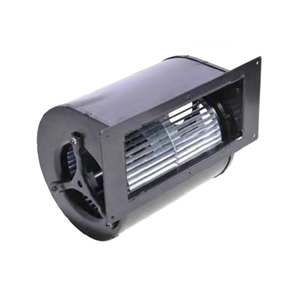
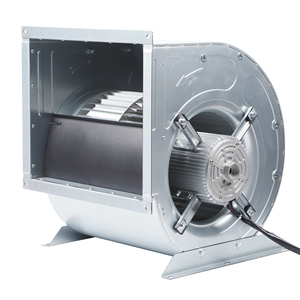
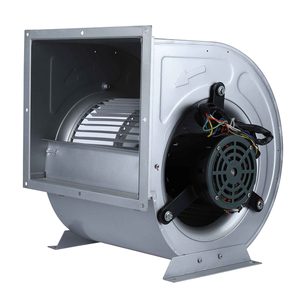
Select from our precision-manufactured single-inlet, double-inlet, AC, and DC radial centrifugal blowers engineered for high static pressure and continuous industrial duty cycles.
Operating from our engineering hub in Sterling, Illinois, alongside advanced manufacturing platforms, Altran Magnetics brings a total-system approach to power switching, electromagnetic mitigation, and high-duty mechanical air movement. Our dedicated application engineering team reviews complex duty cycles, thermal envelopes, system airflow resistance curves, and regulatory mandates before a part number is finalized.
Every CE-certified radial blower and centrifugal fan platform undergoes rigorous dynamic balancing (ISO 1940 G2.5 standard), dielectric withstand testing, thermal overload validation, and acoustic spectral analysis. We design, build, and deliver customized motor-blower assemblies with full revision control and complete regulatory compliance dossiers.

From precision dynamic balancing to integrated EMI filtering, our radial blowers deliver verified aerodynamic stability across high-resistance duct networks.
Forward and backward-curved impellers constructed from heavy-gauge galvanized steel or high-tensile alloy, dynamically balanced to ISO 1940 G2.5 to eliminate vibration and extend bearing life.
Next-generation Electronically Commutated (EC) and Brushless DC (BLDC) direct-drive motors offering up to 85% electrical efficiency, variable speed PWM control, and low thermal dissipation.
Fully compliant with EU Low Voltage Directive (LVD 2014/35/EU), EMC Directive (2014/30/EU), and ErP Eco-Design directives, backed by valid UL, cUL, and RoHS documentation.
Tailored scroll housings, custom mounting flanges, specialized harness terminations, dual-inlet plenum kits, and integrated solid-state or relay controls built to customer drawings.
Optimized scroll housing geometries, sound-attenuating inlet cones, and smooth aerodynamic blade passing frequencies ensure minimal sound pressure levels (dBA) in sensitive environments.
Available IP54/IP55 ingress-protected motors, anti-corrosive powder coatings, stainless steel housings, and high-temperature bearings designed for 24/7 continuous process extraction.
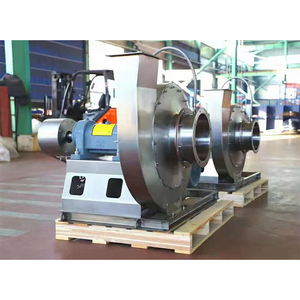
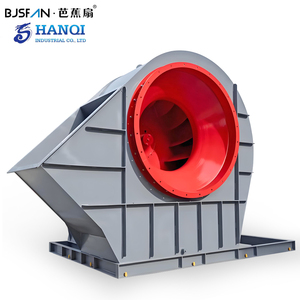
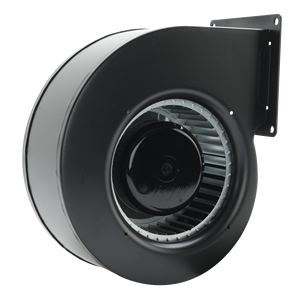
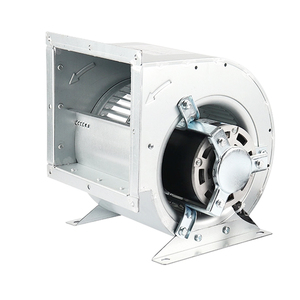
Radial blowers (also categorized as centrifugal blowers) serve as the primary mechanical heart for high-resistance air movement systems across commercial HVAC, industrial exhaust hood smoking systems, battery energy storage systems (BESS), medical cleanroom pressurization, and semiconductor fabrication. Unlike axial fans, which move air parallel to the shaft axis, radial blowers draw air axially into the impeller intake and accelerate it centrifugally at a 90-degree angle into a spiral scroll casing. This structural topology converts kinetic velocity energy into high static pressure, making radial blowers essential for pushing high CFM through dense filters, long ductwork, heat exchangers, and complex industrial scrubbers.
The global air movement market is undergoing a structural transition from traditional AC induction motors (shaded-pole, permanent split capacitor - PSC, and asynchronous squirrel-cage designs) toward Electronically Commutated (EC) and Brushless DC (BLDC) motor platforms. Traditional AC asynchronous motors suffer from intrinsic rotor slip, hysteresis losses, and lower electrical efficiency (typically ranging from 45% to 68%). Furthermore, speed adjustment in AC motors relies on voltage reduction or complex variable frequency drives (VFDs), which induce harmonic noise and motor heating.
Modern EC radial blowers integrate microelectronics, permanent magnet synchronous rotors, and onboard inverter drives directly within the motor hub. This architecture yields several engineering breakthroughs:
System designers must select the correct impeller blade orientation based on system resistance (static pressure head) and acoustic limits:
| Impeller Feature | Forward-Curved (FC) Radial Blowers | Backward-Curved (BC) Radial Fans |
|---|---|---|
| Blade Geometry | Large number of small blades curving in direction of rotation | Fewer, larger blades curving away from direction of rotation |
| Pressure Profile | Moderate static pressure; excellent volumetric airflow in compact housings | Very high static pressure capacity; ideal for dense filtration systems |
| Mechanical Efficiency | Moderate peak efficiency (55% – 65%) | High peak efficiency (75% – 85%+) |
| Overload Characteristic | Power consumption increases with decreasing system resistance (Overloading risk) | Non-overloading power curve; peak power occurs at midpoint design limit |
| Acoustic Footprint | Quiet at low rotational speeds; smooth air delivery | Higher rotational speed required, but lower aerodynamic noise at high pressure |
| Primary Applications | Commercial HVAC duct fans, range hoods, cabinet cooling, fan coils | Industrial dust collection, BESS thermal units, high-resistance scrubbers |
As noise regulations strictly limit dBA emissions in commercial and residential equipment, radial blower manufacturers employ advanced Computational Fluid Dynamics (CFD) and acoustic boundary element analysis. Aerodynamic noise in radial blowers stems from blade passing frequency (BPF) and turbulence generated at the cutoff tongue of the scroll housing.
By optimizing the clearance gap between the impeller tip and the scroll tongue, and employing staggered blade pitch layouts, sound pressure levels can be reduced by 3 to 6 dBA. Furthermore, mechanical vibration is directly controlled through dynamic balancing under ISO 1940-1 Class G2.5 standards. Dual-plane electronic balancing eliminates radial force imbalances, preventing structural fatigue in ductwork and bearing race pitting.
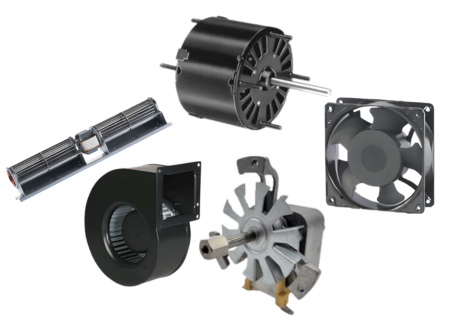
Combining the blower housing, impeller wheel, precision motor, and integrated EMI filter into a single, factory-tested sub-assembly eliminates supply chain complexity for OEMs. Every Altran Magnetics assembly arrives ready for direct drop-in installation, fully validated for electrical safety, dielectric withstand, and mechanical performance under specified operating temperatures.
Procurement executives and strategic sourcing managers face evolving regulatory challenges, supply chain risks, and technical requirements. When procuring CE certified radial blowers, leading engineering teams focus on four major market trends:
While traditional AC direct-drive blowers carry a lower initial purchase price, electricity consumption accounts for over 80% of an industrial blower's lifetime operational cost. Procurement teams are moving toward life-cycle cost modeling. Transitioning to high-efficiency EC radial blowers often yields complete ROI payback within 12 to 18 months through reduced kilowatt-hour (kWh) consumption and minimized maintenance interventions.
Exporting air handling equipment into the European Economic Area (EEA) demands rigorous compliance. The EU Eco-Design ErP Directive mandates minimum fan efficiency thresholds. Sourcing CE-marked blowers certified under EN 60335-1 (Household and Similar Electrical Appliances), EN 60204-1 (Safety of Machinery), and EN 61000-6-2/4 (EMC Immunity and Emissions) ensures seamless customs approval and eliminates legal liabilities for original equipment manufacturers.
Global disruptions have highlighted the risk of relying on single-region component suppliers. Strategic OEM buyers now partner with manufacturers like Altran Magnetics, who provide North American engineering oversight, transparent lot-traceability, robust local stocking programs, and flexible international manufacturing bases. This hybrid model combines global cost competitiveness with fast domestic technical assistance and prototyping.
OEMs are reducing assembly line labor by ordering complete motor-blower modules rather than loose components. Sourcing blowers pre-fitted with custom mounting brackets, harness connectors, integrated EMI line filters, and acoustic insulation allows factory technicians to perform rapid drop-in installation, reducing throughput time and assembly error rates.
Detailed answers to technical, regulatory, and sourcing inquiries encountered during radial blower selection.
CE Certification for industrial and commercial radial blowers requires verification against two core European Directives:
Proper sizing requires calculating the total system resistance (Psystem) at your desired air volume flow rate (Q, in CFM or m³/h):
Psystem = Pstatic_filters + Pstatic_ducts + Pstatic_exchangers + Pvelocity
Plot this system impedance curve against the candidate radial blower's aerodynamic P-Q performance curve (Static Pressure vs. Airflow Rate). The intersection point defines the actual operating point. Operating near the blower's Peak Efficiency Point (PEP) avoids aerodynamic stall, reduces noise, and prevents motor overheating.
The two most common failure modes are bearing breakdown and thermal insulation breakdown:
Yes. Custom engineering is a core competency of Altran Magnetics. We offer custom scroll housing dimensions, specialized mounting flanges, specific inlet collar diameters, custom wiring harnesses, pin-out connectors, dual-voltage tapped coils, and customer-specific part numbering with complete revision control. All modifications are documented in full engineering packages prior to sample fabrication.
Standard evaluation samples for stocked CE radial blowers ship within 3 to 5 business days. Modified or fully customized prototypes typically require 2 to 4 weeks depending on tool modification complexity. Production orders are scheduled according to your blanket P.O. releases, buffer stock agreements, or kanban delivery terms.
Need customized airflow performance, specialized voltage inputs, or full CE regulatory compliance data? Request an engineering consultation, sample review, or OEM project quote today.
Send an Inquiry