We Design. We Build. We Deliver.
Explore our CE-certified line of magnetic contactors, definite purpose relays, and specialized switching devices engineered for heavy industrial duty, renewable power, and HVAC applications.
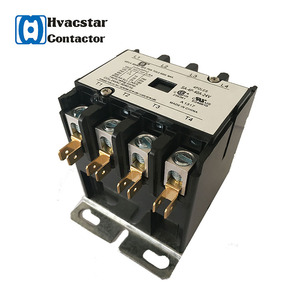
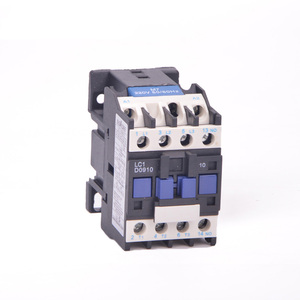
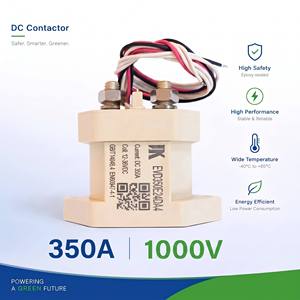

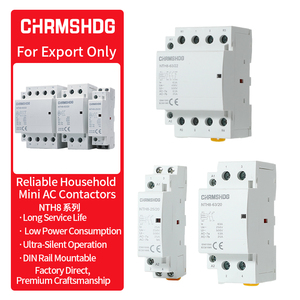


Alternating Current (AC) contactors serve as the primary electromechanical muscle within modern industrial electrical distribution, commercial HVAC infrastructure, renewable energy conversion systems, and automated machine control cabinets. Unlike standard low-power relays, an AC contactor is explicitly designed to rapidly make, carry, and interrupt heavy electric currents under standard operating conditions and specified overload scenarios without experiencing contact welding, insulation breakdown, or catastrophic thermal runaway.
To obtain CE Certification for export into the European Economic Area (EEA) and global markets accepting harmonized IEC standards, AC contactors must undergo rigorous testing regimes aligned with EN 60947-4-1 (Electromechanical contactors and motor-starters) and meet the essential safety requirements of the Low Voltage Directive (LVD) 2014/35/EU and Electromagnetic Compatibility (EMC) Directive 2014/30/EU.
A certified CE AC contactor must demonstrate verified insulation clearance, arc quenching within milliseconds, and thermal stability under continuous operation ($I_{th}$). Compliance guarantees safety across switching categories ranging from resistive heating loads (AC-1) to severe induction motor plugging and inching (AC-4).
Specifying the correct contactor requires matching the load dynamics with standardized IEC utilization categories. Selecting an under-rated switching device risks premature contact erosion and system downtime:
| IEC Category | Typical Load Application | Current Make/Break Ratio | Key Engineering Requirement |
|---|---|---|---|
| AC-1 | Non-inductive or slightly inductive loads (Heaters, Resistance Furnaces) | $1.0 \times I_e$ (Make & Break) | High thermal current capability ($I_{th}$), minimal arc duration. |
| AC-2 | Slip-ring motors: starting, switching off | $2.5 \times I_e$ (Make & Break) | Robust main contact metallurgy to handle initial rotor current. |
| AC-3 | Squirrel-cage motors: starting, switches off during run phase | Make: $6.0 \times I_e$ / Break: $1.0 \times I_e$ | High inrush current withstand capability; zero contact bounce. |
| AC-4 | Squirrel-cage motors: plugging, inching, reversing duty | Make: $6.0 \times I_e$ / Break: $6.0 \times I_e$ | Extreme arc chute ventilation and $AgSnO_2$ contact anti-weld properties. |
| AC-6b | Switching of low-voltage capacitor banks | Make: Up to $30 \times I_e$ (Peak) | Inrush suppression resistor contacts (e.g., CJ19 series contactors). |
When an AC contactor breaks an electrical circuit under heavy load, ionized air forms an electric arc across opening main contacts reaching temperatures beyond 4,000 K. Certified manufacturers deploy multi-grid arc chutes engineered with ferromagnetic splitter plates. These plates draw the electrical arc away from the primary silver alloy tips via Lorentz forces, splitting the arc into multiple smaller segments to cool and extinguish it within a fraction of an AC voltage zero-crossing cycle.
Modern CE-certified contactors have phased out environmentally hazardous toxic Cadmium Oxide ($AgCdO$) contacts in accordance with EU RoHS directives, replacing them with advanced Silver Tin Oxide ($AgSnO_2$) and Silver Nickel ($AgNi$) composite matrix compositions. $AgSnO_2$ delivers superior erosion resistance, higher material transfer thresholds during arc formation, and minimal contact welding propensity during transient short-circuit conditions.
Leveraging rigorous US engineering oversight, traceable manufacturing protocols, and comprehensive testing regimes to deliver component reliability directly to your assembly line.
Every production lot undergoes rigorous automated functional verification—including pull-in/drop-out voltage thresholds, contact resistance (< 2 mΩ), dielectric withstand voltage up to 2,500V RMS, and coil thermal dissipation profiles.
We tailor coil operating voltages (12V DC up to 480V AC 50/60Hz), auxiliary contact arrangements (NO/NC configurations), terminal connection styles (screw, lug, or quick-connect), and custom-branded enclosures under strict revision control.
Complete regulatory clearance bundles ship with every order—including CE Declarations of Conformity, UL file cross-references, RoHS/REACH material composition breakdown, and harmonized tariff paperwork for fast customs clearance.
As global energy transition accelerates, switching component specifications are shifting rapidly toward higher energy efficiency, smart grid connectivity, and extreme DC switching capabilities.
Traditional copper-wound electromagnetic coils are being replaced by micro-controller-driven electronic coils. These universal coils operate seamlessly across wide voltage windows (e.g., 24V-240V AC/DC), eliminating coil chatter during grid voltage sags and reducing coil pick-up power consumption by up to 75%.
Next-generation industrial automation demands predictive maintenance capabilities. Advanced contactors now incorporate embedded current transducers and micro-sensors that track operation counts, temperature rise, and contact wear in real time, broadcasting telemetry over MODBUS or IO-Link to prevent unplanned line shutdowns.
To eliminate electrical contact arcing entirely, hybrid contactors combine semiconductor devices (SiC MOSFETs or Thyristors) with mechanical contacts. Semiconductors conduct during the millisecond transition phase to absorb peak voltage transients, after which low-resistance mechanical contacts bypass the load for zero heat dissipation.
With massive growth in Battery Energy Storage Systems (BESS) and 800V Ultra-Fast EV Chargers, procurement managers are sourcing dual-rated contactors capable of breaking 1,000V+ DC loads alongside standard 480V AC utility circuits using hermetically sealed, inert gas-filled arc chambers.
Space constraints inside control panels drive demand for high power-density DIN-rail contactors. Advanced thermal dissipation modeling enables manufacturers to house 63A switching capacity within modular enclosures previously restricted to 25A frames.
Global OEMs strictly require compliance with EU RoHS 3 and REACH SVHC standards. Future procurement contracts prioritize contactors utilizing 100% recyclable thermoplastics, cadmium-free contacts, and halogen-free arc chutes.
In-depth technical and regulatory answers prepared by our senior electrical compliance engineers to assist global purchasing managers and OEM specifiers.
To legally bear the CE mark, an AC contactor must comply with the Low Voltage Directive (LVD) 2014/35/EU and demonstrate full conformity to standard EN 60947-4-1. Type testing performed by accredited third-party laboratories includes dielectric breakdown testing (up to 2,500V AC), short-time withstand current testing ($I_{cw}$), temperature rise tests under rated thermal current ($I_{th}$), electrical endurance tests (up to 1 million AC-3 operations), and short-circuit coordination testing with protective fuses or circuit breakers.
Selection depends entirely on the operational stress profile of the load:
Standard AC coils rely on precise input voltages (e.g., 220V ±10%). Severe voltage sags cause standard magnetic armatures to chatter rapidly, leading to burned coils and welded contacts. Wide-voltage electronic coils integrate a micro-rectifier and electronic driver circuit that accepts a wide input range (e.g., 100V to 250V AC/DC). They deliver a high initial pick-up energy burst to seal the armature quickly, then automatically throttle down to a minimal holding current (< 1.5W), saving up to 75% coil energy and operating heat.
AC contactors are typically rated for standard ambient air temperatures between -5°C and +40°C (with a 24-hour average below +35°C). When installed in sealed control cabinets where internal ambient temperatures reach +60°C or +70°C, the thermal current capacity ($I_{th}$) must be derated by 10% to 20% to prevent plastic housing softening and excessive contact temperature rise ($K$). Our engineering team provides ambient temperature derating charts for custom enclosure integration.
Every shipment is backed by comprehensive engineering and customs documentation, including standard commercial invoices, packing lists with detailed HS Codes (typically 8536.49 for low-voltage switching apparatus), Certificate of Origin (CO), CE Declaration of Conformity (DoC), RoHS 3 / REACH Compliance Statements, and Lot Quality Inspection Certificates (OQC) detailing contact resistance and dielectric test values.
Partner with a trusted CE certified manufacturer. Contact our application engineering team today to review your electrical schematic, load characteristics, and custom labeling requirements.