We Design. We Build. We Deliver.
Choosing among the top High Voltage DC Contactors manufacturers worldwide requires more than comparing catalog ratings. A 900-volt contactor may look impressive on paper, yet its real performance depends on current interruption, sealing quality, coil control, and thermal behavior. In electric vehicles, battery storage systems, charging stations, and industrial machinery, one small switching device can influence the entire power architecture.
Dr. Markus Klein, an electrical-safety and power-switching specialist, has noted, “A contactor is reliable only when its switching conditions match its rated environment.” That sentence deserves attention. It reminds engineers to examine load profiles, fault currents, altitude, vibration, and repeated cycling. Product brochures rarely tell the whole story. Sometimes, they hide the difficult questions.
This guide introduces leading manufacturers and compares their technical strengths, production experience, certifications, customization options, and global support. It considers established suppliers, specialized innovators, and manufacturers serving demanding mobility applications. The review also looks at ceramic or hermetically sealed designs, precharge solutions, auxiliary contacts, and energy-efficient coils. These details matter beside a battery pack, where heat and arcing cannot be treated casually.
The ranking is not absolute. Different projects need different priorities. A compact contactor may suit a passenger vehicle, while a rugged industrial model may better serve a storage container. Testing methods can also vary between manufacturers. That creates room for interpretation, and occasional uncertainty. Readers should verify current datasheets, test reports, and regional compliance before making a purchasing decision. Reliable selection begins with evidence, not reputation alone.
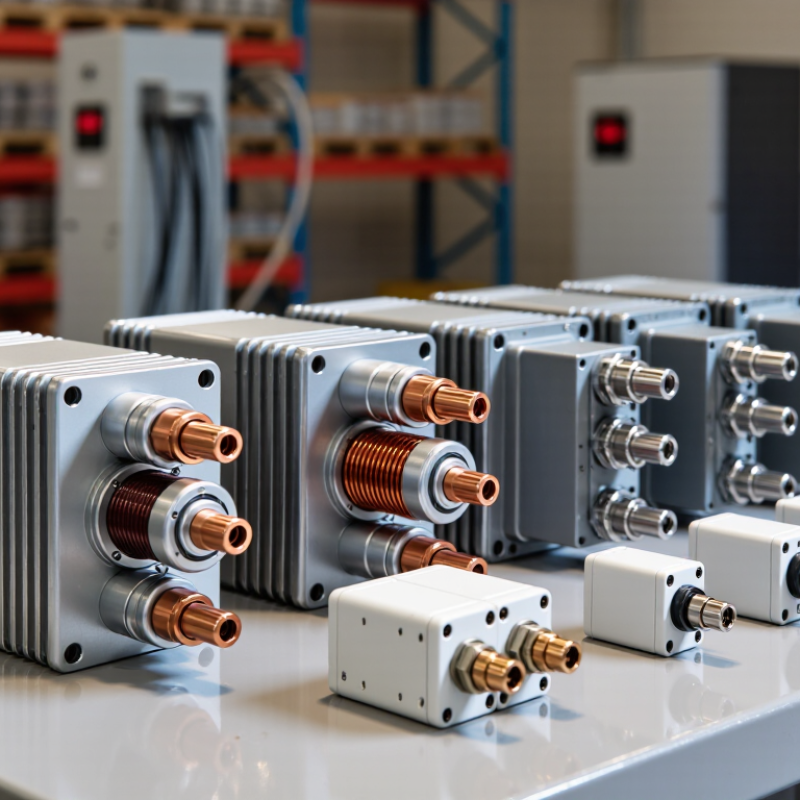
A high-voltage DC contactor is an electrically controlled switch for safely connecting and isolating direct-current power. It commonly appears in electric vehicles, battery storage systems, charging equipment, and industrial power supplies.
Unlike an ordinary relay, it must interrupt DC without natural current zero-crossing. That makes arc control critical.
Inside the sealed housing, a coil moves contacts between open and closed positions. Many designs use gas filling, magnetic blowout, or arc-resistant chambers.
Some include auxiliary contacts for position feedback. Precharge contactors also limit inrush current before the main circuit closes.
Small details matter.
The IEA Global EV Outlook 2024 reported nearly 14 million electric car sales worldwide in 2023. That growth increases demand for reliable high-voltage switching in battery packs and charging systems. However, market growth does not make every contactor suitable.
Engineers should check continuous current, breaking current, voltage rating, insulation, switching frequency, and thermal behavior.
UL 60947-4-1 and IEC 60947-4-1 provide useful evaluation frameworks for low-voltage switching devices, while system designers may require additional testing for higher-voltage applications. A 400-volt contactor may fail in a 800-volt system, even when its current rating appears adequate.
Coil suppression, contact welding resistance, and sealed-gas leakage also deserve inspection. Ratings alone can mislead.
Real-world performance depends on temperature, vibration, precharge timing, and fault energy.
Selection is less simple than a product table suggests.
High-voltage DC contactors act like electrically controlled switches. They connect or isolate batteries, inverters, chargers, and other power equipment. Unlike ordinary relays, they must interrupt DC current without relying on a natural zero-crossing point.
Inside the contactor, a coil creates a magnetic field when control voltage is applied. This field moves an armature and closes conductive contacts. Current then flows through silver-based contact surfaces, which are designed to handle heavy loads. When the coil is de-energized, a spring separates the contacts. The opening action can create an arc.
That arc is dangerous.
Manufacturers reduce it with sealed chambers, controlled gas, ceramic insulation, and arc-resistant contact materials. Some contactors also include an economizer circuit, which lowers coil power after closing. A pre-charge contactor may limit inrush current before the main contacts connect. This protects capacitors and reduces contact damage. Engineers must still check voltage, current, switching frequency, temperature, and fault conditions. A contactor rated for steady current may fail during repeated high-energy switching. That detail is easy to overlook. Real-world testing remains essential, because vibration, contamination, and heat can change performance over time.
High-voltage DC contactors use an electrically controlled coil to move internal contacts and connect or isolate a DC power circuit. Because DC current does not naturally pass through zero, the contactor typically uses arc-extinguishing technology, such as magnetic blowout, sealed gas, or vacuum interruption.
The chart shows nominal DC bus voltage classes commonly encountered in applications using high-voltage contactors. These values describe system-voltage categories rather than the rating of any specific manufacturer or product.
High-voltage DC contactors serve industries where battery power must be switched safely and repeatedly. Electric vehicles use them inside battery packs, disconnecting high-current circuits during crashes, servicing, or charging. The International Energy Agency reported nearly 14 million electric cars sold worldwide in 2023. That growth expands demand for compact, sealed, and highly reliable contactors.
Energy storage is another major user. Utility-scale batteries, solar inverters, and microgrids need contactors to isolate DC strings during faults or maintenance. IRENA recorded 473 GW of new renewable capacity in 2023. More renewable generation means more storage projects and more controlled DC connections. Contactors also support electric buses, forklifts, mining vehicles, rail systems, telecommunications backup, and aircraft power architectures.
Data centers are adopting battery backup systems as electricity demand rises. The IEA estimated global data-center consumption at about 460 TWh in 2022, potentially exceeding 1,000 TWh by 2026. This creates stricter requirements for arc suppression, insulation, thermal performance, and lifecycle testing. Selection is not simple. Engineers must match voltage, continuous current, breaking capacity, coil power, altitude, and cooling conditions. A rating that looks adequate on paper may fail under repeated switching. That uncomfortable detail deserves more attention.
Who Are the Leading High-Voltage DC Contactor Manufacturers?
Leading high-voltage DC contactor manufacturers serve electric vehicles, charging equipment, battery storage, and industrial power systems. Their products commonly support 400 to 1,000 volts DC, with sealed chambers and arc-control structures. The IEA’s Global EV Outlook 2024 reported nearly 14 million electric car sales worldwide in 2023. That growth increases demand for reliable switching components inside battery packs and charging units.
The strongest manufacturers usually combine automotive qualification, automated assembly, and extensive endurance testing. Buyers should examine continuous current, breaking capacity, insulation resistance, contact welding performance, and thermal rise. A compact contactor may look efficient on a test bench, yet fail under repeated high-load cycles. This is where supplier experience matters. However, rankings are not absolute. A specialist with strong storage expertise may outperform a larger supplier in a specific application.
Tips: Compare test reports, not only catalog ratings. Request life-cycle data at your real voltage and current. Check performance after vibration, humidity, and temperature exposure. IEA data also shows electric mobility expanding across major markets, but regional standards and charging designs still differ. That makes local technical support valuable. One detail is often missed: pre-charge contactors need careful coordination with resistors and control software. Poor timing can damage capacitors.
| Manufacturer Profile | Typical Product Focus | Common Voltage Range | Typical Continuous Current | Common Applications | Common Construction | Typical Compliance Evidence | Market Position |
|---|---|---|---|---|---|---|---|
| Global Tier 1 High-Voltage Specialist | Sealed DC contactors for electric vehicles, charging systems, and battery storage | 450–1,000 VDC | 100–500 A | Traction batteries, DC fast chargers, energy-storage systems | Hermetically sealed, gas-filled, silver-alloy contacts | Automotive quality systems, component qualification, electrical endurance testing | Very High |
| Established Automotive Supplier | Compact contactors designed for high-volume vehicle platforms | 400–900 VDC | 100–400 A | Passenger EVs, hybrid vehicles, onboard power distribution | Sealed ceramic or polymer housing with magnetic arc suppression | IATF 16949-based manufacturing, PPAP support, automotive validation testing | Very High |
| Industrial Power-Switching Manufacturer | Heavy-duty DC switching devices for industrial power equipment | 600–1,500 VDC | 200–800 A | Industrial batteries, hydrogen systems, rail equipment, DC distribution | Heavy-duty sealed chamber with high-capacity arc control | IEC 60947-4-1 testing, insulation verification, thermal and endurance tests | High |
| Energy-Storage Contactor Specialist | Main, pre-charge, and auxiliary contactors for battery systems | 450–1,000 VDC | 100–600 A | Residential and commercial BESS, microgrids, solar-plus-storage systems | Gas-sealed chamber, normally-open or normally-closed configurations | High-voltage insulation testing, short-circuit evaluation, temperature-rise testing | High |
| Regional EV Component Manufacturer | Cost-optimized contactors for electric mobility and charging equipment | 400–800 VDC | 80–350 A | Electric buses, commercial vehicles, chargers, light electric vehicles | Compact sealed housing with integrated economizer circuitry | Automotive environmental testing, vibration testing, life-cycle validation | Medium–High |
| Specialty Aerospace and Defense Supplier | Low-weight, high-reliability DC switching components | 270–900 VDC | 25–300 A | Aircraft electrical systems, unmanned platforms, specialty vehicles | Lightweight hermetic package with high vibration resistance | Environmental, vibration, altitude, temperature-cycle, and insulation testing | Specialized |
| Custom-Engineering Manufacturer | Application-specific contactors with customized terminals, coils, and mounting | Up to approximately 1,500 VDC | Application dependent | Test equipment, specialty machinery, marine systems, prototype platforms | Customized sealed or enclosed architecture | Project-specific qualification, dielectric withstand, thermal, and switching tests | Niche |
Buyers should compare high voltage DC contactor manufacturers through verified performance, not catalog voltage alone. The IEA’s Global EV Outlook 2024 recorded nearly 14 million electric car sales in 2023. This growth increases demand for reliable switching in vehicles, charging systems, batteries, and energy storage equipment.
Ask each manufacturer for test evidence under your actual conditions. Compare continuous current, breaking current, coil power, insulation resistance, and electrical endurance. Check performance at low temperatures, high altitude, vibration, and repeated DC switching. A 900-volt rating means little without a specified current and load profile. Request thermal derating curves, weld-resistance data, and third-party laboratory reports. IEC-based testing is useful, but buyers should confirm the exact test scope.
Supply capability matters as much as electrical performance. The IEA reports that global battery manufacturing capacity exceeded 2,600 GWh in 2023, creating intense pressure for stable component supply. Compare production locations, traceability systems, material controls, and realistic lead times. Review failure-analysis procedures and warranty terms before approval. Ask for samples from normal production, not only engineering prototypes. Small details matter, such as terminal torque markings and sealed coil connectors. Do not ignore them. A practical weakness remains common: buyers often compare prices before calculating lifetime switching cost. That approach can reward a cheaper part that requires earlier replacement. Evidence is imperfect, and specifications can be incomplete, so an independent qualification test remains worthwhile.
It is an electrically controlled switch for connecting and isolating direct-current power. It is common in vehicles, battery storage, chargers, and industrial equipment.
A coil creates a magnetic field when control voltage is applied. The field moves an armature and closes the main contacts. A spring separates them when the coil loses power.
Direct current has no natural zero-crossing point. An arc can continue when contacts open. Sealed chambers, controlled gas, and magnetic blowout help reduce this hazard.
It limits inrush current before the main circuit closes. This protects capacitors and reduces contact damage. Timing matters more than it first appears.
They appear in battery packs, charging systems, energy storage, and electric buses. They also support forklifts, mining vehicles, rail equipment, and backup power systems.
Check voltage, continuous current, breaking current, insulation, and switching frequency. Also examine temperature, vibration, altitude, cooling, and fault energy. A product table never tells everything.
Not necessarily. Its insulation and arc-control design may be unsuitable for the higher voltage. Current capacity alone does not prove compatibility.
Sealed housings help limit contamination and gas leakage. Auxiliary contacts can provide position feedback. Economizer circuits may reduce coil power after closing.
Heat, vibration, contamination, and repeated switching change performance over time. A contactor may pass steady-current checks but fail during high-energy switching. That uncomfortable possibility deserves attention.
High Voltage DC Contactors are essential switching components designed to safely control and isolate high-power direct-current circuits. Unlike ordinary contactors, they must manage greater electrical stress, suppress arcing, and maintain reliable performance under demanding voltage and current conditions. Their operation typically involves an electromagnetic coil that opens or closes internal contacts, while specialized insulation, sealed chambers, and arc-control technology improve safety and durability.
These devices are widely used in electric vehicles, charging infrastructure, battery energy storage systems, renewable energy installations, industrial equipment, and transportation applications. When comparing global manufacturers, buyers should evaluate rated voltage and current, breaking capacity, contact resistance, switching speed, thermal performance, sealing protection, testing standards, customization capability, delivery reliability, and technical support. A careful comparison of product quality, certification, lifecycle performance, and total ownership cost can help users select a dependable solution for their specific high-voltage DC application.

Copyright © 2026 Altran Magnetics, LLC. All Rights Reserved.