We Design. We Build. We Deliver.
Choosing the right Medical Grade EMI Filters is not a minor purchasing decision. It can affect patient safety, signal accuracy, equipment uptime, and regulatory readiness.
This guide examines seven strong options for global buyers. Each choice deserves practical scrutiny, not marketing language alone. We consider insertion loss across relevant frequency bands, rated current, leakage current, dielectric strength, and operating temperature. Physical details matter too. A filter must fit the enclosure, connector layout, grounding path, and available space. A perfect electrical rating is useless if installation becomes awkward.
Real medical equipment environments are rarely clean. Imaging systems, patient monitors, surgical devices, and laboratory instruments may share crowded power areas. Noise can enter through power lines, signal cables, or poorly bonded metalwork. The best filters address the actual interference path. They do not simply display impressive laboratory graphs.
Supplier evidence is equally important. Buyers should request current datasheets, test reports, lot traceability, and clear installation guidance. Compliance claims should be verified against the target market and finished equipment requirements. IEC 60601-1 and relevant EMC expectations may influence selection, but a filter alone does not make a complete device compliant. That distinction is easy to miss.
No shortlist is flawless. Application conditions differ, and published performance may change with wiring, load, and grounding. We may also weigh service support more heavily than some engineers prefer. Still, these seven Medical Grade EMI Filters offer a useful starting point for disciplined comparison. Choose slowly. Measure the noise source. Then confirm the filter under real operating conditions.
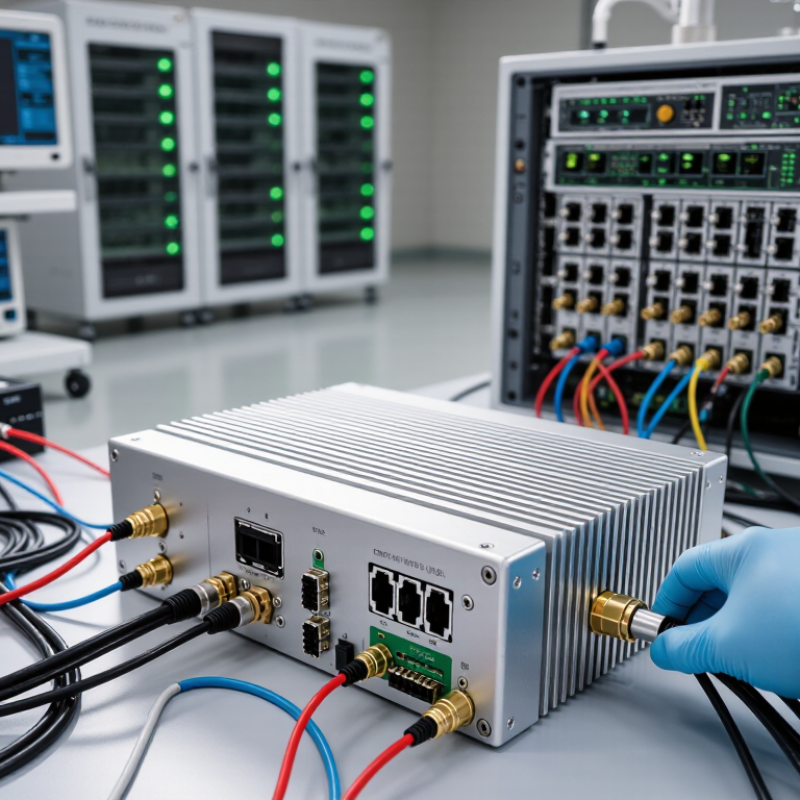
A suitable EMI filter for medical equipment must reduce interference without creating new safety risks. It should control both common-mode and differential-mode noise.
Common-mode chokes help suppress noise on paired conductors. Capacitors address high-frequency noise between lines or from lines to ground. However, capacitance to ground can increase leakage current. That detail matters near patients.
Medical-grade selection starts with the equipment’s power rating, operating voltage, and enclosure design. Engineers should check insertion loss across the actual noise spectrum, not only one attractive test frequency.
The filter also needs suitable creepage and clearance distances. It should withstand abnormal voltage, temperature changes, and repeated power cycles.
Compliance evidence should reference applicable requirements, such as IEC 60601-1 and relevant EMC standards. Documentation must include leakage current, dielectric strength, attenuation curves, and installation limits.
Physical details often decide performance. A filter mounted beside a noisy motor may need stronger low-frequency suppression. A compact diagnostic device may need a shielded feedthrough filter near its cable entry.
Keep unfiltered and filtered wires separated. Otherwise, noise can bypass the filter through shared routing.
This mistake is common. It is easy to overlook.
Global buyers should also verify regional voltage ratings, customs documentation, traceability, and test reports.
A filter may pass laboratory testing but perform poorly after careless grounding or incorrect torque.
Selection is not only about maximum attenuation; it requires measured compatibility with the complete medical system.
Seven Medical-Grade EMI Filter Options for Global Buyers
Medical equipment can fail quietly when electromagnetic interference enters through power or signal paths. In practical evaluations, buyers should compare seven options: single-phase inlet filters, three-phase filters, DC feedthrough filters, panel-mount filters, chassis-mount filters, filtered connectors, and modular filter assemblies. Each design serves a different installation space and current range. Small monitoring devices may need compact inlet protection. Imaging systems often require stronger attenuation and careful thermal review.
Check the filter’s rated voltage, current, leakage current, and operating temperature. These details affect patient safety and equipment reliability. A filter can look suitable but perform poorly after cable installation. Measure attenuation across the expected frequency range. Then test the complete device under realistic load conditions. Standards such as IEC 60601-1-2 may guide electromagnetic compatibility evaluation, but regional requirements can differ. Documentation should include test methods, certificates, traceability, and production controls.
Global buyers also need to review connector compatibility and enclosure clearances. A panel filter with poor grounding may create new interference paths. That is easy to overlook. Ask whether the supplier supports samples, inspection records, and controlled design changes. Custom assemblies may reduce wiring complexity, yet they can increase lead time and validation work. I would not choose the highest attenuation number alone. Real installations are less tidy than laboratory setups, and that difference deserves honest review.
Medical-grade EMI filters must satisfy more than basic noise suppression claims. Global buyers should examine IEC 60601-1 for electrical safety and IEC 60601-1-2 for electromagnetic compatibility. These standards address leakage current, insulation, immunity, and emissions. Small details matter. A filter can reduce interference yet create unsafe leakage paths.
CISPR 11 is important for emissions from medical equipment, especially in clinical environments. Testing may also include IEC 61000-4 series immunity tests, such as electrostatic discharge and electrical fast transients. For international procurement, the IEC CB Scheme can simplify safety evaluation across participating markets. However, national deviations still require careful review. CE marking may involve applicable medical device rules, while UKCA requirements can differ.
Ask for current test reports, ratings, temperature limits, and isolation data. Confirm whether the certificate covers the exact filter model, not merely a similar series. ISO 13485 supports a controlled manufacturing system, but it does not replace product safety testing. RoHS and REACH documentation can support environmental compliance in many markets.
In practice, installation often changes performance. Cable length, grounding, enclosure design, and connector placement can weaken an otherwise capable filter. I would request system-level EMC evidence before approving a shipment. Paper compliance is useful, but never complete. A missing test condition may reveal the real risk.
Comparing medical EMI filters requires more than reading insertion-loss graphs. Start with the device’s voltage, current, frequency, leakage limit, and connector layout. A filter rated for 250 VAC may still perform poorly when its current approaches the rated maximum. Check derating curves carefully. Small details matter.
CISPR 11:2015+A1:2016 evaluates conducted emissions from 150 kHz to 30 MHz. Request test data across that range, not one impressive frequency point. IEC 60601-1-2:2014+A1:2020 also defines immunity conditions, including radiated RF testing that commonly reaches 3 V/m, with higher levels in selected bands. Compare common-mode and differential-mode attenuation separately. A filter may suppress one path while leaving another exposed. In practice, cable routing, enclosure bonding, and grounding can change results dramatically.
Compatibility also means safety. IEC 60601-1 requires evaluation of leakage current, insulation, creepage, clearance, and protective-earth performance. Verify the filter’s medical-rated construction and applicable MOP requirements. Ask for reports from accredited laboratories, calibration details, and test configurations. A 2023 industry analysis of medical device cybersecurity and connectivity also highlights growing electronic complexity, making system-level interference testing more important. The uncomfortable lesson is simple: laboratory numbers do not guarantee cabinet performance. I would test the complete device, under maximum load, with long patient-connected cables. That extra step is easy to overlook.
| Rank | Filter Configuration | Typical Medical Application | Rated Voltage | Rated Current | Typical Leakage Current* | Typical Insertion Loss | Main Filter Elements | Compatibility Advantages | Key Selection Check |
|---|---|---|---|---|---|---|---|---|---|
| 1 | Single-Phase Medical Power Entry Filter | Patient-monitoring equipment, diagnostic instruments and compact medical devices | 115/230 VAC, 50/60 Hz | 3–10 A | ≤0.5 mA typical | 40–70 dB at 0.15–30 MHz | Common-mode choke, X capacitor, Y capacitors, discharge resistor | Combines mains connection and EMI suppression in one compact assembly | Check connector format, fuse arrangement, earth bonding and medical leakage limits |
| 2 | Low-Leakage IEC Inlet Filter | Equipment used near patients, including bedside and portable systems | 115/230 VAC, 50/60 Hz | 1–6 A | ≤0.1 mA typical | 30–60 dB at 0.15–30 MHz | Series inductors, low-value Y capacitors, X capacitor and earth shield | Reduced capacitive leakage is suitable for stricter patient-connected equipment designs | Confirm leakage current at both nominal voltage and operating frequency |
| 3 | High-Attenuation Two-Stage Filter | Imaging systems, laboratory analyzers and equipment installed in electrically noisy environments | 115/230 VAC, 50/60 Hz | 6–20 A | ≤0.8 mA typical | 60–90 dB at 0.15–30 MHz | Two common-mode stages, differential inductors, X capacitors and Y capacitors | Higher attenuation across a wider frequency range than a basic single-stage filter | Verify source and load impedance because insertion loss changes with test conditions |
| 4 | High-Current Medical EMI Filter | Patient beds, medical carts, surgical equipment and motor-driven subsystems | 115/230 VAC, 50/60 Hz | 16–40 A | ≤1.0 mA typical | 30–70 dB at 0.15–30 MHz | High-current common-mode choke, reinforced terminals and thermal-rated capacitors | Handles high continuous current with lower impedance and improved thermal margin | Check temperature rise, inrush current, conductor size and circuit protection |
| 5 | Three-Phase Medical Power Filter | Large diagnostic, laboratory and hospital equipment with three-phase input | 208–480 VAC, 50/60 Hz | 10–100 A per phase | Application-dependent | 40–80 dB at 0.15–30 MHz | Three-phase common-mode choke, phase-to-phase capacitors and phase-to-earth capacitors | Suppresses conducted noise on all phases while supporting high-power equipment | Confirm phase configuration, neutral requirements, protective-earth design and short-circuit rating |
| 6 | DC Medical EMI Feedthrough Filter | Battery-powered monitors, infusion systems, portable diagnostic devices and internal DC rails | 12–48 VDC | 1–30 A | Not normally specified as AC leakage | 40–80 dB at 0.15–30 MHz | Ferrite or powdered-iron inductors, ceramic capacitors and feedthrough capacitors | Low-profile filtering for switching converters, motors and battery-powered electronics | Check DC resistance, saturation current, polarity, ripple current and transient behavior |
| 7 | Medical Signal and Data-Line EMI Filter | Patient-monitoring interfaces, sensor wiring, control lines and shielded communication ports | 5–60 V signal circuits | Up to 2 A per line | Circuit-dependent | 20–60 dB at 1–100 MHz | Common-mode chokes, ferrite arrays, low-capacitance capacitors and transient protection | Reduces radiated and conducted interference while preserving signal integrity | Check bandwidth, differential capacitance, insertion loss, impedance and data-rate limits |
* Leakage-current values and attenuation figures are representative design ranges, not universal product ratings. Final selection should be verified against the applicable IEC 60601-1 requirements, relevant EMC standards, local mains voltage, installation category, patient-contact classification and the manufacturer’s tested datasheet.
Selecting a medical-grade EMI filter starts with the device, not the catalogue. Define voltage, current, frequency range, leakage-current limit, and connector type. A practical shortlist includes IEC inlet filters, single-phase filters, three-phase filters, feedthrough capacitors, DC filters, common-mode chokes, and custom assemblies. Fit matters.
The IEC 60601-1-2:2014+A1:2020 standard separates emissions from immunity testing and uses a risk-based approach. The FDA’s EMC guidance also expects manufacturers to justify testing, installation conditions, and cable configurations. Ask suppliers for insertion-loss curves, leakage-current data, dielectric-strength results, temperature ratings, and complete test reports. A filter rated at 10 A may perform poorly near its upper thermal limit. Do not guess.
MarketsandMarkets valued the global EMI shielding market at approximately USD 7.1 billion in 2023 and projected about USD 9.4 billion by 2028. That growth increases supplier choice, but not necessarily product suitability. For global purchasing, verify creepage and clearance, medical quality controls, documentation language, and certification acceptance in the destination market. Check samples inside the actual enclosure, with final cables attached. I have seen a promising filter fail after installation because the metal panel was poorly bonded. Datasheets rarely show that weakness. Select by measured system performance, not impressive attenuation numbers alone.
Global medical equipment can operate on different nominal mains systems. Use the chart below as a purchasing reference when checking a filter's rated voltage, frequency, phase configuration, current capacity, leakage current, and medical safety approvals.
The seven voltage references represent commonly encountered low-voltage systems based on IEC 60038 nominal supply values and widely used regional installations. Actual filter selection must also consider load current, conducted-emission frequency range, attenuation performance, creepage and clearance, leakage current, and applicable IEC 60601-1 requirements.
It should reduce both common-mode and differential-mode noise. Common-mode chokes suppress noise on paired wires. Capacitors control high-frequency noise between lines or toward ground. Ground capacitance may increase leakage current.
Excess leakage can create safety concerns near patients. Check the filter’s leakage-current data under actual voltage conditions. Small capacitances can still matter. Do not rely on appearance.
Confirm operating voltage, current, frequency range, and equipment power rating. Check creepage and clearance distances. Review dielectric strength and temperature limits. A 10-ampere rating may weaken near its thermal limit.
Request current test reports, attenuation curves, leakage-current results, and isolation data. Also request installation limits and temperature ratings. Confirm the report covers the exact model. Similar series data may mislead.
No. Cable length, grounding, connectors, and enclosure bonding can change results. Test the filter inside the final enclosure. A filter may pass testing but fail after poor grounding.
Place it near the cable entry or noisy circuit. A feedthrough filter may suit a compact diagnostic enclosure. Keep filtered and unfiltered wires separated. Otherwise, noise can bypass the filter.
Review applicable electrical safety, EMC, emissions, immunity, and environmental requirements. Check requirements covering leakage, insulation, emissions, and fast transients. Regional differences still matter. One certificate may not satisfy every market.
Compare measured system performance, not maximum attenuation alone. Verify voltage ratings, traceability, customs documents, and destination-market acceptance. Test samples with final cables attached. I would still question incomplete evidence.
Medical Grade EMI Filters are essential for reducing electromagnetic interference in medical equipment while supporting reliable operation, patient safety, and signal integrity. This guide introduces seven practical filter options for global buyers, focusing on designs suitable for power inputs, sensitive monitoring systems, imaging devices, and other healthcare applications. It explains the features that distinguish medical-grade products, including low leakage current, effective attenuation, stable thermal performance, durable construction, and compatibility with different equipment architectures.
The article also reviews the key standards and certifications buyers should consider, while explaining how to compare insertion loss, current and voltage ratings, frequency response, safety performance, size, and installation requirements. A practical purchasing guide helps readers evaluate supplier documentation, testing evidence, product consistency, lead times, customization needs, and total cost. By combining technical requirements with regulatory and application considerations, buyers can select EMI filters that provide dependable protection and long-term compatibility across diverse medical equipment markets.

Copyright © 2026 Altran Magnetics, LLC. All Rights Reserved.