We Design. We Build. We Deliver.

0%

Choosing Commercial HVAC Blowers for global projects means looking beyond airflow claims and catalogue rankings. A unit must match the system’s pressure requirements, operating hours, controls, and installation space. Buyers should also compare efficiency at the expected duty point, not just maximum capacity. Small differences matter. A noisy blower above a clinic ceiling or an oversized unit cycling in a hotel plant room can create costly problems.

ASHRAE Fellow William Bahnfleth is known for his work on building HVAC systems and the importance of evaluating performance in context. A practical principle for this guide is: “Choose the blower for the whole air system, not the catalogue headline.” This is an editorial takeaway, not a direct quotation. It reflects why fan curves, motor options, sound data, and control compatibility deserve careful review. Check the manufacturer’s current technical documents, warranty terms, and service coverage before comparing models.

Global buyers face another layer of trade-offs. Voltage, frequency, climate, available replacement parts, and local technical support can affect a blower’s real-world value. There is no universal winner. That is the awkward part. A model that suits a low-pressure retail system may be wrong for a filtration-heavy facility. This guide compares leading options through practical criteria, while recognizing that published specifications cannot replace project-specific engineering. Even a careful shortlist can miss something. Verify the details with a qualified HVAC professional before final selection.
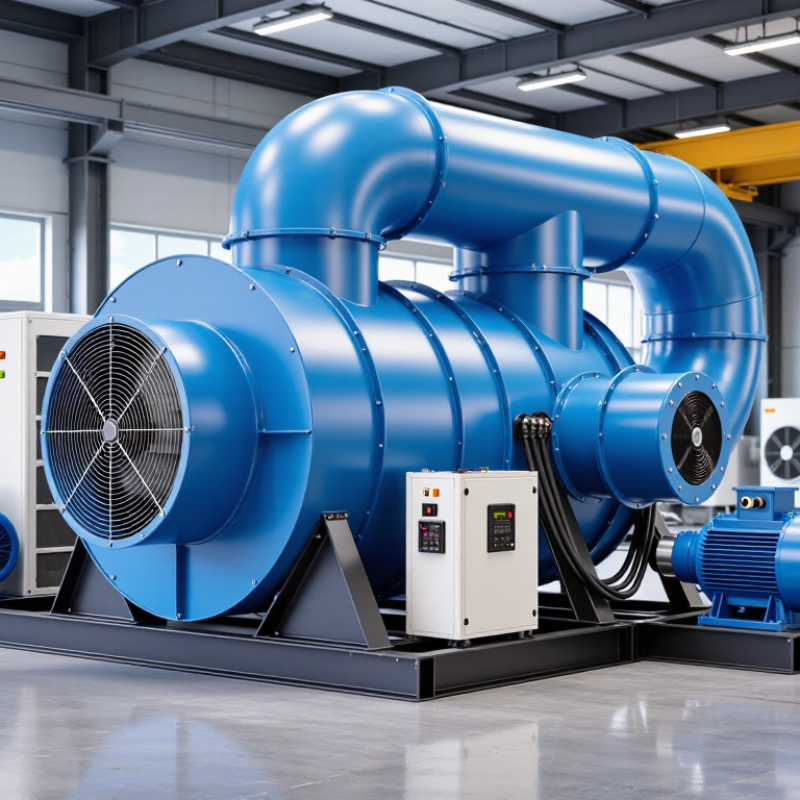
2026 Best Commercial HVAC Blowers for Global Buyers

Understanding Commercial HVAC Blowers and Their Core Functions

Commercial HVAC blowers move conditioned air through ductwork, filters, coils, and occupied spaces. Their job is not simply to create a strong breeze. They must deliver measured airflow while overcoming resistance from long ducts, bends, dampers, and dirty filters. Air must move. That matters in offices, warehouses, clinics, and other buildings with different comfort and ventilation needs.

A blower typically combines an electric motor, an impeller, and a housing. Centrifugal designs are common where systems need pressure to push air through duct networks. Axial designs suit more direct airflow with lower resistance. The right choice depends on airflow, static pressure, operating hours, noise limits, and available space. An undersized unit may leave distant rooms stuffy. An oversized one can waste energy and create drafts. The difference is not always obvious from the nameplate.

For global buyers, compare performance data at the actual operating point, not just the maximum airflow figure. Check motor efficiency, controls, service access, and replacement-part availability. Ask how the blower performs with the specified filter and coil resistance. A clean test bench does not fully represent a dusty plant room. Commissioning measurements can reveal airflow imbalance or unexpected pressure loss. Even then, building use changes, and the original assumptions may need another look.

Comparing Blower Types, Designs, and Performance Characteristics

Commercial HVAC blower selection starts with airflow, static pressure, and duty cycle—not wheel diameter alone. Forward-curved centrifugal wheels move useful air in compact housings, often at modest speeds, but performance can drop as system resistance rises. Backward-curved designs typically handle pressure changes more steadily and may use less power near efficient operating points. They can require more space and careful inlet clearance. Axial blowers suit high-volume, lower-pressure paths, such as condenser sections, though duct bends can reduce their advantage. Noise matters. Check the curve.

Design details shape performance in service. Direct-drive assemblies have fewer transmission parts, while belt drives allow speed adjustment and offer more flexibility in motor placement. Belts also need alignment checks and eventual replacement. EC motors and variable-speed controls can match output to changing loads, but savings depend on operating hours and control settings. A quiet showroom test proves little. Measure sound at the intended distance, then check vibration after installation; this step is easy to overlook.

Global buyers should compare fan curves measured at the same air density, temperature, and test standard. Confirm voltage, frequency, enclosure rating, insulation class, bearing arrangement, and cleaning access. Request sound data, dimensional drawings, and a written operating range. Peak airflow figures can hide weak pressure performance. It is tempting to choose from a catalog table alone, but site conditions rarely behave as neatly as a spreadsheet. That shortcut can be costly.

Key Factors for Selecting a Commercial HVAC Blower in 2026

2026 Best Commercial HVAC Blowers for Global Buyers

Key Factors for Selecting a Commercial HVAC Blower in 2026

Selecting a commercial HVAC blower starts with the building’s actual operating needs, not a catalog headline. Match required airflow and external static pressure to the system design. Then review the fan curve across expected operating conditions. A blower sized only for peak demand may use excess energy or create unnecessary noise during normal hours. Airflow comes first.

Motor efficiency and speed control influence both operating costs and comfort. Variable-speed operation can help adjust airflow as demand changes, but only when controls are compatible and correctly commissioned. Check published performance data, electrical requirements, sound ratings, and the maintenance access needed at the installation site. Dusty filters and restrictive ductwork can change real performance. Paper specifications have limits.

Tips: Ask for test data at your required duty point, not just maximum airflow. Confirm that replacement parts are available through your service network. If possible, compare measured noise and power use after installation; field conditions can disappoint, even with careful selection.

Global Standards, Energy Efficiency, and Installation Requirements

For global buyers, a commercial HVAC blower should match both the air system and the destination market. Check the nameplate voltage, frequency, motor protection, and declared airflow before comparing prices. A unit designed for one electrical supply may need a different motor configuration elsewhere. Details matter.

Efficiency figures are useful only when their test conditions are clear. Compare power input and airflow at the pressure your ductwork requires, not just at a favorable laboratory point. Variable-speed control can reduce energy use when demand changes, but poor commissioning may erase those gains. Ask for test reports and applicable conformity documents, such as those required by local electrical and safety rules. Requirements vary by country.

Installation affects performance as much as the blower itself. Leave room to remove the motor, inspect bearings, and clean the wheel. Use flexible connections where vibration could travel into the duct, and confirm that supports can carry the assembly’s weight. Measure duct dimensions and verify the fan’s rotation before startup. Airflow is not everything. Noise, access, and service conditions also matter. A tidy specification sheet can still miss a cramped ceiling space; site checks sometimes reveal the uncomfortable truth.

2026 Best Commercial HVAC Blowers for Global Buyers

Global standards, energy efficiency, and installation requirements

For a 7.5 kW, four-pole motor, IEC 60034-30-1 nominal efficiency values are 89.6% for IE2, 91.7% for IE3, and 93.3% for IE4. These figures describe motor efficiency, not the overall efficiency of a blower or HVAC system. Buyers should confirm applicable local regulations, supply voltage and frequency, required airflow and static pressure, mounting conditions, and service access before selecting equipment.

Evaluating Commercial HVAC Blower Options for International Buyers

Commercial HVAC blower selection starts with the duty point, not the largest airflow number on a product sheet. Match required airflow and static pressure to the system’s filters, coils, and duct resistance. A mismatch can mean weak airflow, excess noise, or higher energy use. Confirm local supply voltage, frequency, phase, and motor-control compatibility before comparing prices. Small details matter. Ask for a performance curve showing the operating point, plus test conditions and tolerances. For an overseas project, also verify that wiring diagrams, installation instructions, and electrical documentation are available in a usable format.

Shipping and site conditions deserve equal attention. Check the blower’s dimensions, mounting orientation, access for maintenance, and protection against dust or moisture where relevant. Ask how the impeller is balanced and what routine inspection involves. Listen for details in the technical response; vague answers may signal that selection support is limited. Noise figures can vary with test setup, so request the measurement conditions rather than relying on a single number. A neat specification sheet can still hide a mismatch. Buyers should compare the full operating cost, including expected service intervals, replacement parts, and local technician capability. The lowest quotation may not be the easiest unit to maintain thousands of kilometres from the supplier.

FAQS

What does a commercial HVAC blower do?

It moves conditioned air through ducts, filters, coils, and occupied spaces. It must overcome bends, dampers, and dirty filters. Air must move.

How do centrifugal and axial blowers differ?

Centrifugal designs create pressure for duct networks with greater resistance. Axial designs suit high-volume paths with lower resistance. Duct bends can reduce their advantage.

What information matters when choosing a blower?

Check airflow, static pressure, duty cycle, noise limits, and available space. Wheel diameter alone is not enough. I might still be overvaluing the nameplate.

Why compare performance at the operating point?

Maximum airflow figures may hide weak pressure performance. Compare fan curves under matching air density, temperature, and test conditions. A clean test bench can mislead.

Can variable-speed controls reduce energy use?

They can match blower output to changing demand. Savings depend on operating hours and control settings. Poor commissioning may erase them.

What should buyers check before installation?

Confirm voltage, frequency, motor protection, airflow, and local conformity documents. Leave room to remove the motor and clean the wheel. Measure the ductwork.

How do blower drive types affect maintenance?

Direct-drive assemblies have fewer transmission parts. Belt drives allow speed adjustment but need alignment checks and eventual replacement. Belts wear.

What should be checked during startup?

Verify fan rotation, supports, vibration, and airflow balance. Measure sound at the intended distance. Cramped ceiling spaces can change the plan.

Conclusion

Commercial HVAC Blowers are essential to moving and distributing air through heating, ventilation, and air-conditioning systems in commercial buildings. This overview explains their core functions and compares common blower types and design features, including how airflow, pressure, noise, efficiency, and operating conditions can differ. Understanding these characteristics helps buyers match equipment to the needs of offices, industrial facilities, retail spaces, and other applications.

For 2026, selecting a suitable blower involves assessing system requirements, energy use, durability, maintenance needs, and compatibility with existing equipment. The article also considers how efficiency expectations, applicable regional standards, and installation conditions can affect purchasing decisions across international markets. By weighing performance, total operating costs, documentation, and supplier support, global buyers can make a more informed choice for reliable, efficient air movement.


Amelia

Amelia

Amelia is a skilled marketing professional with a deep understanding of the company’s products, customers, and industry trends. With a strong ability to translate complex product features into clear, practical insights, she regularly contributes expert articles to the company’s website. Her writing......

Copyright © 2026 Altran Magnetics, LLC. All Rights Reserved.